A 17.1% Increase from the Previous Year
Full-Scale Launch of a 500 Billion Won Fiscal Operation
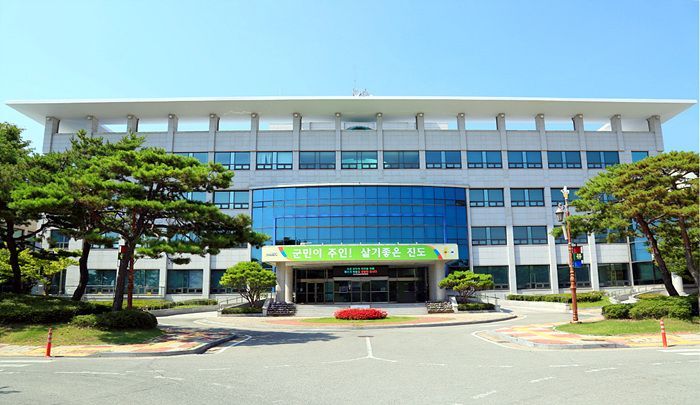
Jindo County in South Jeolla Province has set its budget for 2026 at 510.9 billion won, marking the largest budget in the county’s fiscal history. This represents an increase of 74.7 billion won, or 17.1%, compared to the initial 2025 budget of 436.2 billion won.
With this budget, Jindo County has officially entered the era of operating a fiscal system exceeding 500 billion won for the first time in its history.
According to the county, the general account for 2026 stands at 501.2 billion won, up 74.5 billion won from the previous year, while the special account is set at 9.7 billion won, an increase of 200 million won.
By sector, the budget is concentrated in areas directly related to residents’ livelihoods, including: ▲ Agriculture, Forestry, and Fisheries: 119.3 billion won (23.8%) ▲ Social Welfare: 110.4 billion won (22%) ▲ Culture and Tourism: 49.1 billion won (9.8%) ▲ Environment: 37.1 billion won (7.4%).
Major projects reflected in the budget include: ▲ Improvement projects for disaster risk areas in Haechang, Yeomdae, and Sibirsi (12.5 billion won) ▲ Creation of the Sebang Sunset Art and Culture Tourism Attraction (4.51 billion won) ▲ Phase 2 of the Jindo Port Hinterland Public Sewage Treatment Project (3.5 billion won) ▲ Construction of a dormitory for nursing and welfare personnel (2.93 billion won) ▲ Development of a humanities healing tourism route (2.93 billion won) ▲ Establishment of the Jindo Agricultural and Marine Products Distribution and Logistics Hub Center (2.4 billion won) ▲ Nari Port Improvement Project (2.13 billion won) ▲ Jukhando Pier Reinforcement Project (1.2 billion won).
A county official stated, “Despite challenging fiscal conditions, we have boldly reduced unnecessary expenditures and concentrated the budget on essential areas such as the local economy and social welfare that directly impact residents’ lives. As we enter the era of a 500 billion won budget for the first time, we will responsibly manage our finances to invigorate the local economy and provide real support for residents’ daily lives.”
Meanwhile, out of the final 2025 budget of 617 billion won, the county allocated 195 billion won to the agriculture, forestry, and fisheries sector, maintaining an allocation of over 30% of the total budget to this sector for three consecutive years. For 2026, the county aims to continue allocating more than 30% of its budget to agriculture, forestry, and fisheries, focusing on securing national and provincial funding to further strengthen the foundation of the agricultural and fisheries industries.
© The Asia Business Daily(www.asiae.co.kr). All rights reserved.
![Clutching a Stolen Dior Bag, Saying "I Hate Being Poor but Real"... The Grotesque Con of a "Human Knockoff" [Slate]](https://cwcontent.asiae.co.kr/asiaresize/183/2026021902243444107_1771435474.jpg)











