Ministry of Justice Establishes "Overseas Koreans Residency Integration Division"
Talent Pool with Korean Language Skills Expands
Positive Impact for Yongin Semiconductor Cluster
Korean companies are considering ways to broaden their talent acquisition strategies in response to the relaxation of the overseas Korean residency system, which takes effect at the start of the new year. With the government lowering the barriers for overseas Koreans to stay in Korea, companies believe this creates conditions for them to secure a stable pool of talent who can move between Korea and overseas markets.
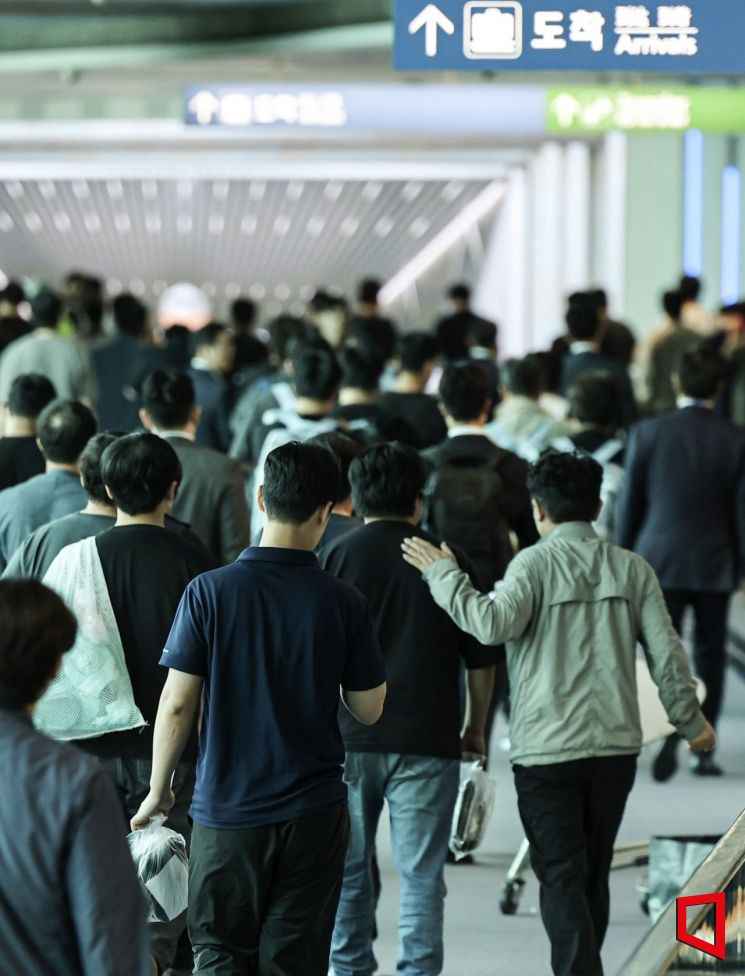 Incheon International Airport Terminal 2, where arriving passengers are entering. Photo by Airport Photojournalists Group
According to the business and legal sectors on January 5, the Ministry of Justice has established a new “Overseas Korean Residency Integration Division” as of today, strengthening the support system and social safety net for overseas Koreans residing in Korea. A key task this year is to ensure the smooth implementation of the “Integration of Overseas Korean Residency Status (F-4),” which unifies the previously separate statuses of Overseas Korean (F-4) and Visit and Employment (H-2) into a single Overseas Korean (F-4) status. This new plan will significantly lower the entry barriers for overseas Koreans wishing to work at domestic business sites of Korean companies.
Until now, companies have not classified overseas Koreans as a separate recruitment group, instead hiring them in a limited way through general foreign applicant channels. With the new system making it easier for overseas Koreans to stay and work in Korea, companies are paying attention to the potential expansion of their talent pool. Industry insiders note that overseas Koreans, who are familiar with the Korean language and culture and have overseas experience, are highly valuable in manufacturing and technology-based industries.
It appears that no company has yet established a dedicated recruitment process specifically for overseas Koreans. However, companies view the improved environment for considering overseas Korean talent more actively in future hiring and workforce placement as a positive development. A representative from Company A stated, “As residency conditions improve, the range of talent available to companies expands.”
Interest in utilizing overseas Koreans is also growing among companies operating overseas production bases. In industries such as semiconductors and electronics, the need to hire local staff in the United States and Europe is increasing, but rising labor costs have prompted companies to seek alternatives. A representative from Company B said, “If we can connect overseas Korean talent recruited directly from prestigious foreign universities to positions in Korea, it will increase our options for workforce management.”
Companies are also paying attention to the pilot regional visa system being operated by the government through the end of this year. This system allows regional governments and the Ministry of Justice to jointly set visa requirements tailored to local conditions, providing greater flexibility in the residency status of overseas talent. Previously, candidates had to choose between a student visa (D-2) or a work visa (E-7), but now it will be possible to grant multiple statuses.
In this context, companies moving into the semiconductor cluster being developed in Yongin, Gyeonggi Province, are expected to benefit directly in securing talent. For semiconductor companies such as Samsung Electronics and SK Hynix, the institutional burden of hiring overseas talent to work long-term in Korea will be reduced.
Meanwhile, according to the Ministry of Justice, as of November last year, there were 861,185 overseas Koreans residing in Korea. By nationality, China accounted for the largest number with 665,370 people, followed by the United States with 54,532, Uzbekistan with 41,252, and Russia with 37,155.
© The Asia Business Daily(www.asiae.co.kr). All rights reserved.

















