Governor Kim Youngrok and Mayor Kang Gijung Announce Joint Declaration for the Year of Byeongo
Formation of Integration Promotion Council... Gathering Residents' Opinions to Draft Integration Plan
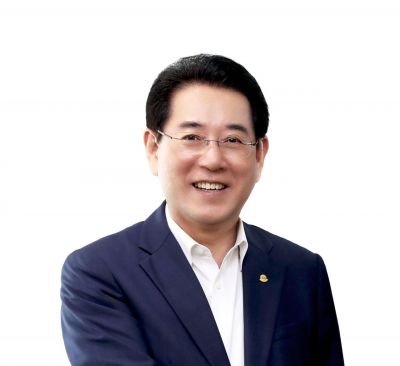
On January 2, in celebration of the Year of Byeongo, Jeollanam-do and Gwangju City declared at the National May 18 Democratic Cemetery, in front of the spirits of May, the symbol of Korea's democratization, that they would immediately pursue full integration of the two regions to open a new era of great revival for Gwangju and Jeonnam.
Kim Youngrok, Governor of Jeollanam-do, and Kang Gijung, Mayor of Gwangju City, after paying their respects at the National May 18 Democratic Cemetery, announced a joint declaration in front of the Gate of Democracy to promote the establishment of an "integrated local government" combining Gwangju City and Jeollanam-do.
The two regions agreed that integration is necessary at this historic turning point, as they stand at the center of the AI and energy transformation era and the southern semiconductor belt, poised to become a key hub for Korea's future.
In particular, under the Lee Jaemyung administration, bold incentives are being planned for the integrated region, such as granting special status and organizational privileges equivalent to those of Seoul Metropolitan City, additional allocation of local grants, and the prioritized relocation of public institutions. Both regions believe that now is the optimal opportunity for full integration, and through this joint declaration, they agreed to immediately pursue unification.
To maximize the synergy effects of integration, the two regions pledged to make every effort to secure bold fiscal and authority transfers and special privileges from the government. They also promised to work together, based on mutual respect and trust, to secure future-oriented growth engines and maximize regional development and the welfare of residents.
In particular, they will actively promote the enactment of a special law establishing an integrated local government that includes the merger of administrative districts and tailored special provisions for Gwangju and Jeonnam. They also agreed to make every effort to include special provisions in the law to secure substantial powers and functions equivalent to those of a federal state, through the transfer of national administrative and fiscal authority.
To this end, the two regions will establish a "Gwangju-Jeonnam Integration Promotion Council" (tentative name) with equal representation, gather opinions from the Gwangju Metropolitan Council and Jeollanam-do Provincial Council, and fully collect the views of residents. After finalizing the integration plan, they agreed to promptly move forward with the unification process.
Governor Kim Youngrok stated, "Now is the best time for the full integration of Gwangju and Jeonnam, as President Lee Jaemyung is strongly committed to supporting the integrated local government and the government is promising unprecedented incentives. If we miss this opportunity, there is no guarantee that such conditions will arise again, so let us unite our efforts to achieve administrative integration, the greatest long-cherished wish of Gwangju and Jeonnam."
He added, "Although the path is difficult, I believe it is an urgent task to achieve integration as soon as possible, elect an integrated mayor through the June local elections, and embark on a new history of Gwangju-Jeonnam integration starting July 1. We will work together to ensure the Gwangju-Jeonnam Integration Special Law is passed by the end of February. In addition to the Integration Promotion Council, which will handle practical affairs, we will form a broad advisory committee to widely gather public opinion and push forward with the integration."
Mayor Kang Gijung emphasized, "I believe President Lee Jaemyung has provided an opportunity for the revival of Gwangju and Jeonnam through the national balanced development policy of 'Five Major Regions and Three Special Zones.' Especially now, when there is a strong commitment to fostering AI, semiconductor, and energy industries centered on Gwangju and Jeonnam and expanding opportunities for talent development, we must not miss this chance. With the government's determination and the region's resolve aligned, now is the optimal time for administrative integration."
He continued, "Although it was not stated in the announcement, in reality, our top priority is to elect an integrated head of government in the June 3 local elections. If we fail to achieve integration during the local elections, the possibility will become increasingly remote. By gathering the opinions of residents, we will swiftly and responsibly pursue integration so that Gwangju and Jeonnam can become Korea's first administrative integration model and usher in a prosperous new era for the region."
© The Asia Business Daily(www.asiae.co.kr). All rights reserved.
![Clutching a Stolen Dior Bag, Saying "I Hate Being Poor but Real"... The Grotesque Con of a "Human Knockoff" [Slate]](https://cwcontent.asiae.co.kr/asiaresize/183/2026021902243444107_1771435474.jpg)











