Morgan Stanley's Job Outlook for 35 European Banks
"10% Workforce Reduction Over 5 Years Due to AI and Digitalization"
"Branch Closures and Voluntary Retirement Have Reached Limits... AI Adoption Underway"
There are projections that approximately 200,000 banking jobs in Europe could disappear over the next five years. This is due to the adoption of artificial intelligence (AI) and the trend of branch closures. According to Yonhap News, citing the UK daily Financial Times (FT) on December 31 (local time), "Morgan Stanley analyzed 35 European banks and predicted that up to 10% of staff could be cut by 2030 through cost reduction using AI and the transition of work to online platforms."
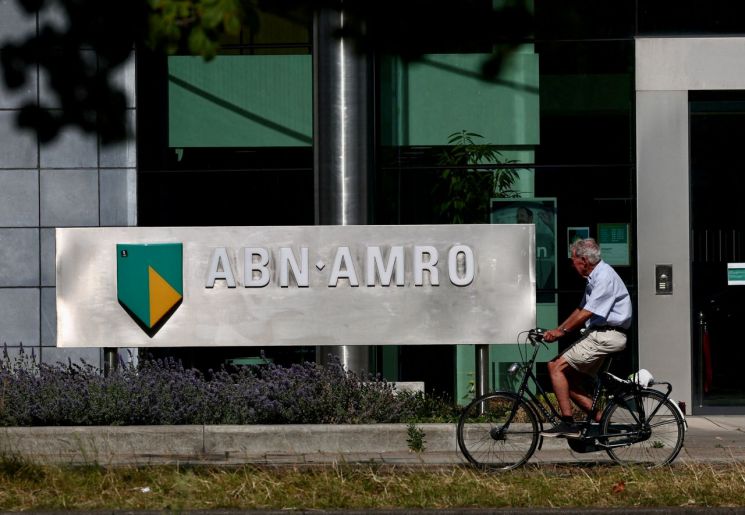 Dutch bank ABN AMRO has announced plans to reduce its full-time staff by about 20% by 2028. Photo by Reuters Yonhap News
Given that the total number of employees across these 35 banks is about 2.12 million, this means that approximately 212,000 jobs could be lost. The workforce reductions are expected to be concentrated in central service sectors, including risk management, regulatory compliance, and operational support roles. Morgan Stanley pointed out, "Many banks have mentioned up to a 30% increase in efficiency due to AI and further digitalization."
According to Yonhap News, European banks are under pressure to improve their return on equity (ROE), lagging behind the United States, and to reduce costs, with AI being cited as a catalyst for restructuring. In November last year, Dutch bank ABN AMRO announced plans to reduce its full-time staff by about 20% by 2028, and in March last year, France's Societe Generale stated, "There are no sacred cows when it comes to cost reduction."
In the first half of last year, Switzerland's UBS used AI to create videos featuring analysts as avatars, which were sent to clients. In recent months, it is reported that 250 senior executives participated in an AI leadership event at Oxford University.
Morgan Stanley noted, "Until now, banks have tried to lower their cost-to-income ratio (CIR) by closing branches and offering voluntary retirement, but these efforts have now reached their limits." The firm added, "Now, banks believe the only way to further reduce CIR is to automate headquarters work through AI adoption." The CIR is an indicator showing how much a bank spends on selling, general, and administrative expenses such as labor costs, rent, and IT expenses to generate revenue. A lower CIR means higher management efficiency and productivity, as more profit is generated with less cost.
 The cost-to-income ratio (CIR) of major investment banks (IB) on Wall Street in the United States is in the low 50% range, while that of major European banks reaches 70%. Reuters Yonhap News
In reality, the CIR of major investment banks on Wall Street is in the low 50% range, while that of major European banks reaches 70%. Strong labor laws, bureaucracy, and outdated IT systems are analyzed as factors that have driven up the CIR. In Korea, the CIR of major commercial banks is in the 40% range, even lower than in the United States, which is attributed to voluntary retirements and branch closures.
Some voices are warning against the hasty adoption of AI in banks. Conor Hillery, Co-CEO for Europe, the Middle East, and Africa at JPMorgan Chase, cautioned, "We must be careful not to lose sight of the basics by getting overly excited about AI," and warned, "If the industry fails to strike a balance between utilizing AI in core work and training new employees, it could face serious problems."
© The Asia Business Daily(www.asiae.co.kr). All rights reserved.
!["The Woman Who Threw Herself into the Water Clutching a Stolen Dior Bag"...A Grotesque Success Story That Shakes the Korean Psyche [Slate]](https://cwcontent.asiae.co.kr/asiaresize/183/2026021902243444107_1771435474.jpg)

















