Sokcho in 2026: A More Comprehensive Welfare Network for Citizens
Integrated Care Covering Medical, Nursing, and Daily Life Services... Full-Scale Launch in March
Increased Child Allowance and Expanded Agri-Food Vouchers for Young Adults... “Sokcho-Style Integrated Care” in Operation
From Care to Food Security... Inclusive and Tailored Services for All
Sokcho City in Gangwon Province is launching more comprehensive welfare projects in the new year of 2026 to create a city where citizens are happy.
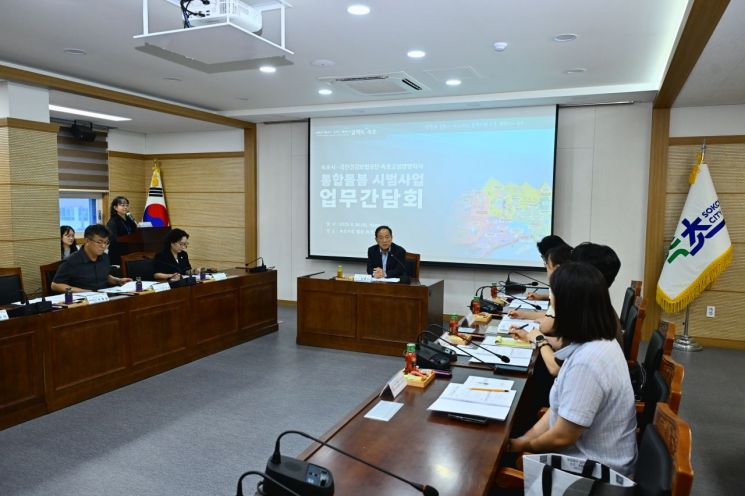 Sokcho City is launching more comprehensive welfare projects in the new year of 2026 to create a city where citizens are happy. Lee Byung-sun, Mayor of Sokcho City, is seen holding a business meeting with the National Health Insurance Corporation on August 28 last year. Provided by Sokcho City
From January to December, Sokcho City will implement the “Sokcho-Style Integrated Care Support Project.” This project will first be operated as a pilot program in accordance with the Act on Integrated Support for Local Care, including medical and nursing care. Starting March 27, when the law is officially enacted, the full-scale project will be launched. The core of the project is to provide and connect services such as healthcare, health management, long-term care, daily life support, and housing to elderly people and people with disabilities who have difficulty maintaining daily life due to frailty, disability, illness, or accidents, as well as other citizens in need of comprehensive support, and to continue monitoring these services.
The integrated care initiative consists of seven specialized projects that encompass life support, housing, health and medical care, and service linkage. These include “Home ON Care,” where care workers visit homes to help with cleaning, meals, and caregiving; “Healthy Meal Table,” which offers customized meal plans and nutritional counseling; and “Re:Sweet Home,” which supports the improvement of age-friendly living environments. For homebound patients with mobility difficulties, the “One District, One Primary Doctor” program provides home visits, and a system is in place to identify and connect discharged patients eligible for integrated care in collaboration with local medical institutions. The city will also promote “Find:Da Sokcho,” which identifies eligible recipients through local welfare experts such as welfare coordinators, and “Connect:Da Sokcho,” which monitors those under intensive management. The budget for the integrated care project in 2026 is set at 510 million won.
The food safety net for vulnerable groups, including children and young people, will also be strengthened.
The per-meal subsidy for children under 18 at risk of missing meals will be raised from 9,500 won to 10,000 won.
The agri-food voucher, which supports households receiving basic living benefits in purchasing high-quality, fresh agricultural products, will be expanded in 2026 to include young adult households. As a result, the eligible households for this voucher will be those receiving basic living benefits that include pregnant women, infants, children, and young adults (born between January 1, 1992, and December 31, 2007). From 2026, mushrooms, wild greens, and other forest products will also be included among the eligible items. The support amount will be 40,000 won per month for a single-person household, 60,000 won for two people, 83,000 won for three people, and 100,000 won for four people, depending on household size.
The “Just Dream Project,” which is newly introduced, will be available to any vulnerable group in the region. This project was established to supplement the previous food bank (market) system. It aims to identify vulnerable individuals in welfare blind spots and provide them with food and daily necessities, as well as connect them to welfare counseling and customized services. To this end, the “Sokcho Basic Food Bank” has been set up on the second floor of 19 Meokgeorigil and will operate year-round until December.
The care sector will also become more systematic.
For households in urgent need of care due to illness, injury, or the absence of a primary caregiver, but who have difficulty accessing existing services, basic care services will be provided for up to 72 hours within 30 days to minimize care gaps.
The child care service to support work-family balance for guardians will expand its eligibility from households with an income below 200% of the median to those below 250% starting in 2026. This is expected to help improve the quality of life for family members and create a more child-rearing-friendly social environment.
To promote specialized childcare services for infants, nighttime care, part-time care, and children with disabilities, dedicated daycare centers will be designated and operated for each sector. In 2026, there will be one center for infants, six for nighttime care, seven for part-time care, and one for children with disabilities. In addition, two Sokcho-Style Safe Childcare Centers will be operated to meet various childcare needs.
Meanwhile, the child allowance, which was previously provided as 100,000 won per month to all children under 8 years old, will be expanded to include children under 9, and the amount will be increased to 105,000 won.
A Sokcho City official stated, “In 2026, we focused on further strengthening the welfare safety net that citizens can truly feel,” adding, “We will promptly connect households in need of food and care to customized services, and we will carefully examine all areas of welfare, including children and families, to reduce their burdens.”
The official also said, “We will further strengthen the public-private cooperation system to ensure that institutional changes are properly implemented in the field, and we will strive to reach households in need through the identification of blind spots and continuous monitoring.”
© The Asia Business Daily(www.asiae.co.kr). All rights reserved.

















