Limited Impact Despite Chinese Government’s Advisory
Rise in Individual Travelers Drives 21% Increase in Room Rates
Although the Chinese government has advised against traveling to Japan, hotel bookings in Japan by Chinese tourists for the Lunar New Year holiday period-a major holiday in China-have surged by 57% compared to this year.
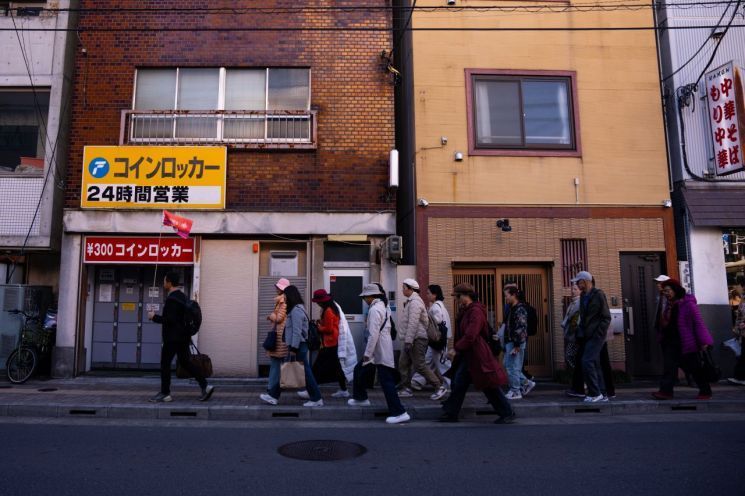
On December 31, Japan’s Nihon Keizai (Nikkei) newspaper, citing the Japanese accommodation booking platform Tripla, reported that a survey of 1,727 hotels nationwide found that hotel bookings from China for next year’s Lunar New Year period (February 5-23) have increased by 57% compared to bookings during this year’s holiday (January 28-February 4).
In a separate survey conducted by Nikkei on 10 major hotel chains during the same period, three chains reported an increase in bookings, five chains saw similar levels as last year, and only two chains responded that bookings had decreased.
Average Room Rate Up 21% Year-on-Year
The average daily rate (ADR) per room also rose, with five out of the ten hotel chains surveyed reporting an increase in ADR. According to Tripla’s data, the nationwide average ADR for next year’s Lunar New Year period is 22,004 yen (approximately 200,000 won), a 21% increase from the previous year.
Kazuhisa Takahashi, CEO of Tripla, analyzed, “This year, the early start of snowfall has driven up demand for skiing among tourists, which in turn has pushed up overall room rates.”
Different from 2012: "Increase in Individual Chinese Travelers"
This stands in stark contrast to 2012, when a controversy over the nationalization of the Senkaku Islands (known as Diaoyu Dao in China) led to a sharp decline in Chinese travelers choosing Japan as a destination. At that time, widespread anti-Japanese sentiment in China triggered large-scale protests, and group bookings by Chinese tourists to Japan were canceled en masse. As a result, the number of travelers from China dropped by more than 40% year-on-year for the same month.
Last month, the Chinese government again urged its citizens to refrain from visiting Japan following remarks by Japanese Prime Minister Sanae Takaichi regarding a possible Taiwan contingency. However, analysts say that this time, the so-called “Hanilryeong” (restrictions on Japanese content and cultural imports) imposed by the Chinese government is unlikely to have a significant impact. This is because the proportion of individual travelers-who are less directly affected by government policies-has increased substantially compared to group tours, which are subject to more direct control.
Japanese real estate services firm CBRE analyzed that while group tours accounted for about 50% of Chinese visits to Japan in the past, this figure has recently dropped to 15.6%, indicating a growing resilience to changes in diplomatic relations.
However, some hotels that have heavily depended on demand from Chinese group tourists remain cautious, saying it is too early to be optimistic. A representative from Hankyu Hanshin Hotels stated, “We are closely monitoring future booking trends.”
© The Asia Business Daily(www.asiae.co.kr). All rights reserved.

















