National Health Screening Committee: "Low Cost-Effectiveness"
Temporary Support for High-Risk Occupational Groups Aged 20 to 49 Only
The target group for the "chest radiography (X-ray) examination," which had previously been uniformly conducted as part of the national health screening program, will now be limited to individuals aged 50 and older, who have a higher incidence rate.
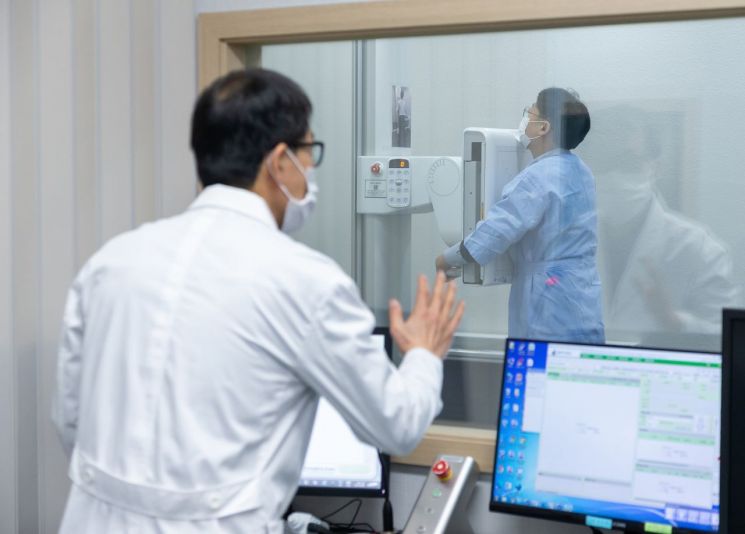
The Ministry of Health and Welfare announced on the 31st that it held the "3rd National Health Screening Committee of 2025" and deliberated and approved the "Improvement Plan for Chest Radiography in National Health Screening," which includes these changes.
Until now, chest radiography has primarily been conducted to detect pulmonary tuberculosis. However, the actual prevalence rate of pulmonary tuberculosis has remained at just 0.04%.
According to the Ministry, as of 2023, the detection rate of pulmonary tuberculosis through chest X-ray screening was only 0.03%, while the screening cost amounted to 142.6 billion won annually. This accounts for about 21% of the total national health screening costs. In addition, the inefficiency of duplicate examinations has been consistently pointed out, as approximately 9 million people undergo chest X-rays through general medical consultations each year, aside from the screenings.
Under the revised plan, starting in 2027, regular chest radiography will be conducted only for individuals aged 50 and above. However, to minimize gaps in tuberculosis management, those aged 20 to 49 in "high-risk occupational groups" with a high risk of infection will be temporarily included in the screening. Eligible groups include legally mandated tuberculosis screening professions such as healthcare workers, employees at workplaces vulnerable to infectious diseases, and handlers of respiratory hazardous agents-covering 70 occupations as defined by the Korean Standard Classification of Occupations.
The Ministry of Health and Welfare plans to apply the new standards from 2027, following a one-year preparation period that will include legal and institutional reviews for selecting high-risk occupational groups, building a database of screening targets, system upgrades, and revisions to the health screening implementation standards.
Furthermore, starting with this revision of the chest radiography screening, the Ministry is considering a systematic overhaul of the national health screening system based on evidence. This will include comprehensive reviews of changes in disease patterns, medical and scientific evidence, and the effectiveness of examinations. Existing screening items with low effectiveness will be revised, and new items deemed necessary will be included after a trial period.
Lee Hyunghoon, Second Vice Minister, stated, "This committee's deliberation is significant as it marks the first time that national health screening items have been revised based on cost-effectiveness," adding, "We will continue to regularly review the validity of screening items to establish a more effective screening system for public health management."
© The Asia Business Daily(www.asiae.co.kr). All rights reserved.

















