December Consumer Price Index Rises 2.3% Year-on-Year
Annual Consumer Inflation Rate at 2.1%, Matching Bank of Korea's November Forecast
"Gradual Decline Expected Next Year Due to Weakness in International Oil Prices"
"Due to the weakness in international oil prices, the inflation rate will gradually decline to around 2%."
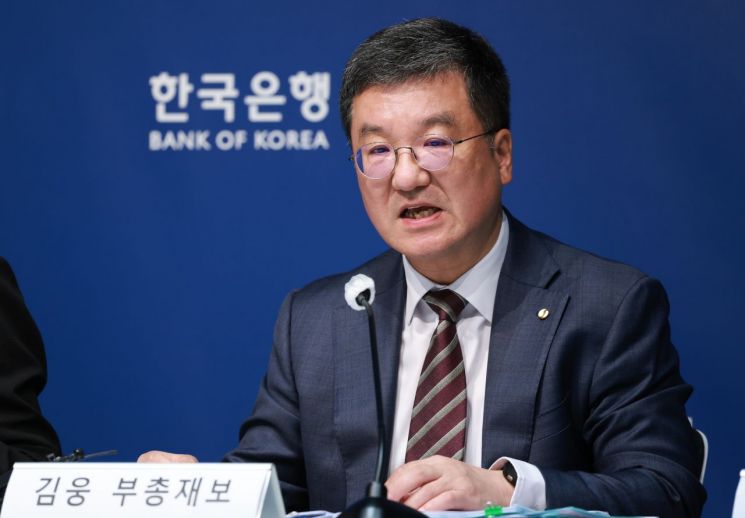
Kim Woong, Deputy Governor of the Bank of Korea, stated at the "Price Situation Review Meeting" held at the Bank of Korea headquarters in Jung-gu, Seoul on December 31, 2025, that "While core inflation is maintaining a stable trend around 2%, the inflation rate will gradually decline to the 2% level due to factors such as the weakness in international oil prices." The Bank of Korea's inflation forecast for next year is 2.1%.
According to the National Data Office on this day, the Consumer Price Index (CPI) for December was 117.57 (2020=100), up 2.3% from a year earlier. This is a 0.1 percentage point decrease from the previous month (2.4%). The core inflation rate remained at 2.0%, the same as the previous month.
It was explained that, despite rising petroleum prices, the slower increase in agricultural, livestock, and fisheries products led to a slight decrease in the overall inflation rate compared to the previous month. Petroleum prices increased by 6.1% year-on-year this month, up from 5.9% last month, due to the high exchange rate, even though international oil prices declined. In contrast, the price increase for agricultural, livestock, and fisheries products narrowed from 5.6% to 4.1%, as a result of increased shipments of major agricultural products and government price stabilization measures.
Deputy Governor Kim explained, "In December, the continued rise in petroleum prices was driven by the high exchange rate, but as expected, the upward trend in agricultural, livestock, and fisheries product prices slowed, resulting in a slightly lower increase compared to the previous month." He added, "The annual consumer price inflation rate was 2.1%, lower than last year's 2.3%."
This month, the living cost inflation rate was 2.8%, a slight decrease from 2.9% in the previous month. Deputy Governor Kim emphasized, "Since the living cost inflation rate remains high at the upper 2% range, we will continue to closely monitor the impact of the exchange rate on prices and the winter trend in agricultural, livestock, and fisheries product prices as we assess the inflation situation."
© The Asia Business Daily(www.asiae.co.kr). All rights reserved.

















