Devoting All Efforts to Revitalizing the Local Economy and Supporting Youth Policies
Kim Taegyun: "Focusing on Restoring Livelihoods Amid Economic Downturn"
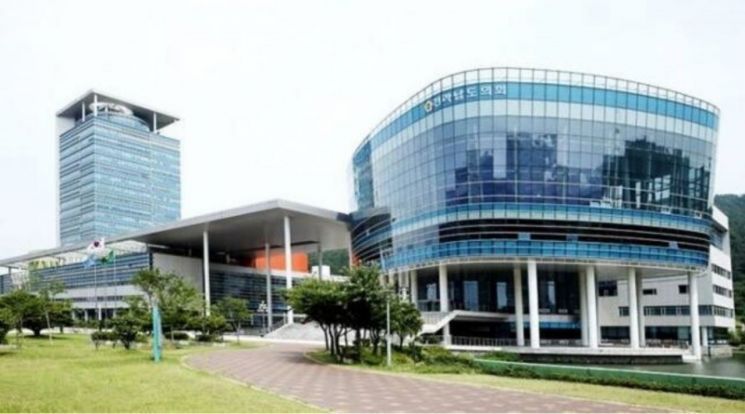
The Jeollanam-do Provincial Council has evaluated itself as having focused on presenting a new future vision for Jeollanam-do throughout 2025, aiming for a major transformation to enhance the happiness and economic index of its 1.8 million residents.
According to the Jeollanam-do Provincial Council on December 31, the council dedicated itself to enacting and amending ordinances, conducting administrative audits, and questioning provincial administration during a total of 136 days of sessions, from the first session of the year (the 387th extraordinary session in February) to the 395th second regular session, which concluded on December 16. During this period, the council handled 604 agenda items.
Specifically, the council deliberated and passed 609 items, including 300 ordinance bills, 146 proposals, 8 resolutions, 53 consent bills, 7 budget bills, as well as rules and approval bills.
Of these, 279 out of the 300 ordinance bills were sponsored by council members, accounting for 92%. This is being recognized as a major achievement in realizing the “hard-working and rewarding council” vision advocated by Chairman Kim Taegyun upon taking office.
Throughout this process, the council prioritized revitalizing the local economy and improving the quality of life for residents through institutional reforms at the grassroots level. It also focused on actively responding to population decline and supporting initiatives for young people.
In particular, by operating six standing committees, 15 council member research groups, and five special committees, the council made every effort to become an active and engaged legislative body. The council covered a wide range of fields through on-site activities, policy development forums, and research activities, working closely with residents and maintaining a hands-on approach.
The number of council member research groups increased from 12 in 2024 to 15 this year. The number of meetings also rose significantly, with 20 roundtable discussions, 3 policy forums, 12 on-site activities, 29 research briefings, and other events. In total, there were 66 such activities, up by 30 compared to 36 during the same period last year, earning the council praise for actively communicating with residents and being proactive in policy development.
Amid a prolonged economic downturn and hardships for residents, the council worked tirelessly this year. As a result of its dedicated efforts to overcome the industrial crisis in the Gwangyang Bay area, following the Yeosu National Industrial Complex, both Yeosu and Gwangyang were designated as regions for proactive response to industrial crises.
Notably, the council’s prompt legislative action led to the meaningful enactment of the “K-Steel Act.”
Furthermore, the council expanded support for credit guarantee fees and interest subsidies for small business owners and the self-employed, raised the discount rate for local gift certificates, and launched campaigns to revitalize traditional markets. Through these and other legislative activities, the council played a vital role in restoring livelihoods and boosting the local economy.
The council was also proactive in stabilizing management and increasing income for those in the agriculture and fisheries sectors, providing robust support for farmers and fishers in Jeollanam-do.
Regarding the long-awaited establishment of a medical school, a 30-year aspiration of residents, the council facilitated the integration of Mokpo National University and Suncheon National University and urged the government to expedite its approval, focusing its legislative efforts on this issue.
Looking ahead, the Jeollanam-do Provincial Council plans to mobilize all its resources to ensure the new medical school in Jeollanam-do opens in 2027.
The council prioritized the allocation of the 2026 budgets for Jeollanam-do and the Jeollanam-do Office of Education, focusing on creating tangible changes in residents’ lives and education with limited resources, given the ongoing domestic demand slump and declining tax revenues. The council thoroughly reviewed and approved these budgets.
The budget submitted by Jeollanam-do was approved at 12.7023 trillion won, an increase of 158.7 billion won (1.3%) from the previous year. The education office’s budget was approved at 4.441 trillion won, a decrease of 444 billion won (9.1%) from the previous year.
This careful and responsible review aimed to eliminate populist and wasteful expenditures and prioritize projects that contribute to stabilizing the local economy and strengthening future competitiveness.
The Jeollanam-do Provincial Council achieved Grade 2 in the 2025 Comprehensive Integrity Assessment of local councils conducted by the Anti-Corruption and Civil Rights Commission, maintaining one of the highest integrity levels among local councils nationwide. The council achieved Grade 2 for four consecutive years since 2019 and reached Grade 1 in 2024.
Although the overall rating was adjusted to Grade 2 this year, no metropolitan council nationwide received Grade 1, effectively making this the highest rating. In particular, the council achieved perfect scores for three consecutive years in the “integrity effort” category, which evaluates anti-corruption efforts and institutional implementation, once again proving its commitment to practical integrity in administration.
Chairman Kim Taegyun stated, “The Jeollanam-do Provincial Council has carried out its legislative work this year with a heavier sense of responsibility than ever before to overcome the prolonged economic downturn and hardships faced by residents. In the coming new year, we will continue to build a resident-centered council that safeguards livelihoods and directly addresses the challenges of regional extinction and population crisis.”
He added, “Next year, together with all council members, we will devote all our efforts to stabilizing livelihoods, reviving the local economy, and realizing sustainable policies for future generations.”
© The Asia Business Daily(www.asiae.co.kr). All rights reserved.

















