KDCA Releases "2023 Cardiovascular and Cerebrovascular Disease Incidence Statistics"
Missing the "golden hour" can be fatal... 20% one-year mortality rate for stroke
As the population ages, the incidence of stroke continues to increase. The occurrence rate of myocardial infarction is more than three times higher in men than in women, requiring particular attention.
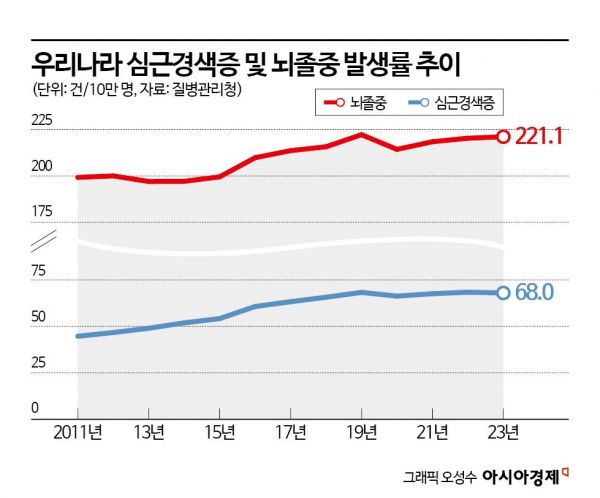
According to the “Cardiovascular and Cerebrovascular Disease Incidence Statistics” announced by the Korea Disease Control and Prevention Agency on December 30, 2025, there were a total of 34,768 cases of myocardial infarction and 113,098 cases of stroke in South Korea in 2023.
Acute myocardial infarction is a condition that occurs when the coronary artery is suddenly blocked, preventing blood from flowing. In 2023, the incidence rate of myocardial infarction was 68.0 cases per 100,000 people. By gender, men had 102.0 cases, which was more than three times higher than women (34.2 cases). By age group, the highest incidence was among those aged 80 and above, at 316.7 cases, and the incidence rate increased with age.
When classified by occurrence, both first-time and recurrent cases were higher among men. In 2023, the proportion of recurrent myocardial infarction among all myocardial infarction cases was 9.6%, an increase of 6.5% compared to 2014, ten years prior. Looking at the age-standardized incidence rate adjusted for population structure by region, Jeonnam (46.9 cases) and Gwangju (41.0 cases) had higher rates, while Sejong (30.0 cases) and Seoul (33.1 cases) were relatively lower.
The 30-day fatality rate, which is the proportion of people who die within 30 days after a myocardial infarction, was 8.9%. After a myocardial infarction, 7.4% of men and 13.5% of women died within 30 days, while among those aged 65 and above, 14.2% died within 30 days. The one-year fatality rate, which is the proportion of deaths within one year after a myocardial infarction, was 16.1%. After a myocardial infarction, 13.5% of men and 23.6% of women died within one year, with the rate being higher among women than men. The fatality rate was highest among those aged 80 and above, and overall, the trend over the past ten years shows a general decrease.
In 2023, the incidence rate of stroke was 221.1 cases per 100,000 people, with 250.3 cases among men and 192.2 cases among women. By age group, those aged 80 and above recorded the highest figure at 1,507.5 cases. Up to age 79, male patients outnumbered female patients, but among those aged 80 and above, the number of female patients surpassed that of males.
Stroke is a condition in which a blood vessel in the brain becomes blocked or bursts, causing damage to the nearby brain area and resulting in neurological symptoms. Since brain cells are difficult to recover once damaged, prompt emergency treatment is extremely important when symptoms appear.
Although the age-standardized incidence rate of stroke has steadily decreased over the past ten years, from 139.7 cases in 2014 to 113.2 cases in 2023, the total number of cases is actually increasing due to the rapid growth of the elderly population.
The 30-day fatality rate after a stroke was 7.5%, with 6.6% for men and 8.7% for women, meaning the rate for women was 2.1 percentage points higher than for men. The fatality rate was highest among those aged 80 and above at 11.9%, followed by 8.0% for those aged 20-29, and 7.4% for those aged 0-19. The one-year fatality rate after a stroke was 19.8%, and among those aged 65 and above, 31.2% died within one year.
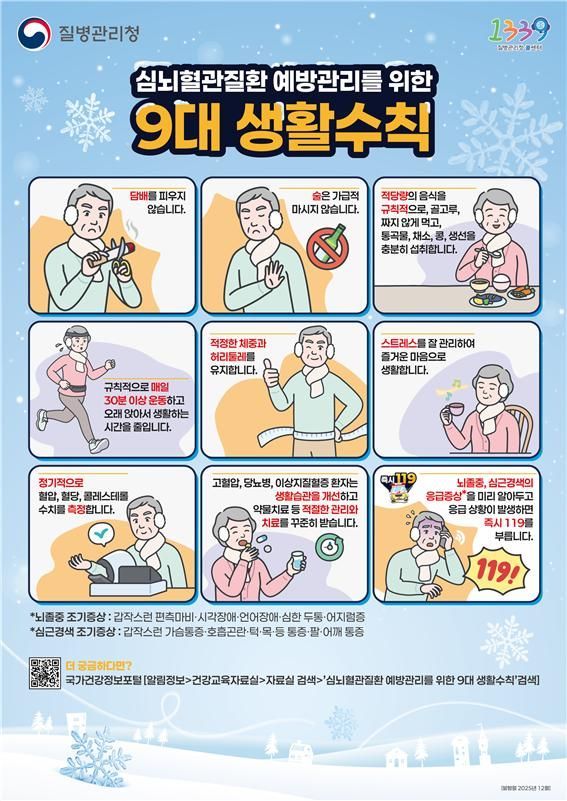
Im Seungkwan, Commissioner of the Korea Disease Control and Prevention Agency, stated, "Although the age-standardized incidence rate of stroke is decreasing, the total number of cases is increasing due to population aging. It is important to consistently practice the 'Nine Rules for the Prevention and Management of Cardiovascular and Cerebrovascular Diseases' and to continuously manage risk factors such as hypertension, diabetes, and dyslipidemia."
© The Asia Business Daily(www.asiae.co.kr). All rights reserved.


















