Medical Community Pushes Back Against Projected Physician Shortage of Up to 36,000
Diverging Interpretations Over Variables Like AI Adoption and Reduced Working Days
Shortage Likely to Be Presented as a "Range" Rather Than a "Single Number"
The Physician Workforce Supply and Demand Estimation Committee, which is discussing the size of medical school enrollment, will hold a meeting on December 30 to reach a final conclusion. Although the government initially aimed to reach a decision within the year, significant differences in opinion among the committee members and resistance from the medical community have made it uncertain whether a final plan will be produced.
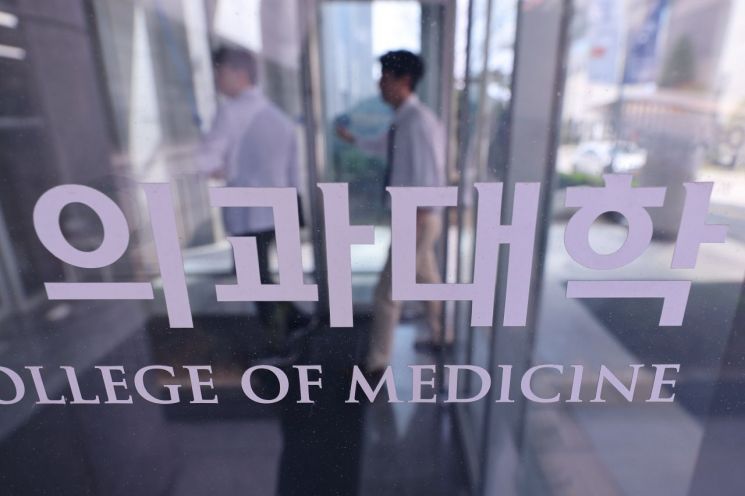
According to the medical community, the committee is scheduled to hold its 12th meeting at a location in Seoul this afternoon, where it plans to finalize and announce its recommendation for medical school enrollment for the 2027 academic year. The committee had intended to wrap up discussions at the 11th meeting on December 22, but internal disagreements prevented a conclusion, as estimates for the physician shortage in 2040 ranged from a minimum of 10,000 to a maximum of 36,000. As a result, an additional meeting was scheduled.
The committee, which consists of government officials, healthcare providers, consumers, and academic experts, has held 11 meetings over five months since its first session in August. As a result, it has narrowed the final demand estimation models down to two: a time series analysis model (ARIMA) using total healthcare utilization as the unit of analysis, and a cohort component model using per capita healthcare utilization. By applying variables such as productivity improvements from artificial intelligence (AI) adoption and a reduction in physicians' working days, the committee projected that in 2040, the physician supply would be about 133,000, while demand would range from 142,000 to 169,000 depending on the variables. The estimated physician shortage, therefore, is expected to vary widely from 10,000 to 36,000 depending on the model and scenario.
The medical community has objected to the committee's analytical approach, arguing that simply calculating the number of physicians is insufficient. They insist that the concept of a "full-time equivalent (FTE)" index, which reflects the actual time physicians spend treating patients, should be incorporated.
Criticism was also raised about the limitations of the time series analysis method used for demand forecasting. Kim Taekwoo, President of the Korean Medical Association, stated, "The model used by the committee predicts future values by analyzing past data patterns, but the results can vary significantly depending on the reference point chosen for analysis. This approach makes it difficult to guarantee statistical validity."
As a result, there is a prevailing view within the committee that, rather than determining a "single number" for the physician shortage, it should be presented as a "range" that varies according to supply and demand assumptions. Since the committee is a professional advisory group that provides the evidentiary basis for policy decisions, rather than making policy decisions itself, it aims to focus on demonstrating an objective and reliable estimation process to persuade both the medical community and the public.
Previously, the government had sought to increase the medical school enrollment quota, which had been capped at 3,058 since 1998, by 2,000. However, as conflicts between the government and the medical community intensified, the quota for the 2026 academic year reverted to 3,058. Instead, the committee was established to recommend the 2027 quota within this year. The final enrollment quota will be determined based on the committee's discussions, followed by policy deliberation by the Health and Medical Policy Review Committee (HMPRC), and finalized through consultation between the Ministry of Health and Welfare and the Ministry of Education. As of now, the leading scenario is to confirm and announce the future medical school enrollment quota, including the regional physician track, in January next year.
At the first HMPRC meeting of the year held the previous day, it was decided that five criteria would be comprehensively considered to restore public trust and enhance predictability regarding physician workforce training: 1) addressing regional, essential, and public healthcare disparities; 2) responding to changes in the future healthcare environment due to demographic shifts and technological advancements; 3) improving the healthcare delivery system and related policy changes; 4) ensuring the quality of medical education; and 5) ensuring stability through workforce supply and demand projections every five years.
© The Asia Business Daily(www.asiae.co.kr). All rights reserved.
![Clutching a Stolen Dior Bag, Saying "I Hate Being Poor but Real"... The Grotesque Con of a "Human Knockoff" [Slate]](https://cwcontent.asiae.co.kr/asiaresize/183/2026021902243444107_1771435474.jpg)
















