Trump Faces Controversy Over Fed Independence
All Leading Chair Candidates Support Rate Cuts
Powell's Dismissal and Lisa Cook Lawsuit Add to Uncertainty
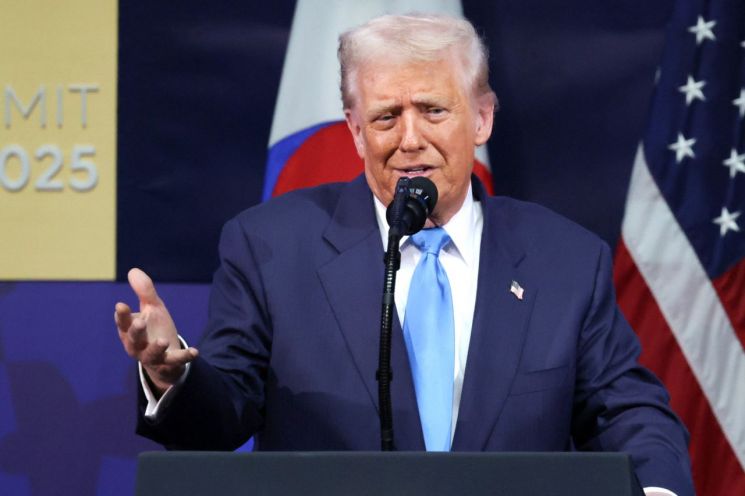
As U.S. President Donald Trump is expected to announce his nomination for the next Federal Reserve (Fed) Chair soon, concerns among investors are growing. This is because, unlike current Chair Jerome Powell, who has maintained the Fed's independence, leading candidates are seen as likely to align with the Trump administration's policy direction.
According to the Wall Street Journal (WSJ) on the 28th (local time), market experts have warned that a weakening of the Fed's independence could pose a significant threat to the economy and financial markets. The cost of borrowing in the United States is influenced by long-term U.S. Treasury yields. These yields are determined by the short-term interest rates that investors expect, rather than the current rates.
If the Fed aggressively cuts interest rates in a healthy economic environment rather than during a recession, it could trigger inflation. Concerns that the Fed would then need to raise its benchmark rate to control inflation could push up Treasury yields and borrowing costs. A sharp rise in market interest rates would also increase anxiety in the stock market.
The Federal Open Market Committee (FOMC), which determines the U.S. benchmark interest rate, consists of 12 members, including the Fed Chair. The FOMC is made up of seven Fed Board Governors appointed by the President and five regional Federal Reserve Bank presidents (out of twelve, who rotate voting rights). While the Fed Chair can exert significant influence over the FOMC, they do not have the authority to set the benchmark rate alone. For this reason, concerns about independence have not previously arisen in the market.
On Wall Street, there is a belief that President Trump could undermine the Fed's independence. One concern is the potential dismissal of Jerome Powell as Chair, especially since a majority of the Fed Board members were appointed by Trump. When news broke last July that President Trump was considering Powell's dismissal, the stock market fell and Treasury yields rose.
Another variable is the Supreme Court ruling related to the dismissal of Fed Governor Lisa Cook. In October, President Trump dismissed Cook on allegations of falsifying mortgage documents. After both the first and second trials, the Supreme Court also refused to allow her immediate dismissal, and an appeals process is now underway.
Blake Gwinn, Head of U.S. Rates Strategy at RBC Capital Markets, pointed out, "If the number of Trump-appointed Fed Board members increases to three, the possibility of dismissing the Fed Chair will rise, which could create anxiety in the market."
Even if such scenarios do not materialize, market concerns are likely to grow. It is explained that deepening disagreements within the Fed alone could impact the markets. Some expect a situation in which the next Chair pushes for rate cuts while other Board members oppose, as it is rare for the Fed Chair to decide the benchmark rate unilaterally in the U.S.
John Briggs, Head of U.S. Rates Strategy at Natixis Corporate & Investment Banking, noted, "As the views of each FOMC member carry more weight, uncertainty over the path of interest rates will increase, which could ultimately raise volatility in the bond market."
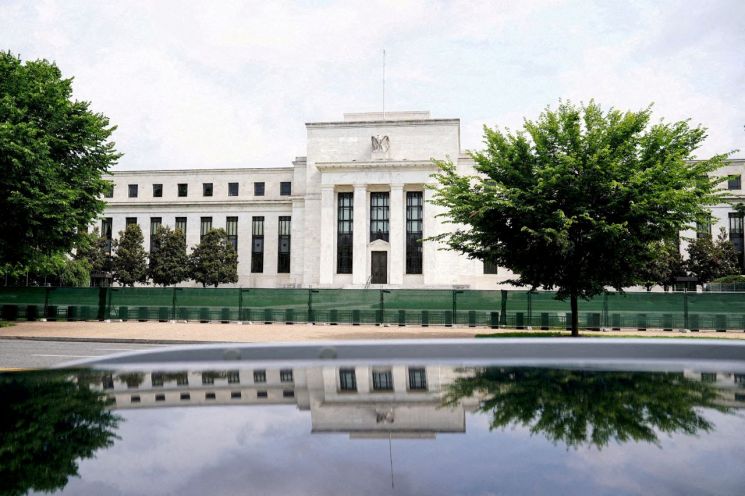
In fact, over the past few weeks, the yield spread between short-term and long-term U.S. Treasuries has widened. This is interpreted as investors expressing concern over the Fed's independence. While a short-term rate cut is expected, there is also a belief that long-term market rates could rise.
To avoid such turmoil, there are hopes that the Fed will work to narrow internal disagreements and reach consensus on additional rate cuts. Over the past 15 months, the Fed has lowered its benchmark rate from 5.25%-5.55% to 3.5%-3.75%.
President Trump insists that the rate should fall below 1% within a year, but the market believes that it would not be problematic if the next Chair implements moderate rate cuts based on economic data. Brian Whelan, Chief Investment Officer of Fixed Income at TCW, said, "By the time the next Chair takes office and begins their first meeting, they will have much more information, and there will likely be greater support for rate cuts."
© The Asia Business Daily(www.asiae.co.kr). All rights reserved.
![Clutching a Stolen Dior Bag, Saying "I Hate Being Poor but Real"... The Grotesque Con of a "Human Knockoff" [Slate]](https://cwcontent.asiae.co.kr/asiaresize/183/2026021902243444107_1771435474.jpg)

















