Mandatory Liability Insurance Urged for Training Hospital Designation
32% of Defendants in Emergency Cases Are Residents
Insurance Without Criminal Coverage Is Useless
"Urgent Need to Raise Compensation Limits"
As "judicial risk" is increasingly cited as a key cause for the avoidance of essential medical fields directly linked to life, there has been a call to make liability insurance mandatory as part of the requirements for designating training hospitals to better protect medical residents. The argument is that the excessive legal responsibility faced by residents during their training should be shared by hospitals and the system itself.
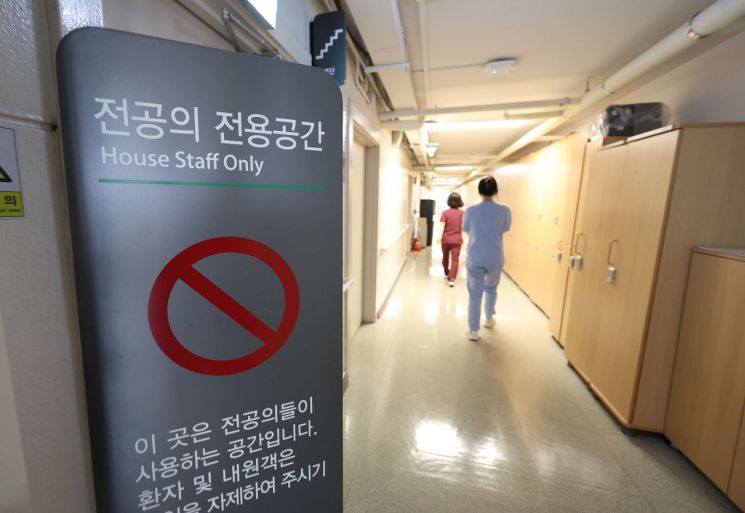 The Korean Intern Resident Association insisted on mandatory subscription to compensation insurance for residents. Photo unrelated to the article. Photo by Yonhap News.
Park Changyong, Policy Director of the Korean Intern Resident Association, conveyed the voices from the field regarding the introduction of effective liability insurance for residents at a policy meeting with the Ministry of Health and Welfare on the 27th. Park strongly urged that mandatory subscription be specified in the criteria for designating training hospitals, stating, "If liability insurance is left to the discretion of each hospital, residents at hospitals with poor financial conditions will still be left legally unprotected."
The background to this argument lies in the current judicial reality faced by residents. According to an analysis published in the Korean Journal of Emergency Medicine, residents accounted for about 32% of defendants in criminal cases related to emergency medical care from 2012 to 2021-the second highest proportion after specialists. This highlights how residents, who are still in training, are placed at the forefront of legal responsibility when medical accidents occur.
Park pointed out the fundamental reason why residents avoid essential medical fields, saying, "The more a specialty deals with life, the more criminal complaints are concentrated. Even if a not-guilty verdict is ultimately reached, the mental and financial burden experienced during the investigation process can ruin an individual's life."
Although the government is currently promoting a program to support liability insurance premiums for residents in eight essential specialties, including internal medicine, surgery, and obstetrics and gynecology, there is criticism from the field that this is only a "half-measure." The main points of criticism are that the supported specialties are limited and, most importantly, that criminal protection measures-what residents fear most-are not included.
The Korean Intern Resident Association emphasized that insurance excluding protection for criminal judicial procedures is essentially hollow. Accordingly, they recommended that criminal special clauses must be included in the insurance, and that compensation limits should also be substantially raised according to the risk level of each specialty.
© The Asia Business Daily(www.asiae.co.kr). All rights reserved.

















