The Hidden Conflicts Behind the "K-Pop Demon Hunters" Craze
A Test of Vitality Between Industry and Art
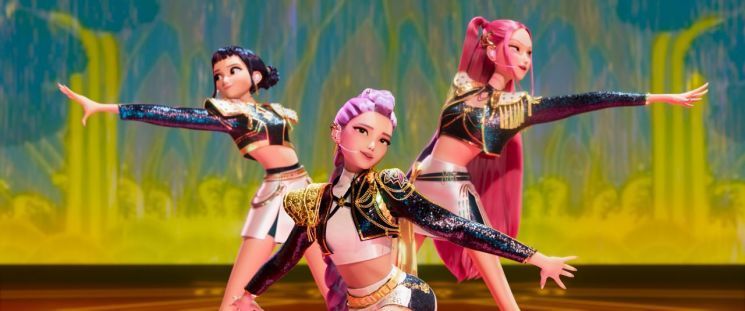
Despite a year of glory for K-pop, marked by the record-breaking success of "K-Pop Demon Hunters," analysts say the industry is now at a turning point, facing internal fractures such as legal disputes and slowing growth.
On December 25 (local time), The New York Times analyzed the underside of the K-pop industry through a critique by pop music critic Jon Caramanica, expressing concern that the "production system" that has sustained K-pop for the past 30 years may no longer be effective.
This year, K-pop cemented its place in global mainstream culture, with the Netflix film "K-Pop Demon Hunters" setting an all-time viewership record and topping the Billboard charts for eight weeks. However, The New York Times interpreted the film as an allegory of K-pop's formula for success, highlighting the intense tension between the standardized production system and artistic autonomy.
The New York Times cited the legal dispute between HYBE and NewJeans (ADOR) as a prime example of the industry's cracks. Caramanica described NewJeans as "a group that displays vibrant humanity even under strict constraints," and analyzed that their trajectory could become a benchmark pushing the K-pop industry to pursue not just superficial growth, but also "aesthetic value" and "artistic autonomy."
In particular, innovations occurring outside the agency system were presented as alternatives to overcome fatigue with the massive production model. Caramanica ranked "pullup to busan" by independent artist Effie-who is not affiliated with a major agency-as his top album of the year. This suggests that K-pop's vitality no longer relies solely on large-scale production systems, and that pioneers breaking free from the system's control are opening new paths.

Additionally, the global success of "Apartment (APT.)," a collaboration between BLACKPINK's Ros? and Bruno Mars, was cited as an example of K-pop stars breaking boundaries by merging with other genres instead of being confined to their established identities. The New York Times also mentioned the rise of multinational group Cat's Eye, diagnosing that K-pop is evolving beyond the genre of any particular country to become a "language" and "process" shared worldwide.
If the return of BTS next year is considered a "sure bet" to inject massive profits and energy into the industry, the rise of indie acts such as Effie, The Deep, and Kimjei is seen as a new root that will ensure K-pop's sustainability.
Caramanica added an optimistic outlook, stating, "This year is when the cracks between the K-pop industry and its artistic form have become most apparent, but it is also the year when artists raised under the rigid framework of production are achieving true artistic liberation." Ultimately, he analyzed that as the grip of major agencies weakens, a new chapter of K-pop is opening up-one in which the individual "authenticity" of artists shines through.
© The Asia Business Daily(www.asiae.co.kr). All rights reserved.


















