Preserving and Passing Down Regional History and Cultural Diversity
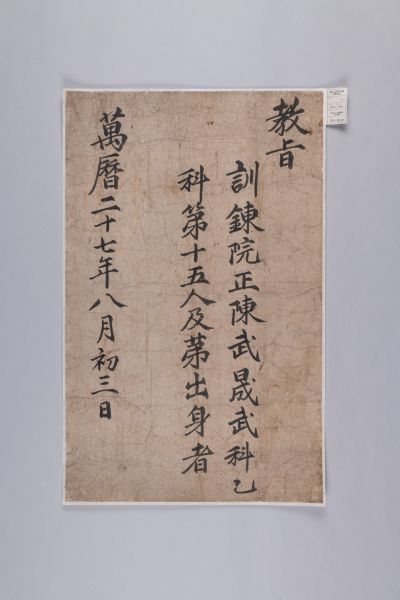
Jeollanam-do Province has newly designated five items, including the Ancient Documents from Muyeolsa Temple in Goheung and the Deulsori folk song of Neungju in Hwasun, as provincial tangible and intangible cultural heritage. These items are recognized for their outstanding historical and academic value, as well as for embodying traditional skills and community culture.
This designation aims to systematically preserve the historical significance and cultural diversity of the Jeollanam-do region and to pass down the unique local cultural identity to future generations.
According to Jeollanam-do Province on December 26, the "Ancient Documents from Muyeolsa Temple in Goheung" are a collection of documents that chronicle the history of a military official family during the Joseon Dynasty. The collection consists of 70 documents spanning five generations of Jin Museong (1566-1638), who was awarded the first-class honor of Meritorious Subject during the Japanese invasions of Korea, and his family.
The collection includes various types of materials such as Hongpae (royal certificates), Gyoji (official appointments), Hogudanja (household registers), and personal letters. These documents provide detailed insights into individuals and rural society not recorded in official government publications, and are regarded as having significant academic value for research on the Imjin War and the military official class of the late Joseon period.
In addition, master craftsman Oh Kyungsik (born in 1947) has been recognized as a holder of the intangible cultural heritage title of "Traditional Musical Instrument Maker" in Jeollanam-do Province. He has inherited the traditional skills of making Korean musical instruments, having been taught the traditional janggu (double-headed drum) crafting techniques by the late Kang Sawon, a previous holder of this title in the province. He is currently the only person to have fully preserved these traditional methods. His role in preserving and transmitting traditional instrument-making techniques, especially at a time when this craft is at risk of disappearing, has been highly praised.
Three items, including Deulsori (field songs) and Gilsamnorae (weaving songs), which are songs of local community life, have been newly designated as intangible cultural heritage.
The "Deulsori of Neungju, Hwasun" is a traditional work song that vividly reflects the cooperation and bonds within the agricultural community, and its value is heightened by the fact that it continues to be passed down by local residents themselves.
The "Gilsam Song of Naepyeong-ri, Hwasun" and the "Gilsam Song of Sopori, Jindo" are folk songs sung during the weaving process, retaining historical significance and regional characteristics accumulated over a long period as academic materials. In particular, the Jindo weaving song has been recognized as a unique traditional folk song that has actively incorporated and localized external musical elements.
Kang Hyoseok, Director of the Bureau of Cultural Prosperity of Jeollanam-do Province, stated, "The heritage of Jeollanam-do is not a relic of the past, but a living record of life today," emphasizing, "We will continue to actively discover hidden regional heritage and strengthen policies to protect them together with the residents."
Along with this designation, three additional items, including the Stone Standing Buddha Statue of Juksan-ri in Gokseong and the title of "Piljang" (traditional brush maker), have been preliminarily announced for designation as provincial cultural and intangible heritage. The final decision will be made after a 30-day notice period and a review by the Jeollanam-do National Heritage Committee.
© The Asia Business Daily(www.asiae.co.kr). All rights reserved.

















