Guidelines have been issued to slow the progression of myopia in children and to detect complications at an early stage.
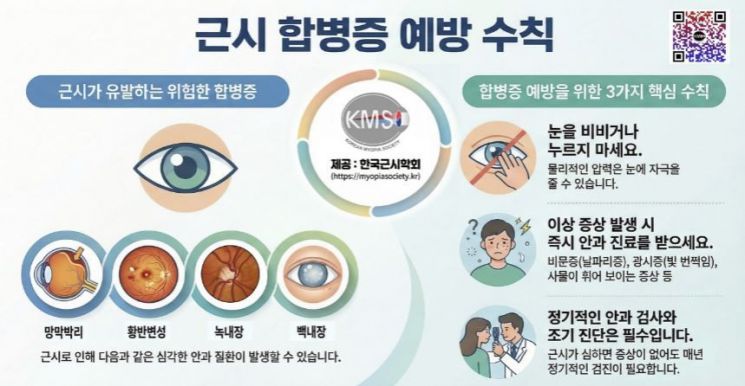
The Korean Myopia Society (KMS) announced on December 23 that it has officially released the nation's first "Guidelines for the Prevention and Management of Myopia in Children and Adolescents." Park Kiho, President of the Korean Myopia Society, stated, "Myopia progression can be significantly slowed with early diagnosis," adding, "We hope these recommendations will serve as practical standards both in clinical settings and at home."
The new guidelines define myopia as a progressive disease that not only causes vision deterioration but also increases the risk of developing retinal detachment, macular degeneration, glaucoma, and cataracts as individuals reach adulthood. Accordingly, the guidelines stress the importance of early diagnosis and lifestyle management for prevention.
The most effective preventive measure is engaging in outdoor activities for at least two hours a day. According to related studies, children who spend time outdoors experience a 30-50% reduction in myopia progression compared to those who engage only in indoor activities. The guidelines also emphasize creating a proper learning environment. When studying or reading, children should maintain an appropriate distance between their eyes and the desk, adopt correct posture, and minimize the use of smart devices. In addition, parents should not wait for children to report vision problems themselves but should ensure they receive annual eye examinations to monitor their condition. Glasses or contact lenses should only be prescribed and fitted after an examination by an ophthalmologist, as incorrect prescriptions can accelerate myopia progression.
The guidelines also cover preventive measures for complications in patients with high myopia. High myopia is a major risk factor for serious diseases such as retinal detachment, which can lead to blindness, beyond mere vision problems. To prevent complications, patients should avoid physically stimulating their eyes, such as rubbing or pressing on them. If symptoms such as an increase in floaters, flashes of light, visual field defects or blurriness, sudden vision loss, or distorted vision appear, immediate ophthalmic consultation is required. For those with high myopia, even in the absence of symptoms, annual specialized examinations using equipment to check the retina, optic nerve, and intraocular pressure are essential for managing complications.
Meanwhile, the Korean Myopia Society is an academic organization established to promote research and share clinical insights on the prevention, diagnosis, treatment, and management of complications related to myopia. The society holds regular symposia with ophthalmology specialists from Korea and abroad to comprehensively discuss the latest research and treatment strategies, including methods to control myopia progression and examinations for high myopia. Through these efforts, the ultimate goal is to enhance the expertise of domestic medical professionals and reduce the risk of blindness caused by myopia, thereby improving the nation's eye health. More detailed information about these guidelines and the society's activities can be found on the Korean Myopia Society website.
© The Asia Business Daily(www.asiae.co.kr). All rights reserved.

















