Sankei and Fuji News Network Conduct Survey
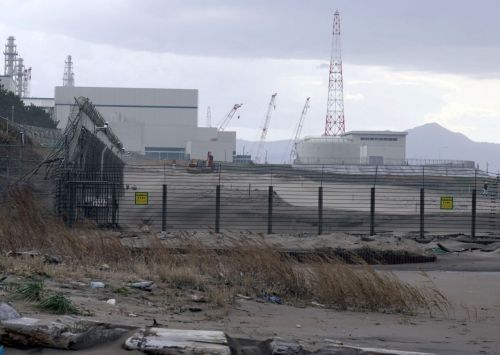 Panoramic view of Tokyo Electric Power Company (TEPCO) Kashiwazaki-Kariwa Nuclear Power Plant. Photo by Reuters Yonhap News Agency
As the Japanese government under Sanae Takaichi is showing signs of returning to nuclear power for economic reasons, a recent survey found that 64 out of every 100 Japanese people support restarting nuclear power plants.
The Sankei Shimbun reported on December 23 that, according to a telephone survey conducted jointly with Fuji News Network (FNN) on December 20-21 with 1,021 respondents, 64.4% said they support the restart of nuclear power plants. The percentage of those who said they do not support it was 29.1%.
However, there were regional differences. In the Hokuriku-Shinetsu region, which includes Niigata Prefecture-home to the Tokyo Electric Power Company (TEPCO) Kashiwazaki-Kariwa Nuclear Power Plant, which is expected to partially restart next month-the percentage of respondents who said they do not support the restart (49.7%) exceeded those who said they do (46.1%). In contrast, in Hokkaido, support for the restart reached 68.3%.
The Japanese government suspended the operation of all nuclear power plants nationwide following the 2011 Fukushima nuclear accident, but the Liberal Democratic Party, which returned to power the following year, scrapped the zero-nuclear policy. Since then, after supplementing safety measures, nuclear plants have been restarted one by one, and currently 14 reactors are in commercial operation.
Notably, as of the previous day, TEPCO’s Kashiwazaki-Kariwa Nuclear Power Plant, which was responsible for a previous nuclear accident, has essentially completed the local consent process and is expected to restart around January 20. This will be the first time since the 2011 Fukushima Daiichi Nuclear Power Plant accident that TEPCO, the operator of the plant at the time, will restart a nuclear reactor.
Before the Great East Japan Earthquake, there were 54 nuclear reactors in Japan. However, after the Fukushima Daiichi accident, all nuclear plants were temporarily shut down, and since then, some have resumed operation, with 14 reactors currently in commercial operation. The Japanese government is increasing the operation rate of nuclear power plants to reduce dependence on imported fossil fuels. The Nihon Keizai Shimbun (Nikkei) also predicted that the restart of the Kashiwazaki-Kariwa plant would contribute to the stability of electricity supply in the Tokyo metropolitan area.
Meanwhile, in this survey, 75.9% of respondents said they support the Sanae Takaichi Cabinet. After Prime Minister Takaichi’s remarks on November 7 suggesting possible intervention in a Taiwan contingency, which sparked tensions between China and Japan, 59.6% of respondents positively evaluated the Japanese government’s response, significantly higher than those who did not (29.5%).
© The Asia Business Daily(www.asiae.co.kr). All rights reserved.
![Clutching a Stolen Dior Bag, Saying "I Hate Being Poor but Real"... The Grotesque Con of a "Human Knockoff" [Slate]](https://cwcontent.asiae.co.kr/asiaresize/183/2026021902243444107_1771435474.jpg)
















