Leaving Sejong for Busan... Opening Ceremony Today
Hopes for Stronger Field-Oriented Maritime Policy
Administrative Efficiency Remains a Challenge
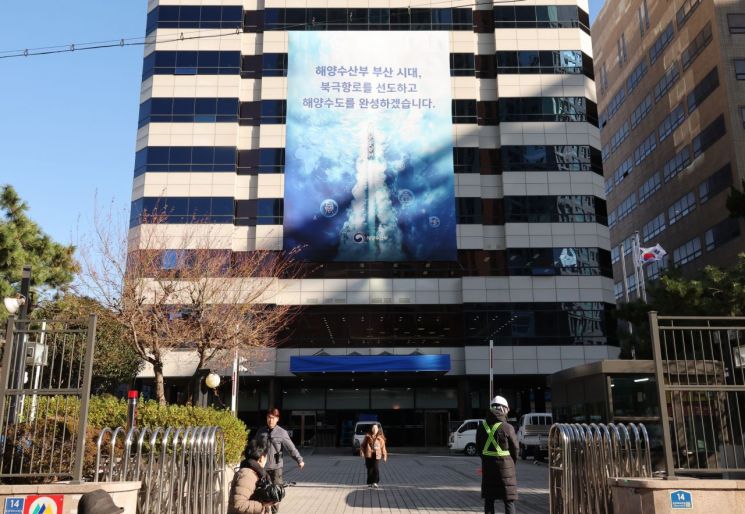
The Ministry of Oceans and Fisheries will officially usher in the 'Busan Era' on December 23 by holding an opening ceremony at its new Busan headquarters. This marks the first time a central government ministry headquarters has independently relocated to a regional city. As the ministry leaves Sejong and settles in Busan, the hub of port, shipping, and fisheries industries, there is growing interest in the practical impact of maritime policy and changes to the administrative structure. At the same time, concerns are being raised regarding the efficiency of central administration, policy continuity, and the sustainability of support for settling in the new location.
This relocation holds symbolism beyond a mere office move. It is the first time Busan's long-declared vision of becoming a 'maritime capital' is being realized through the physical relocation of a central administrative body. Despite being a key hub for the maritime, fisheries, and shipping industries, Busan has long been perceived as somewhat removed from the center of policy decision-making. There are high hopes that this move will serve as a turning point, narrowing the gap between administration and industry.
The Ministry of Oceans and Fisheries has emphasized that relocating to Busan will enhance the field relevance and speed of policy implementation. With both the North Port and New Port, Busan is a city densely populated with shipping companies, port operators, and fisheries distribution networks. The logic is that if the policy-making ministry is present on the ground and interacts daily with the industry, industrial needs can be reflected more swiftly, and crisis response capabilities can be strengthened. In particular, as the government pursues major maritime agendas such as developing Arctic shipping routes and enhancing global shipping and logistics competitiveness, the ministry's physical move is seen as directly linked to policy execution.
The Busan Metropolitan Government also views this opening as a starting point for its leap toward becoming a maritime capital. Leveraging the ministry's relocation, the city plans to accelerate its strategy to create a cluster by attracting additional public maritime and fisheries agencies, headquarters of shipping companies, and consolidating maritime finance and research functions. The expectation is that if administration, execution, and industry are all concentrated in one city, the maritime policy ecosystem will function more dynamically. In fact, in line with the 'Maritime Capital Busan' initiative, shipping companies such as SK Shipping and H-Line Shipping have recently decided to relocate their headquarters. After amending their articles of incorporation and completing registration early next year, they plan to establish offices in Busan and commence operations in the first half of the year.
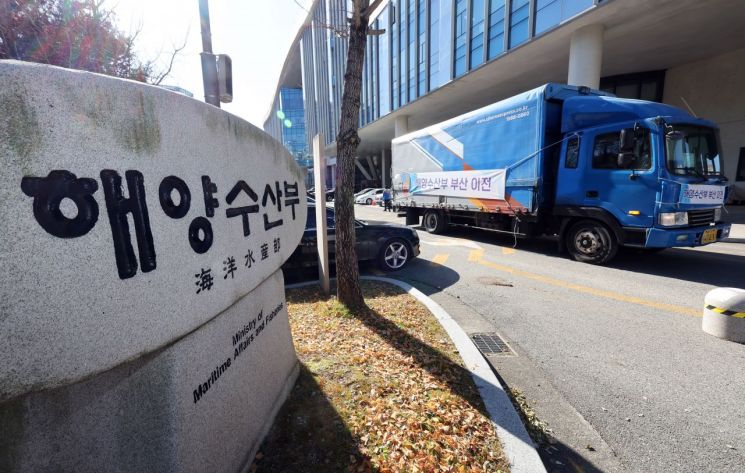
The ripple effect on the local economy is also drawing attention. As a majority of ministry employees begin working in Busan, there are signs of change in the commercial districts and housing market near the new headquarters. While relocating public agencies is not a cure-all for revitalizing the local economy in the short term, the symbolism of having a central government ministry headquarters based locally is injecting significant vitality into the region.
The Busan Metropolitan Government is also supporting the ministry's settlement. Over four years, a total of 77.1 billion won will be invested to assist ministry employees with housing and resettlement. The package includes 100 official residences, a relocation settlement allowance of 4 million won per person, a monthly settlement support payment of 400,000 won for four years, scholarships and childcare support for children, and assistance with brokerage and registration fees. It has been calculated that, for a family of three, the total support could amount to approximately 46.7 million won.
The ministry's relocation to Busan has also led to a significant increase in the number of civil servants from other ministries wishing to transfer. According to the ministry, about 160 civil servants applied to work at the ministry during the relocation process, with a substantial portion coming from other regions, such as the Ministry of Trade, Industry and Energy and the Ministry of Health and Welfare. Within the ministry, there is an interpretation that the move is not simply a 'talent outflow,' but rather an opportunity for talent inflow. As civil servants from other ministries with a strong interest in maritime and fisheries policy prefer to work in Busan, there is hope that the organization's competitiveness will be strengthened.
However, concerns are as clear as the expectations. Above all, the fact that the Busan Era is beginning while the minister's position is vacant is seen as potentially undermining the significance of the maritime capital initiative. Since the relocation is not just an organizational move but a matter of shifting the direction of national maritime policy, many argue that clear political leadership is essential. Going forward, a key issue will be whether the next minister can strongly drive the maritime capital initiative.
Administrative efficiency is also being put to the test. The current Busan headquarters is a temporary facility, operating with a main building and an annex. As a result, increased movement between sites and the burden of interdepartmental collaboration are inevitable. More fundamentally, there is the issue of distance from other central government ministries and the National Assembly, which remain in Sejong and Seoul. Since the ministry's work structure frequently requires coordination with multiple ministries on matters such as budgeting, permits, and foreign affairs and trade, concerns persist that the costs of face-to-face consultations may increase.
The sustainability of settlement is another challenge to be addressed. While the city has introduced large-scale support measures to help ministry employees settle into their new homes and lives, it remains uncertain whether conditions will allow staff to remain in Busan once the support ends. Issues such as education, healthcare, employment opportunities for spouses, and the burden of housing costs are expected to become increasingly important over time. The movement of personnel and organizational changes surrounding the ministry's relocation to Busan are expected to serve as indicators of whether the maritime capital initiative will make substantial progress in the future.
© The Asia Business Daily(www.asiae.co.kr). All rights reserved.


















