Employment Permit System Quota Reduced After Years of Growth
"Reflecting Decline in Manufacturing and Construction Jobs"
The government has decided to set the foreign workforce quota under the Employment Permit System (E-9 visa) for next year at 80,000. The separate quota for the shipbuilding industry, which had been operated with a set deadline until this year, will not be extended. The pilot program for foreign domestic workers, which has been a subject of debate since last year, will not be expanded into a full-scale project.
On the 2nd, the government held a meeting of the Foreign Workforce Policy Committee at the Government Complex Seoul and finalized the "2026 Plan for the Introduction and Operation of Foreign Workforce (E-9)."
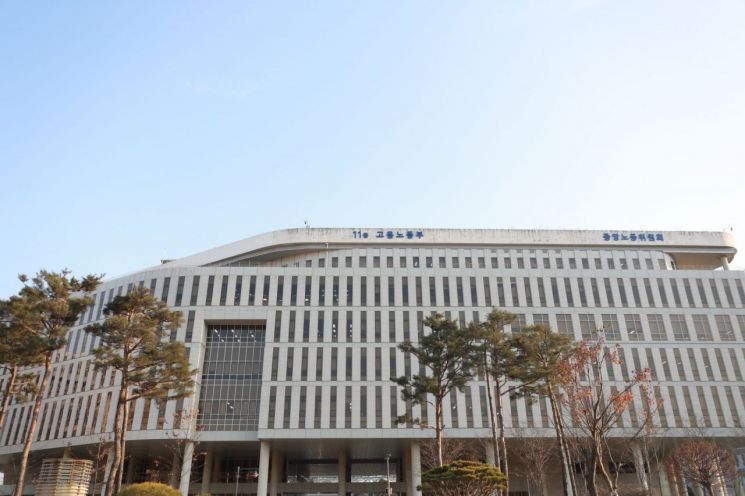
At the meeting, the government decided on next year's E-9 foreign workforce quota at 80,000, taking into account a comprehensive analysis of labor market trends by industry, the results of on-site demand surveys from employers and relevant ministries, and other factors. This is a reduction of 50,000 compared to this year’s quota of 130,000.
The government explained, "The temporary surge in demand for foreign workers immediately after the spread of COVID-19 has been largely met, so the scale of employment permit issuances has stabilized to pre-pandemic levels. In addition, there has been a clear decline in job vacancies in the manufacturing and construction sectors in recent times."
Next year's quota will be divided into 70,000 for industry-specific allocation and 10,000 for flexible allocation. The industry-specific quota will be distributed as follows: 50,000 for manufacturing, 10,000 for agriculture and livestock, 2,000 for construction, 7,000 for fisheries, and 1,000 for services. The flexible allocation can be used for any sector as needed on-site, regardless of industry classification.
The separate quota for the shipbuilding industry, which was temporarily in place from April 2023 until this year, will end at the close of this year. From next year, shipbuilding workforce needs will be met within the manufacturing quota as before. The government expects that this will not cause difficulties in securing shipbuilding workers.
However, the government stated, "To address concerns on the ground, a joint task force on shipbuilding workforce supply and demand will be established with relevant ministries," adding, "We will continuously monitor the on-site workforce situation." The government also said, "If difficulties in workforce supply arise, we will take immediate action," and "We will also seek ways to expand domestic employment in shipbuilding by improving working conditions."
The government will also change employment limits for regional workplaces. For manufacturing companies outside the Seoul metropolitan area, the additional employment limit will be raised from the current 20% to 30%. In addition, manufacturing reshoring companies located outside the metropolitan area will be allowed to hire foreign workers regardless of company size. The cap on additional foreign hires (currently 50 workers) will also be lifted.
Among industries allowed to employ foreign workers (such as crop cultivation), certain sectors that previously had no employment limits-such as the cultivation of rice, barley, millet, sorghum, potatoes, and other grains and food crops-will now have new standards and regulations established. This is to address labor shortages in rural areas caused by the aging farming population.
Furthermore, the pilot program for foreign domestic workers will not be expanded into a full-scale project or lead to further introduction of domestic workers. However, to ensure stability for existing domestic workers, measures such as extending their employment period, in line with E-9 workers, will be applied.
Kwon Changjun, Vice Minister of Employment and Labor, said, "With the number of foreign workers reaching 1.1 million, we will systematize the supply and demand design to ensure that foreign labor is appropriately utilized in sectors where it is needed." He added, "We will also pursue institutional improvements to enhance the skills and protect the rights and interests of foreign workers."
© The Asia Business Daily(www.asiae.co.kr). All rights reserved.
![Clutching a Stolen Dior Bag, Saying "I Hate Being Poor but Real"... The Grotesque Con of a "Human Knockoff" [Slate]](https://cwcontent.asiae.co.kr/asiaresize/183/2026021902243444107_1771435474.jpg)
















