Policy Seminar Hosted by Park Sooyoung's Office
"Inflation Tax Burden... Needs to Be Addressed with an Inflation-Indexed Tax System"
As high inflation persists over the long term, there have been calls to introduce an "inflation-indexed tax system" to prevent the problem of increasing tax burdens even when real income does not rise in line with price increases.
On December 22, Park Sooyoung, the opposition secretary of the National Assembly's Strategy and Finance Committee and a member of the People Power Party, held a policy seminar at the National Assembly under the theme "Plans for Introducing an Inflation-Indexed Tax System" and shared these views. The inflation-indexed tax system would automatically link tax base brackets and similar thresholds to the consumer price index.
Park stated, "Despite rising prices, tax base brackets and deduction systems have remained fixed for a long time, resulting in what is known as 'inflation taxation,' where the real tax burden increases even without raising tax rates. It is necessary to consider improving the tax system to enhance its stability and predictability."
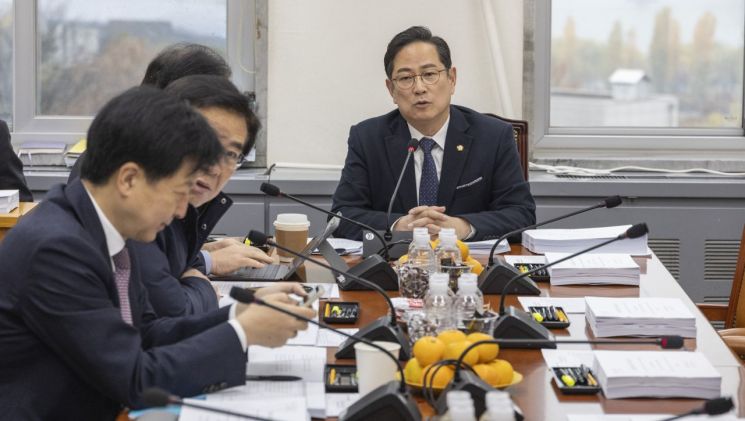
Ko Kwangyong, Director of Policy at the Center for Free Enterprise and the keynote speaker, explained, "Over the past decade, both consumer and living costs have risen sharply, but tax standards have failed to keep pace, resulting in a structural increase in income tax burdens. The inflation-indexed tax system is not a new tax cut policy, but rather a minimum institutional safeguard to correct distortions in real tax burdens caused by inflation."
Director Ko proposed introducing an inflation-indexed income tax system based on the models of the United States and Canada. This would involve fully indexing tax brackets to the inflation rate, so that the real tax base remains the same each year. For example, if an individual earning 64 million won in 2020 were subject to the inflation-indexed income tax, their income tax for this year would decrease by 1 million won.
Kwon Sungjun, a research fellow at the Korea Institute of Public Finance and a panelist, also agreed on the necessity of the inflation-indexed tax system. However, he argued that the income tax system should be rationalized before introducing such a system. Kwon pointed out issues such as the excessively detailed eight-tier tax rate structure and the deduction system focused on wage earners, warning, "If the inflation-indexed system is introduced without rationalizing the tax system, the irrational deduction structure could simply become permanently indexed to inflation."
Ko Yoonseong, a professor at the School of Business at Hankuk University of Foreign Studies, emphasized that spending restructuring and tax item adjustments should be implemented in parallel to prepare for potential reductions in tax revenue. Professor Ko stated, "The inflation-indexed tax system can enhance the neutrality and predictability of the tax code, reducing distortions in economic decision-making. Beyond political debates, we need to discuss concrete design and implementation roadmaps, such as which price indices and which items will be indexed."
At the seminar, Lee Seongbong, president of the Korean Association for Tax Studies, served as moderator. The discussion featured a range of opinions from participants including Oh Uisik, CEO of Hyungje Joint Tax Corporation; Ok Dongseok, chairman of the Open Society Forum; and Park Honggi, Director of Income and Corporate Tax Policy at the Ministry of Economy and Finance.
© The Asia Business Daily(www.asiae.co.kr). All rights reserved.
![Clutching a Stolen Dior Bag, Saying "I Hate Being Poor but Real"... The Grotesque Con of a "Human Knockoff" [Slate]](https://cwcontent.asiae.co.kr/asiaresize/183/2026021902243444107_1771435474.jpg)
















