Local governments in the Gyeonggi region are actively pursuing the construction of additional public incineration facilities and other measures to avoid a 'waste crisis' following the implementation of the 'Ban on Direct Landfill of Metropolitan Area Household Waste' starting in January next year.
The ban on direct landfill of household waste (waste in standard volume-based bags) prohibits the direct burial of household waste in landfills. Instead, waste must be incinerated or recycled first, and only contaminants and residues generated from the incineration or recycling process may be landfilled.
According to Gyeonggi Province on the 22nd, the total daily amount of household waste generated by all 31 cities and counties in the province is 4,735 tons. Of this, 641 tons (13%) from 18 cities and counties are disposed of through direct landfill at the Metropolitan Landfill Site without incineration or recycling.
The cities and counties currently disposing of waste through direct landfill are Bucheon, Guri, Namyangju, Siheung, Ansan, Anyang, Osan, Uiwang, Uijeongbu, Goyang, Gimpo, Hanam, Hwaseong, Yangju, Pyeongtaek, Gwangju, Anseong, and Yongin. Starting next year, these cities and counties must convert approximately 600 tons of household waste to incineration or recycling treatment.
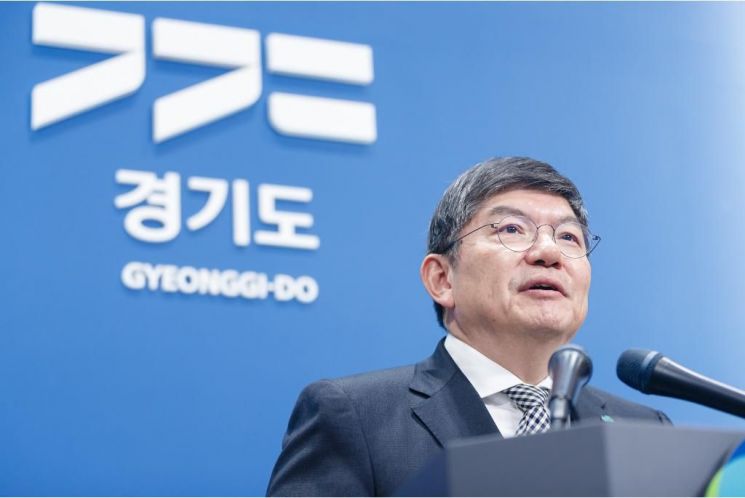 Cha Seongsu, Director of the Climate Environment and Energy Bureau of Gyeonggi Province, is holding a press conference on the 22nd regarding the 'Ban on Direct Landfill of Metropolitan Area Household Waste.' Provided by Gyeonggi Province
In response, Gyeonggi Province plans to work with local governments to expand the number of public incineration facilities by 21 by 2030, aiming to achieve 'zero direct landfill.'
Four cities-Suwon (which currently has no direct landfill volume), and Namyangju, Gwangmyeong, and Anseong (which have direct landfill volumes)-have completed all administrative procedures and will begin construction next year.
Gyeonggi Province plans to ease the financial burden and expedite construction by consulting with central government ministries on securing national funding, reviewing site locations, and streamlining administrative procedures.
The province will also strengthen cooperation with private incineration and recycling facilities to increase the volume of household waste processed through these methods.
Additionally, Gyeonggi Province will expand the use of reusable cups and containers, and support infrastructure to promote reuse, thereby creating a system that reduces the amount of waste generated.
Cha Seongsu, Director of the Climate Environment and Energy Bureau of Gyeonggi Province, stated, "By expanding public incineration facilities, supporting policies for reducing and reusing household waste, and fostering close public-private cooperation, we will prepare meticulously to establish a safe and sustainable resource circulation system."
© The Asia Business Daily(www.asiae.co.kr). All rights reserved.
![Clutching a Stolen Dior Bag, Saying "I Hate Being Poor but Real"... The Grotesque Con of a "Human Knockoff" [Slate]](https://cwcontent.asiae.co.kr/asiaresize/183/2026021902243444107_1771435474.jpg)
















