"Preventing Harm to the Lives and Bodies of Citizens"
The Constitutional Court has ruled that the provision of the Road Traffic Act requiring users of personal mobility devices, such as electric scooters, to hold a motor-driven bicycle license or higher does not violate the Constitution.
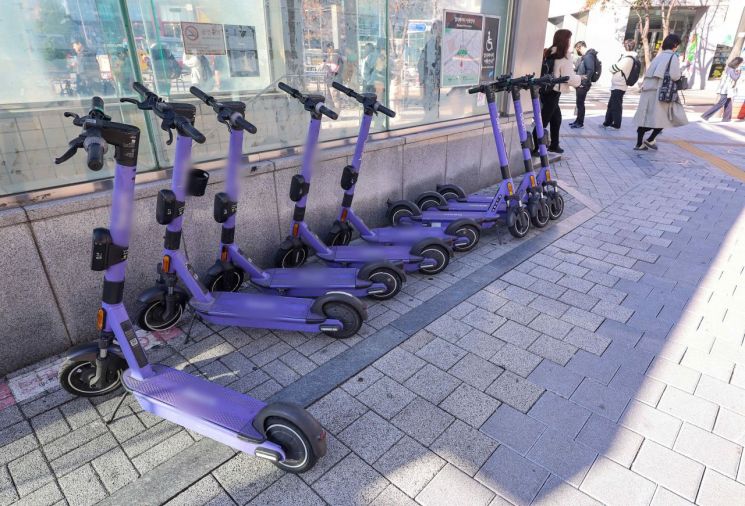
On December 22, the Constitutional Court announced that on December 18, it had unanimously dismissed a constitutional complaint filed by electric scooter users against the provisions on "personal mobility devices" in Articles 43 and 50 of the Road Traffic Act.
The provisions under review stipulate that individuals who operate personal mobility devices without a motor-driven bicycle license or higher are subject to fines and penalties. The provisions also include regulations that require both operators and passengers of personal mobility devices to wear protective gear, with violations resulting in fines or administrative penalties.
The petitioners argued that these provisions prevent them from freely using electric scooters, thereby infringing upon their general freedom of action and their right to equality.
However, the Constitutional Court found that "the legislative purpose and appropriateness of the measures are recognized, as they aim to prevent harm to the lives and bodies of citizens, ensure road traffic safety, and foster and establish a safe culture for the use of personal mobility devices."
The Court further stated, "Operators of personal mobility devices must have sufficient understanding of road traffic laws and regulations, as well as knowledge of the mechanical structure and operating principles. Therefore, the requirements cannot be considered excessively restrictive."
Regarding the provision on protective equipment, the Court noted, "Due to the structural characteristics of personal mobility devices-including their weight, size, and riding method-there is a high risk of falling or overturning depending on road conditions. Given the importance of protecting life and bodily safety, it cannot be considered beyond the scope of legislative discretion for lawmakers to mandate the use of protective gear through regulatory measures."
The Court concluded, "The disadvantages experienced by users of personal mobility devices as a result of the license requirement and the obligation to wear protective equipment are not significantly greater than the public interest in protecting the lives and bodies of citizens and ensuring road traffic safety."
© The Asia Business Daily(www.asiae.co.kr). All rights reserved.
![Clutching a Stolen Dior Bag, Saying "I Hate Being Poor but Real"... The Grotesque Con of a "Human Knockoff" [Slate]](https://cwcontent.asiae.co.kr/asiaresize/183/2026021902243444107_1771435474.jpg)
















