Gwangju-South Jeolla Special Metropolitan Union Ordinance Passes Both City and Provincial Councils
Approval Process by Ministry of the Interior and Safety Begins; Official Launch Expected in February Next Year
Administrative Integration of Gwangju and South Jeolla Reemerges Ahead of Local Elections
As President Lee Jae-myung has expressed the need to swiftly finalize the administrative integration of Daejeon and South Chungcheong Province, the discussion on the administrative integration of Gwangju and South Jeolla Province is also entering a new phase. This comes as the special metropolitan union ordinance for Gwangju and South Jeolla, which has passed both the Gwangju City Council and the South Jeolla Provincial Council, is now undergoing approval procedures at the Ministry of the Interior and Safety.
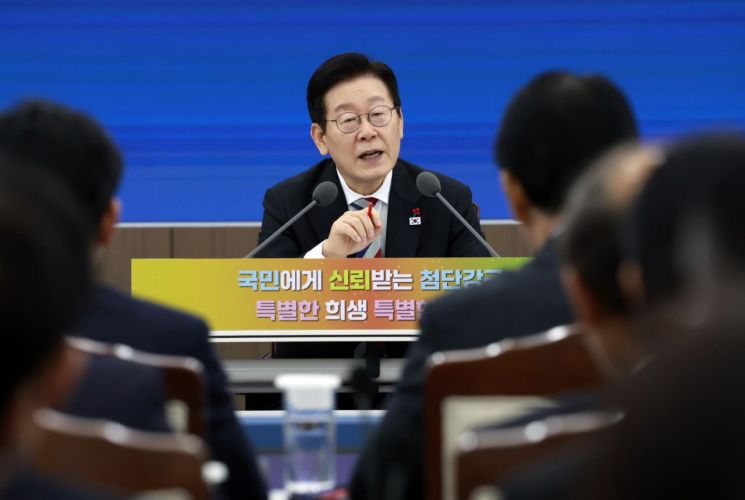
According to Gwangju City and local political circles on December 22, President Lee held a luncheon meeting with Democratic Party lawmakers from Daejeon and South Chungcheong Province at the Yongsan Presidential Office on December 18. He stated, "In order to elect new leaders for the integrated local governments in next year's local elections, practical and effective administrative support from the government is necessary." Observers suggest that discussions on administrative integration at the metropolitan level may accelerate, in line with the government's national agenda for balanced regional development, known as the '5 Poles and 3 Specials' strategy (which aims to foster five major metropolitan zones-Seoul Capital Area, Chungcheong, Honam, Daegu-Gyeongbuk, and Busan-Ulsan-Gyeongnam-and three special self-governing zones-Jeju, Gangwon, and Jeonbuk).
Meanwhile, the institutional procedures for launching the Gwangju-South Jeolla Special Metropolitan Union are entering their final stage. The ordinance for establishing the special metropolitan union recently passed both the Gwangju City Council and the South Jeolla Provincial Council. Once the ordinance is approved and promulgated, Gwangju and South Jeolla will officially launch as a special local government entity based on the Local Autonomy Act, and will begin full-scale interregional cooperation.
With both councils having completed their approval processes, Gwangju City and South Jeolla Province have entered the final phase of establishing the special metropolitan union. The Gwangju City Council preemptively approved the ordinance in October and allocated the related budget this month. After the South Jeolla Provincial Council approved the revised ordinance on December 16, the Gwangju City Council reflected these changes and finalized the ordinance on December 19.
The final ordinance adjusts the commencement date for the union's official work from the original "January 1, 2026" to "within six months after the ordinance is promulgated." This change takes into account the time needed to prepare for launch, including approval and promulgation by the Ministry of the Interior and Safety, enactment of special accounting regulations, formation of the union council, establishment of union ordinances and rules, and securing office space. Although the ordinance specifies "within six months," the plan is to proceed swiftly with practical preparations and launch procedures.
Gwangju City and South Jeolla Province plan to officially request approval for the ordinance from the Ministry of the Interior and Safety within this month. If approval and promulgation proceed without any unexpected issues, the Gwangju-South Jeolla Special Metropolitan Union is expected to be officially launched in February next year.
As the launch date becomes more concrete, discussions within the local community regarding the administrative integration of Gwangju and South Jeolla are continuing. In a public opinion survey conducted by the Gwangju City Council's Administrative Autonomy Committee, 71.7% expressed support for the integration.
Moon In, Mayor of Buk-gu, Gwangju, who is preparing to run for Gwangju mayor next year, stated on his social media that the administrative integration of Gwangju and South Jeolla should be expedited, based on the '5 Poles and 3 Specials' national balanced development strategy. He argued that in order to resolve overcrowding in the Seoul Capital Area and address regional imbalances, Gwangju's technological capabilities and talent should be combined with South Jeolla's power resources and industrial land. He emphasized the need to go beyond the special metropolitan union and develop a discussion and actionable roadmap for full administrative district integration.
Jung Junho, a lawmaker from the Democratic Party, also announced, "I have completed the draft of a special law on the establishment and support of the Gwangju-South Jeolla Super-Metropolitan Special Self-Governing Province," adding that it includes complete administrative integration by unifying the heads of the two metropolitan governments. The special law includes provisions for the integration of Gwangju and South Jeolla, the establishment of a super-metropolitan special self-governing province, and the basis for financial and administrative support, such as integration costs and local allocation tax.
Kang Gijung, Mayor of Gwangju, stated, "The Gwangju-South Jeolla Special Metropolitan Union is a response to the dominance of the Seoul Capital Area and the crisis of regional extinction. With the passage of this ordinance, a new foundation has been laid for the joint survival and prosperity of the two regions. Gwangju and South Jeolla will become a central pillar for balanced national growth in Korea through super-metropolitan cooperation."
© The Asia Business Daily(www.asiae.co.kr). All rights reserved.
![Clutching a Stolen Dior Bag, Saying "I Hate Being Poor but Real"... The Grotesque Con of a "Human Knockoff" [Slate]](https://cwcontent.asiae.co.kr/asiaresize/183/2026021902243444107_1771435474.jpg)
















