Fuel Dumped to Avoid Exceeding Safe Landing Weight
Wave of Odor Complaints from Local Residents
A Boeing 747 cargo plane departing from Belgium was forced to dump up to 100 tons of jet fuel over a village while making an emergency landing due to a landing gear malfunction, prompting complaints from local residents.
On December 20, Yonhap News, citing the French daily Le Figaro, reported on the incident that occurred on December 14 (local time) in Liege, eastern Belgium. The Boeing 747 freighter, operated by the cargo-only airline Challenge Group, departed Liege Airport at 10:30 a.m. that day, bound for New York, United States. However, shortly after takeoff, the crew discovered a malfunction in the aircraft's landing gear, forcing the plane to return and make an emergency landing.
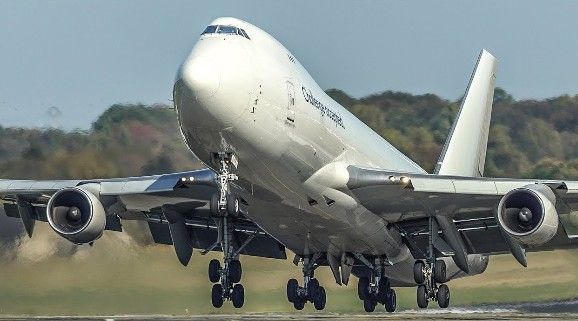
To prepare for the emergency landing, the aircraft needed to reduce its weight. Long-haul cargo planes take off with full fuel tanks, and landing without reducing weight would exceed the aircraft’s safe landing weight. Therefore, the crew carried out an emergency fuel dumping procedure in midair, after which the freighter landed safely.
The problem arose afterward. Many residents in suburban areas around Liege reported strange odors to local authorities. Upon investigating the source of the smell, authorities determined it was caused by the jet fuel dumped from the aircraft. It was reported that the freighter circled over several villages near Liege for about an hour, dumping up to 90-100 tons of jet fuel before landing at 11:45 a.m.
Airport Spokesperson: "Most of the Fuel Evaporated, Causing Little Damage on the Ground"
A spokesperson for Liege Airport explained, "Jet fuel dumping is a procedure carried out mainly in emergency situations," and added, "It is done to lighten the aircraft and prevent structural damage during landing." The spokesperson further noted that most of the fuel evaporates at high altitude, so there is little damage on the ground. According to regulations, fuel dumping should typically be performed at an altitude of at least 3,000 meters and over the sea, away from densely populated areas. However, due to the flight path of this freighter, the fuel was dumped at a lower altitude than expected, resulting in complaints from residents about odors and environmental impact on the ground.
The mayor of one of the affected areas stated, "We will request the flight path of the aircraft from Liege Airport to accurately identify the affected areas," adding, "If necessary, we will also request an environmental contamination analysis."
© The Asia Business Daily(www.asiae.co.kr). All rights reserved.

















