Private Education Spending Drops for First Time in Five Years
First Decline Since the COVID-19 Pandemic
Little Change for Households Earning Over 7 Million Won per Month
Over 20% Decrease for Households Earning 3 to 4 Million Won per Month
For the first time since the COVID-19 pandemic, private education spending by households with children has decreased. It is analyzed that as consumer sentiment weakens, academy fees have become a target for budget tightening. The decline was more pronounced among households at or below the median income level, while high-income families saw only a slight reduction.
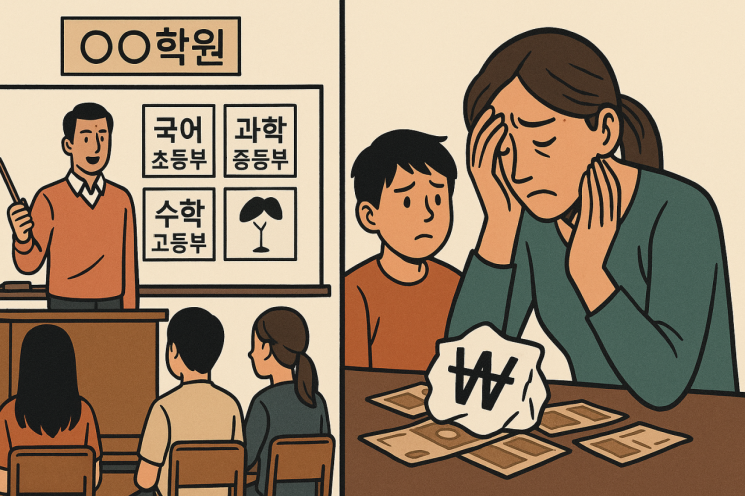
According to the National Data Office (formerly Statistics Korea) National Statistics Portal (KOSIS) on December 21, the average monthly spending on private academy education for students in married households with unmarried children in the third quarter of this year was 413,000 won, a 0.7% decrease from a year earlier. This is the first year-on-year decrease in private academy education spending by households with children in about five years, since the fourth quarter of 2020.
Private education spending decreased throughout all four quarters of 2020, and then increased for 18 consecutive quarters. Spending on private academy education for students refers to supplementary and advanced learning expenses for elementary, middle, and high school students, as well as for young children and repeat test-takers. It is a representative indicator of the private education burden on households.
After the COVID-19 outbreak, essential expenditures such as food, non-alcoholic beverages, rent, and heating costs have fluctuated slightly, but private education spending has remained relatively stable regardless of income or consumption conditions.
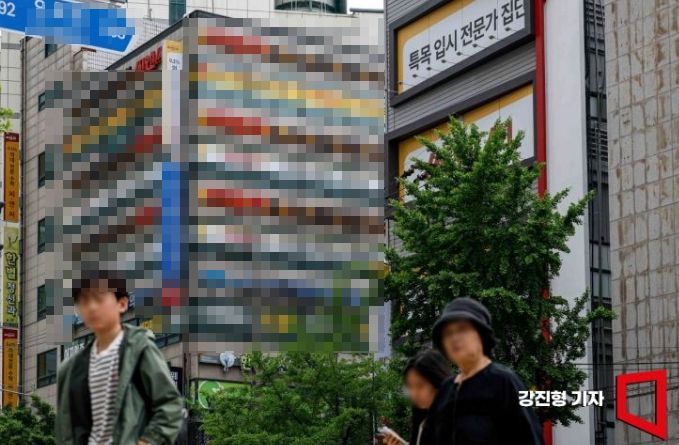
Recently, as consumer spending has weakened, spending on academy fees has also declined. The extent of the decrease in private education spending varied by income bracket.
In the third quarter of this year, the rate of decrease in student academy education spending among high-income households with an average monthly income of 7 million won or more was only 2.9%, while it reached 21.3% for households with a monthly income of 3 million to 4 million won.
Lee Eunhee, a professor of consumer studies at Inha University, told Yonhap News, "Private education spending is generally considered an 'investment for the future,' so it is not an item that is easily reduced," adding, "The economic burden households feel due to high inflation and other factors is now affecting private education spending as well."
She continued, "High-income households have more capacity to absorb education costs, so the decline is limited, whereas middle- and low-income households inevitably experience a greater impact. This demonstrates the disparity in private education spending according to income level."
© The Asia Business Daily(www.asiae.co.kr). All rights reserved.


















