Twenty Years of East Asian Conceptual History: Consolidating Achievements
Korean, Chinese, and Japanese Conceptual History Research Reshapes Modern East Asian Studies
Exploring the Future Directions and Tasks of East Asian Conceptual History for Civilizational Transformation
Hallym University (President Choi Yanghee) and the Hallym Academy of Sciences (Director Lee Kyunggu) held an international symposium on December 19 in the university’s international conference hall under the theme "The Trajectory and Turning Points of East Asian Conceptual History Research." The symposium brought together conceptual history scholars from the Hallym Academy of Sciences, as well as researchers from China, Taiwan, Macau, and Japan who have established networks with the academy. They gathered to consolidate the achievements of East Asian conceptual history research and to explore future directions.
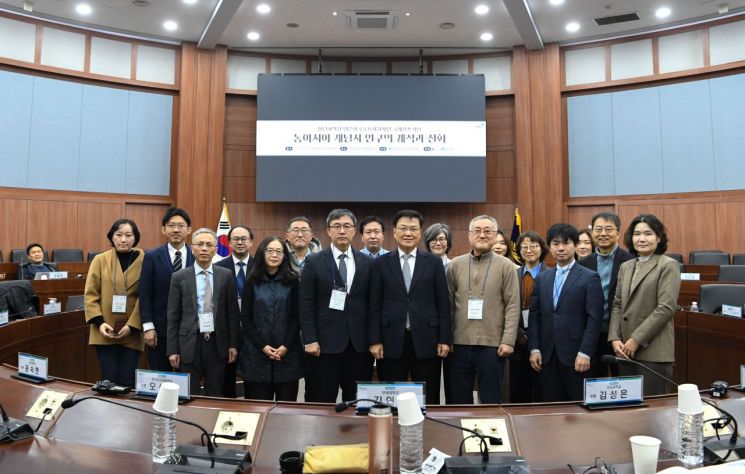 'The Trajectory and Turning Points of East Asian Conceptual History Research' International Symposium. Provided by Hallym University
Within the academic community, conceptual history research is regarded as having opened a new chapter in the study of modern East Asia. In particular, this international symposium served as a platform to reflect on the accumulated strengths of conceptual history and to seek directions for a macro-level civilizational transformation at a time when global standards are in flux. Leading scholars in the field of conceptual history from Korea, China, and Japan reviewed the history of conceptual history from its beginnings to the present, introduced each country’s unique research methods and experiences, and engaged in in-depth discussions on the future direction of conceptual history research.
The symposium began with a commemorative address by Choi Yanghee, President of Hallym University, and the first session (Achievements of Conceptual History) featured: Professor Song Injae (Hallym Academy of Sciences, Hallym University) on "Twenty Years of Korean Conceptual History: Emergence, Growth, and Expansion"; Professor Cheng Wen-hui (National Chengchi University, Taiwan) on "The Taiwanese Turning Point in East Asian Intellectual and Conceptual History"; Professor Li Gongzhong (Nanjing University, China) on "Twenty Years of Conceptual History Research in China"; and Professor Inoue Shoichi (International Research Center for Japanese Studies, Japan) on "'Women' and 'Men' in Japan: Their Formation and Development."
The second session (Methods of East Asian Conceptual History) included: Professor Okubo Takeharu (Keio University, Japan) on "The Historical Development of the Concept of Rights in Modern Japan"; Professor Jang Sejin (Hallym University) on "Have the Expectations of Conceptual History Been Met? Reflections on the 'Korean Conceptual History Series' Published by the Hallym Academy of Sciences"; and Professor Yu Laiming (Wuhan University, China) on "From Conceptual History to Knowledge Culture Studies."
The final session (Exploring and Practicing Turning Points) featured: Professor Chu Weiyun (Nanjing University, China) on "The Digital Turn in Conceptual History Research: Global Trends, Core Methods, and China’s Research Practices"; Professor Sun Jiang (University of Macau, China) on "Toward Glocal Conceptual History"; and Professor Hwang Jeonga (Hallym University) on "Conceptual History Research and the Future."
The general discussion was moderated by Professor Lee Taehun (Yonsei University), with designated discussants including Professor Kang Yonghun (Incheon National University), Professor Yoon Sookhyun (Chonnam National University), Professor Kim Hyunju (Yonsei University), Professor Kim Sungeun (Chonnam National University), and Professor Oh Sanggeum (Hankuk University of Foreign Studies), who contributed to the depth of the discussion.
Professor Song Injae, head of the HK Research Group at the Hallym Academy of Sciences and organizer of the symposium, stated, "The Hallym Academy of Sciences’ conceptual history research began with the compilation of the Conceptual History Dictionary in 2005 and, over the past 17 years, has advanced the Humanities Korea Project, collaborating with East Asian researchers and transcending the boundaries of universities and nations."
He added, "This symposium was a meaningful occasion to reaffirm the rich trajectory of knowledge formed by East Asian conceptual history, and to seek new leading concepts that will guide the direction and civilizational transformation of East Asian conceptual history at this critical juncture of growth."
© The Asia Business Daily(www.asiae.co.kr). All rights reserved.

















