Interest paid in line with US policy rate target range?currently 3.5?3.75%
Banks gain profitability advantage over overseas foreign currency investment
This enables attraction of foreign currency deposits under better terms?incentives for companies
The Bank of Korea will, for the first time in its history, temporarily pay interest on excess reserve requirements for foreign currency deposits held by financial institutions. The goal is to stabilize the foreign exchange market and improve the supply-demand balance.
The Bank of Korea plans to pay interest at a rate in line with the US policy rate target range (currently 3.5-3.75%), making it more profitable for financial institutions to keep their foreign currency funds domestically rather than investing them overseas. This policy aims to encourage financial institutions to attract more foreign currency deposits under better terms, which is expected to incentivize both companies and individuals to keep their foreign currency assets within the country. Additionally, this measure is intended to prepare for the possibility of the National Pension Service, which has declared a policy of "flexible currency hedging," engaging in large-scale foreign exchange swaps, thereby improving the supply-demand balance. The government has also decided to temporarily exempt the foreign exchange soundness levy for the same purpose.

Interest of 3.5-3.75% to Be Paid on Excess Foreign Currency Reserves: Expected Effects
On the 19th, the Bank of Korea held an extraordinary Monetary Policy Board meeting and decided to temporarily pay interest on foreign currency reserves deposited by financial institutions. The interest will be paid monthly for the period from January to June next year, covering deposits from December this year through May next year. After the required reserves for December are determined, excess reserves will begin to accumulate from the second week of January, and interest will be paid on these amounts. Yoon Kyungsoo, Director General of the International Department at the Bank of Korea, explained, "We will use the US Federal Reserve's policy rate target range as a reference, but we are still considering the specific method, such as whether to calculate daily or use an average rate."
The expected effects can be summarized as follows: ▲ Encouraging the inflow of foreign currency funds into the domestic market by offering higher interest rates compared to overseas investment; ▲ Preventing the outflow of institutional and individual foreign currency assets by expanding short-term investment options for financial institutions; ▲ Improving the supply-demand balance in preparation for the anticipated large-scale foreign exchange swaps by the National Pension Service.
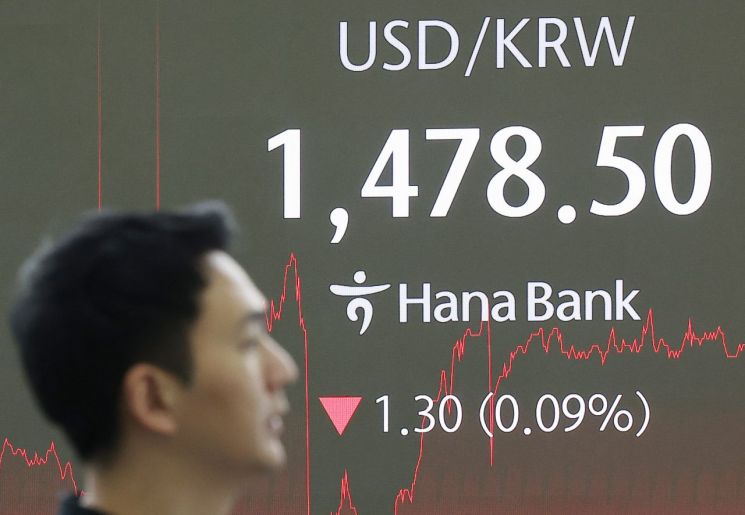 On the 18th, the exchange rate between the Korean won and the US dollar was displayed on the status board in the dealing room at the Hana Bank headquarters in Jung-gu, Seoul. Photo by Yonhap News.
Banks: Higher Interest Income Relative to Risk → More Attractive Foreign Currency Deposits → Individual and Corporate Funds Also ‘Parked’ Domestically
Director General Yoon stated, "When financial institutions deposit funds that could otherwise be invested overseas with the Bank of Korea, it helps keep these funds within the country." He pointed out that "paying interest at the level of the Fed's policy rate target (3.5-3.75%) is advantageous in terms of profitability for financial institutions." If these funds remain domestically, financial institutions will be able to attract foreign currency deposits under more favorable conditions. Yoon further analyzed, "This creates an incentive for companies and individuals to park funds domestically that they might otherwise send overseas."
 An employee is holding up US dollars at the Counterfeit Response Center of KEB Hana Bank in Myeongdong, Jung-gu, Seoul. Photo by Yonhap News.
"Flexible Currency Hedging": Preparing for Large-Scale Swaps by the National Pension Service
Another purpose is to ensure ample liquidity in advance of potential large-scale foreign exchange swaps by the National Pension Service. Excess reserves accumulated by banks are included in foreign exchange reserves and can be used as funds for swaps between the Bank of Korea and the National Pension Service. Yoon noted, "It is true that some foreign exchange swaps with the National Pension Service have recently resumed," and added, "With the swap agreement between the Bank of Korea and the National Pension Service extended, and as the National Pension Service has announced a shift to 'flexible currency hedging,' we anticipate the volume of swaps could increase. This measure (interest payment on foreign currency reserves) will be helpful in preparing for such scenarios."
He continued, "Even if excess reserves start coming in from mid-January next year, since foreign exchange reserves are calculated at the end of each month, this will allow for sufficient preparation. The timing and scale of swap adjustments are determined by the National Pension Service, so we cannot know in advance, but the Bank of Korea must respond according to the swap agreement, and this measure is also intended to ensure smooth operation."
The government will also temporarily exempt financial institutions from the foreign exchange soundness levy on non-deposit foreign currency liabilities for six months. The exemption period is tentatively set for January to June next year. The government explained that this will reduce the cost of raising foreign currency funds overseas by about 10 basis points, making it more attractive for banks to increase their supply of foreign currency funds domestically.
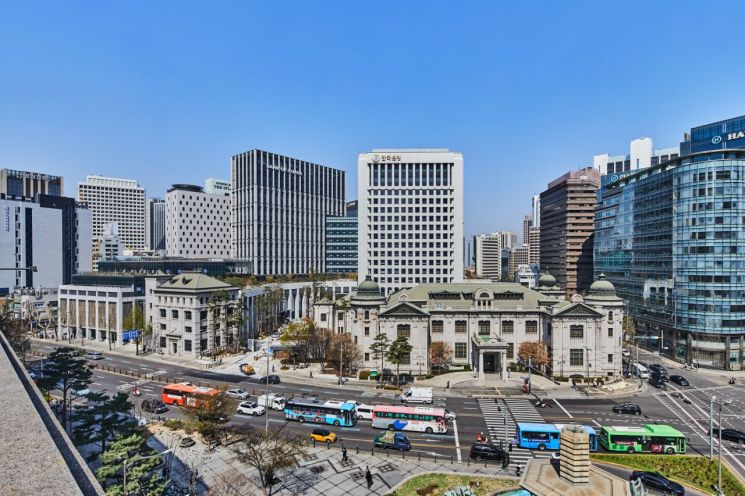
"Measures to Stabilize the Foreign Exchange Market: Significant Synergy Expected from Multiple Policies"
Director General Yoon expressed his expectation that this measure, together with additional government actions, will create significant synergy and substantially improve the supply-demand balance. He stated, "The Bank of Korea and the government have introduced this measure as part of a series of actions, including the reform of the forward foreign exchange position system, easing of burdens through the deferral of foreign currency liquidity stress test regulations, expanded permission for foreign currency loans for residents to be used for won-denominated purposes, and exploring a new framework related to the National Pension Service." He emphasized, "Rather than the announcement of this single measure, it is the combination of various policies and the resulting changes in supply-demand dynamics and expectations that will clearly have an impact going forward."
© The Asia Business Daily(www.asiae.co.kr). All rights reserved.
![Clutching a Stolen Dior Bag, Saying "I Hate Being Poor but Real"... The Grotesque Con of a "Human Knockoff" [Slate]](https://cwcontent.asiae.co.kr/asiaresize/183/2026021902243444107_1771435474.jpg)


















