A Benchmark of Goryeo Stone Pagoda Design
A Millennium Heritage Recognized by the Nation
The "Five-Story Stone Pagoda of Gaesimsa Temple Site in Yecheon," a cultural heritage symbolizing Yecheon in North Gyeongsang Province, has been elevated to National Treasure status through an official announcement by the National Heritage Administration. This iconic monument, which encapsulates the form and aesthetics of Goryeo stone pagodas, has had its historical, academic, and artistic value formally recognized at the national level.
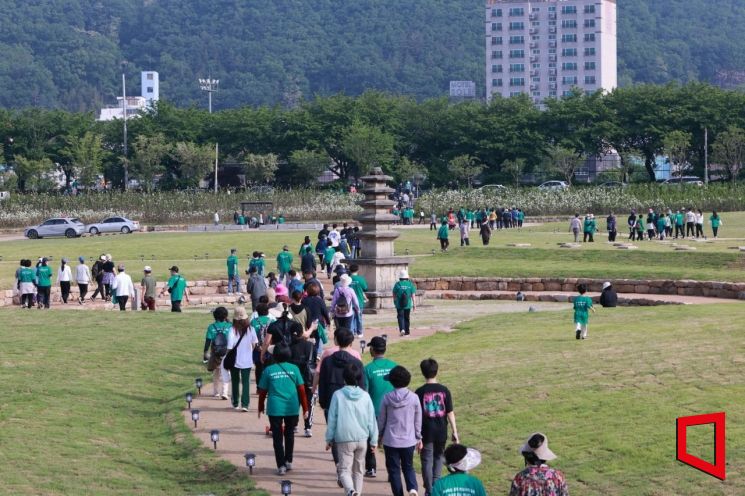
The Five-Story Stone Pagoda of Gaesimsa Temple Site stands 4.3 meters tall, with a building area of 6.4 square meters. It is a Goryeo-era stone pagoda that inherits the style of Silla stone pagodas.
The structure consists of a five-story body atop a two-tiered platform. An inscription remains that dates the construction to the second year of King Hyeonjong of Goryeo (1011), making the exact period of its creation a notable feature.
The most distinguished value of this pagoda lies in its inscription, which comprises a total of 190 characters. The inscription, carved on the lower part of the platform capstone and the face stone, is the longest among Goryeo stone pagodas, with 188 characters successfully deciphered, lending it high academic credibility.
The inscription includes records indicating that the Gwanggun (military unit) was mobilized during the construction of the pagoda. This provides valuable historical material that concretely illustrates the operational methods and organizational structure of the early Goryeo military system.
Additionally, the inscription reveals changes in local village organizations, such as the Miruk Hyangdo and Chuhyangdo, which succeeded the Silla Hyangdo. This allows for a multifaceted understanding of regional social structures, religious beliefs, and community management during the Goryeo period, making it highly significant for historical and social studies.
The pagoda is also highly valued in terms of architectural history. While maintaining the two-tiered platform structure typical of Unified Silla stone pagodas, it also features an added base for the first-story body, clearly demonstrating the transition to Goryeo stone pagoda styles. As a representative work that encapsulates the stylistic evolution from Unified Silla to Goryeo, it is regarded as a monument of great importance in the history of Korean stone pagodas.
The authenticity and integrity of this cultural heritage have also been scientifically verified. Through three rounds of excavation and trial digs conducted from 2014 to 2022, the existence of the Gaesimsa Temple site and stratified remains spanning from Unified Silla to the Joseon Dynasty were confirmed, and it was revealed that the foundational structure of the pagoda has been preserved in its original form.
Stone analysis confirmed that all 29 components of the platform, body, and finial are made of the same feldspathic sandstone, supporting the fact that the pagoda has maintained its original form for a thousand years without any replacement of its parts since its construction.
With its elevation to National Treasure status, the Five-Story Stone Pagoda of Gaesimsa Temple Site in Yecheon is expected to further solidify its standing as a representative cultural heritage of the Goryeo period and as a national symbol of Yecheon.
An official from Yecheon County stated, "The designation of the Five-Story Stone Pagoda of Gaesimsa Temple Site as a National Treasure is a deeply meaningful achievement that nationally recognizes Yecheon's historical and cultural significance. We will systematically preserve and manage this precious heritage, which vividly conveys the society, military, and village culture of the Goryeo period, in a manner befitting its status as a National Treasure."
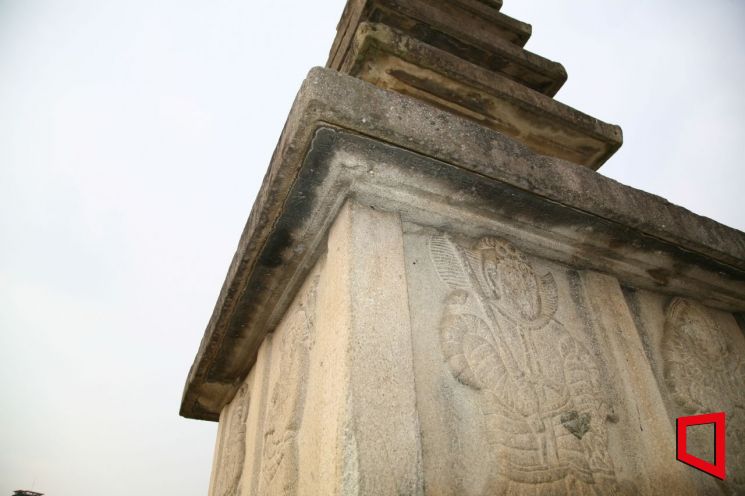 Yecheon Gaesimsaji Five-Story Stone Pagoda Elevated to National Treasure Status: Inscription Found on the Lower Part of the Upper Platform Capstone
© The Asia Business Daily(www.asiae.co.kr). All rights reserved.
![Clutching a Stolen Dior Bag, Saying "I Hate Being Poor but Real"... The Grotesque Con of a "Human Knockoff" [Slate]](https://cwcontent.asiae.co.kr/asiaresize/183/2026021902243444107_1771435474.jpg)

















