The government is moving to revise the ceiling and imposition system for fines to prevent unfair trade practices, and is considering increasing penalties by up to 100% for repeated violations. The introduction of compulsory investigative authority is also under review to enhance the effectiveness of investigations.
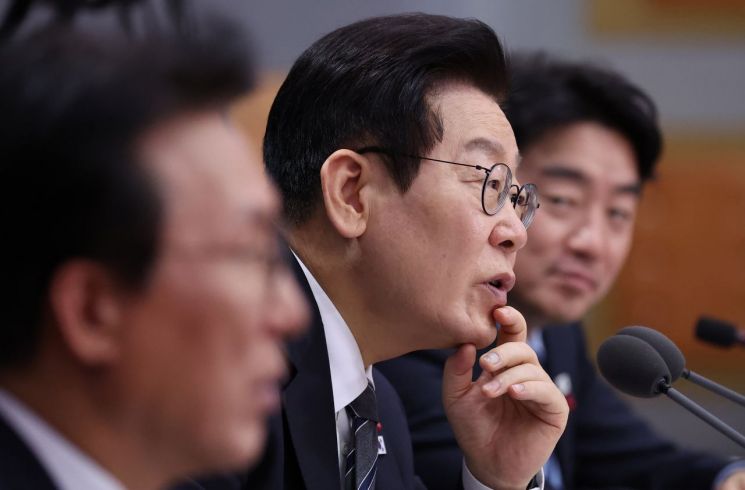
On December 19, the Fair Trade Commission announced measures to address the imbalance of power between large corporations and small and medium-sized enterprises in its work report for next year. In his opening remarks to the presidential work briefing, Fair Trade Commission Chairman Joo Byungki emphasized, "For the sustainable growth of the national economy, a fair economy where all can grow together must be realized," adding, "We will strengthen sanctions against unfair practices that increase the burden on the public and strive to enhance consumer rights."
Collective Action by Small Business Owners Exempted from Collusion Rules...Significant Increase in Fines
First, to ensure mutual growth and bargaining power for economically vulnerable groups, the Fair Trade Act-related systems will be redesigned. The government is considering exempting collective action by small and medium-sized businesses, such as small business owners and franchisees, against large corporations from collusion regulations to guarantee their fair share. The bargaining power of franchisees, subcontractors, and agency operators in negotiating transaction terms will be strengthened.
The level of fines imposed under fair trade-related laws will also be significantly raised. The calculation and imposition methods will be revised so that economic sanctions can effectively deter legal violations.
By the first half of next year, the government will revise the fine notification to increase the additional penalty for repeated violations of the Fair Trade Act from the current maximum of 80% to 100%. In addition, the standard for an additional fine for a single repeat violation will be raised from the current 20% to a maximum of 50%. For acts such as abuse of market dominance, where the level of fines is lower than in advanced countries, the government plans to set a ceiling (proportional fines).
The introduction of compulsory investigative authority is under review to enhance the effectiveness of investigations. The Fair Trade Commission stated, "To rationally and effectively sanction unfair practices, we will strengthen economic sanctions and consider measures to enhance investigation effectiveness, such as compulsory investigative authority." The Commission will also pursue institutional improvements, including rationalizing the requirements for illegality under the Fair Trade Act, so that price abuses by monopolistic operators can be effectively regulated.
In new industries directly linked to national competitiveness, such as artificial intelligence (AI), incentives will be provided. The mandatory shareholding ratio for semiconductor sub-subsidiaries will be lowered from the current 100% to 50%, subject to prior review and approval by the Fair Trade Commission and local investment. Financial leasing will also be permitted.
Furthermore, to expand venture investment by corporate venture capital (CVC) owned by general holding companies and to promote strategic investment in promising global technologies, regulations on external and overseas investment ratios will be eased. Safeguards will be put in place to ensure these measures do not undermine the purpose of the holding company system, such as contributing to balanced regional development and curbing economic concentration.
Exclusion of Treasury Shares in Determining Shareholding Ratios for Private Interest Regulations
The Fair Trade Commission will strictly sanction unfair internal transactions, such as business favoritism and indirect financial support occurring during succession and expansion of control by owner families, and will focus monitoring on sectors closely related to daily life, such as finance, food, and healthcare. The method for calculating fines will be revised so that fines proportional to unfair gains can be imposed on individuals such as owner families, and a legal basis for imposing fines on unlawful acts intended to evade regulation of large business groups will be established.
To prevent evasion of private interest regulations, treasury shares will be excluded when determining the shareholding ratio subject to such regulations. The targets of these regulations are owner families, companies in which the owner family owns 20% or more of the shares, or subsidiaries in which such companies own more than 50% of the shares. When the proportion of treasury shares is high, the owner family's shareholding ratio decreases, allowing them to evade private interest regulations.
The government will focus on investigating collusion in four key sectors closely related to daily life: food, education, construction, and energy. For major cases, dedicated teams will be established to conduct prompt investigations. For long-term and habitual price-fixing, the government will actively consider not only imposing fines but also issuing price readjustment orders to enhance the effectiveness of corrective actions.
Strengthened Oversight of Platform Giants such as Delivery Apps
Oversight will be strengthened to prevent unfair practices by platform giants such as delivery apps and chauffeur services. The government will address various unfair practices, including demands for most-favored-nation treatment by delivery apps, tying sales, and unreasonable commission fee terms, and will seek to improve practices by reviewing the excessive cost burden on drivers.
A response system will be established for false or exaggerated advertising using artificial intelligence (AI). The omission of 'virtual person' labeling in AI-based deceptive advertising will be defined as misleading advertising, and specific labeling methods will be stipulated for AI-powered advertisements.
The monitoring scope of social network service (SNS) advertising will be expanded to include AI-based deceptive advertising, and the Korea Consumer Agency's system for blocking unfair AI advertising will be strengthened. The government will investigate and correct unfair advertising practices that exaggerate discount rates, product performance, industry rankings, and coupon benefits in comprehensive and specialized shopping malls for cosmetics and beauty devices.
© The Asia Business Daily(www.asiae.co.kr). All rights reserved.


















