Chinese New Year and Spring Festival Holidays to Last Up to 9 Days
Overseas Travel from China Surges by Over 30% Year-on-Year
Japan Trips Canceled Amid Chinese Government’s Travel Restraint Order
As China’s New Year and Spring Festival holidays are expected to last up to nine days, travel demand within the country is surging. Local Chinese travel agencies have highlighted South Korea, Thailand, and Vietnam as cost-effective overseas travel destinations, but reported that Japan has been excluded from the list of popular destinations.
On December 18, Guangming.com cited data from Chinese travel agencies, reporting that bookings for flights, hotels, and guesthouses from December through the New Year holidays have increased significantly compared to the same period last year.
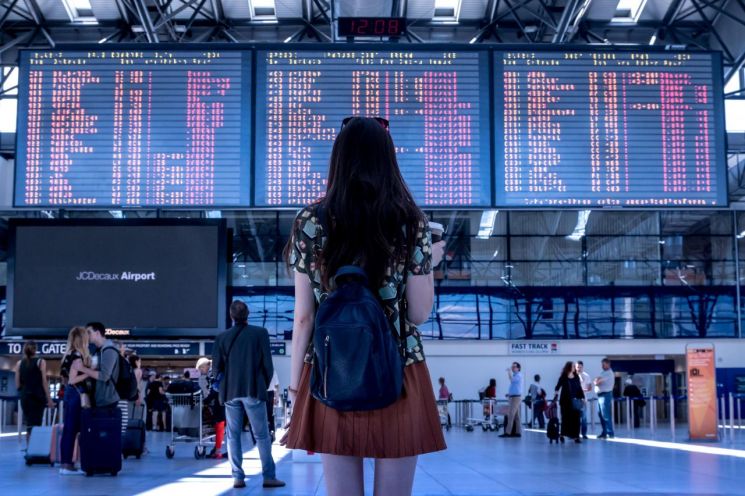
China has designated January 1 to 3 next year as public holidays. Some office workers are taking an additional three days off from December 29 to 31, allowing them to enjoy a break. This means that, including the weekend starting December 27, people can take a total of nine days off until January 4. The Spring Festival holiday will also last about nine days, from February 15 to 23. Numerous Chinese media outlets have described these as “record-long holidays,” reporting on the surge in flight and hotel bookings during the Spring Festival period.
In particular, a growing number of Chinese travelers are turning to overseas trips. Travel agencies stated, “Overseas travel bookings have increased by more than 30% compared to last year, with demand concentrated on South Korea, Malaysia, Singapore, Vietnam, Thailand, and Indonesia.” They added, “One-way airfares are affordable, at less than 1,500 yuan, which drives popularity for these destinations.”

According to the travel agency Qunar.com, bookings for flights to Seoul, South Korea, have increased 3.3 times compared to the same period last year. The agency explained, “South Korea has shown the fastest growth recently and has become the most favored destination among university students during the Spring Festival period.”
Flight bookings to Ho Chi Minh City and Hanoi in Vietnam have increased by 3.2 times and 2.4 times, respectively, compared to the previous year. These destinations are also especially popular among travelers aged 23 to 30. Another travel agency ranked Egypt as the most popular destination, followed by South Korea in second place. Bookings to Egypt rose 3.3 times, South Korea 2.8 times, and Spain 2.6 times.
In contrast, agencies consistently reported that Japan has been excluded from the list of popular destinations. According to data from the Osaka Tourism Bureau, the cancellation rate for Chinese tourist bookings at approximately 20 hotels in Osaka Prefecture reached 50% to 70% by the end of December. Hokkaido, in particular, suffered the greatest impact due to reduced flights.
Meanwhile, statistics released by the Japan National Tourism Organization (JNTO) on December 17 for foreign visitors in November show a similar trend. The number of Chinese visitors to Japan was 562,600, which is a 3.0% increase from the same period last year, but about 150,000 fewer than the 715,700 Chinese visitors in October. This decline is attributed to the Chinese government’s “travel restraint order,” which was issued after Japanese Prime Minister Sanae Takaichi suggested possible intervention in the event of a Taiwan contingency last month.
Major Chinese airlines have extended the period for free cancellations and changes on flights to Japan until March next year. The number of hotel bookings by Chinese travelers in Japan has also dropped sharply. According to Tripla, a Japanese accommodation booking site, the number of hotel bookings from China during November 21-27 fell by about 57% compared to November 6-12, before the Chinese government issued its travel restraint order.
© The Asia Business Daily(www.asiae.co.kr). All rights reserved.


















