Paju Self-Sufficiency Center Expands Beyond Geumchon to Unjeong
Establishing a Foothold for Independence
Improving the Structure of Self-Sufficiency Programs
From 'Simple Jobs' to 'Sustainable Independence'
Paju Self-Sufficiency Center Renamed as 'Paju Welfare Association'
A New Beginning
Restoring Lives Through Work
Pursuing Policies That Realize the True Purpose of Self-Sufficiency
Paju City in Gyeonggi Province (Mayor Kim Kyungil) has launched a major overhaul to fundamentally improve the structure of its local self-sufficiency programs and strengthen the foundation for the economic independence of vulnerable groups. The city plans to move away from simply providing jobs and shift toward a "welfare model of working and growing together," with a focus on social participation and economic self-reliance.

Paju City announced that it will completely reorganize its local self-sufficiency programs around three pillars: diversifying program types, establishing a foothold in the Unjeong area, and expanding new self-sufficiency projects. The city has set the practical independence and social reintegration of program participants as its top policy priority.
Continued Expansion and Operation of Self-Sufficiency Models After Pilot Program Ends
Paju City was selected for the government’s pilot project to diversify self-sufficiency program types in 2019 and has implemented phased changes over the past five years. As a result, the number of self-sufficiency enterprises grew from four to seven. With the conclusion of the pilot project this year, the city changed the name of its parent organization to "Paju Welfare Association Social Cooperative," marking a new commitment and leap forward for the future.
In the past, local self-sufficiency programs were limited in type and had uniform participation methods, which hindered participants from achieving independence. To address this, the city and the self-sufficiency center have worked to expand program models, offering a variety of paths so that participants can choose the stage of independence that best suits their abilities and circumstances. Going forward, they aim to transition to self-sufficiency programs that more thoroughly prepare participants for a better future.
The city also plans to reorganize the spatial distribution of self-sufficiency project teams, which have been concentrated in the Geumchon area.
To utilize vacant commercial spaces in the region, the city and the self-sufficiency center signed a "Local Community Mutual Growth Space Creation Business Agreement" with Dayul Group Co., Ltd. on September 17. Through working-level consultations based on this agreement, the city will relocate the hub of local self-sufficiency programs from the Geumchon area to the Unjeong area, improving accessibility for participants and strengthening connections with local businesses and the everyday economy.
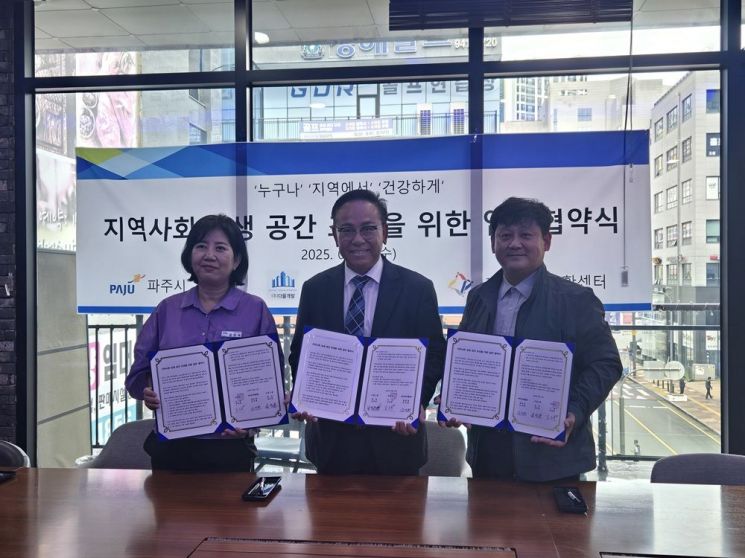 Paju City signed a business agreement with Dayul Group Co., Ltd. on September 17 to create a space for mutual growth in the local community. Provided by Paju City
Unjeong is a densely populated area with high demand for daily services, making it well-positioned for self-sufficiency programs to grow into jobs connected to the local economy, rather than isolated public sector jobs. However, due to relatively high rental costs, Paju City’s self-sufficiency workplaces have been concentrated in Geumchon (seven in Geumchon, one in Paju), limiting accessibility for the increasing number of vulnerable residents in Unjeong.
With the proactive securing of space through the mutual growth agreement, three project teams are scheduled to enter Unjeong for the first time by the end of this year. The creation of a self-sufficiency hub in Unjeong is expected to help expand business partners and revitalize self-sufficiency programs, forming a sustainable cycle for the local economy.
Moving Beyond Repetitive Programs: Expanding New and High-Value-Added Self-Sufficiency Projects
With the expansion of business models, Paju City and the self-sufficiency center plan to gradually restructure away from repetitive, low-value-added projects and focus on discovering new self-sufficiency programs. These will be demand-driven and market-friendly, centering on daily services, environment and care, and community-based projects.
In addition, the city will intensively foster projects with high potential to become self-sufficiency enterprises, supporting participants to grow beyond self-sufficiency into stable income generators.
In particular, the unique cafe project team "Mitery Pasta Geumchon Branch," which has gained strong support from local residents by offering high-quality pasta, pizza, and Western-style pilaf at affordable prices, will open its second location, "Mitery Pasta Paju Mokdong Branch," as a new project in 2026, with trial operations beginning on the 23rd.
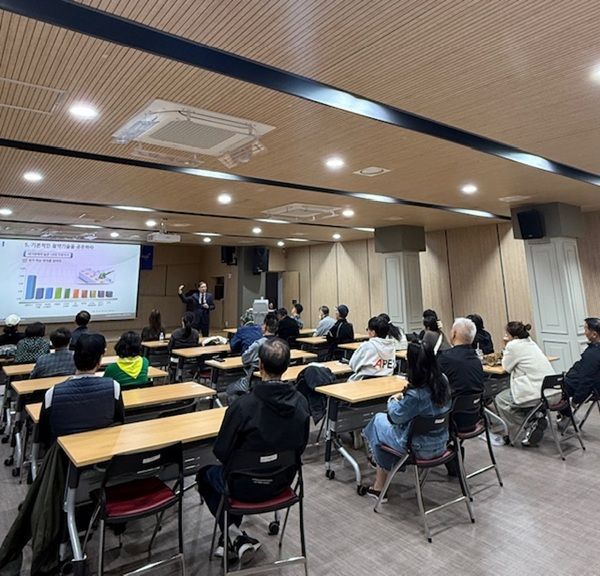 Participants in self-sufficiency programs receiving self-reliance capacity training for economic independence. Provided by Paju City
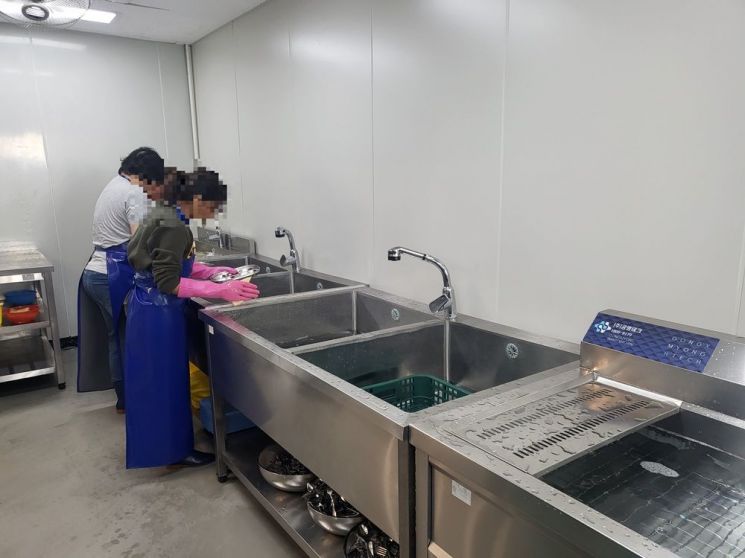
In addition, the city plans to continue providing jobs for eligible participants through eight project teams currently in operation-including the cafe project team, restaurant project team, Paju Cleaning, baby food tray cleaning, and Stepping Stone Two Hands Together-and seven self-sufficiency enterprises, such as Clean Care, Convenience Store Unjeong Branch, and Happiness Plus.
To encourage more recipients to participate in self-sufficiency programs, the city has expanded the integrated full-time and part-time work model from one project team to all project teams since the beginning of this year. This provides more opportunities for participants who, due to personal circumstances such as care responsibilities or health issues, are unable to work full-time, enabling them to gain more work experience and skills.
Furthermore, the city is promoting asset-building support programs such as the Hope Savings Account, which aims to help low-income workers achieve independence. These programs are designed to facilitate safe asset formation and management through efficient financial management, and the city is also actively providing education to strengthen economic independence and self-sufficiency capacity.
Expectations for change are growing in the field. One program participant said, "It’s not just about filling time; I am excited to learn new skills and open up new opportunities for the future."
Mayor Kim Kyungil emphasized, "The local self-sufficiency program is not just a system for basic livelihood, but a starting point to help people work and become independent on their own. Paju City is promoting self-sufficiency policies that focus on restoring lives through work, aiming to realize the value of self-sufficiency that leads to both employment and independence."
Toward 'Sustainable Independence' Through 'Social Participation'
With the largest-ever increase in the standard median income and a continued rise in the number of welfare beneficiaries, the city aims to use this reorganization of local self-sufficiency programs to help participants rebuild the ladder to independence through maximum social participation.
A representative from the self-sufficiency center said, "Through this expansion of business models, relocation of hubs, and growth of existing programs, the joint welfare policies of the city and the center will become a meaningful opportunity to establish a policy model that can provide real help to the lives of vulnerable groups through public-private cooperation, enabling local self-sufficiency to move toward sustainable independence."
© The Asia Business Daily(www.asiae.co.kr). All rights reserved.
![Clutching a Stolen Dior Bag, Saying "I Hate Being Poor but Real"... The Grotesque Con of a "Human Knockoff" [Slate]](https://cwcontent.asiae.co.kr/asiaresize/183/2026021902243444107_1771435474.jpg)


















