The surge in Human Immunodeficiency Virus (HIV) infections among the elderly has emerged as a new social issue in China.
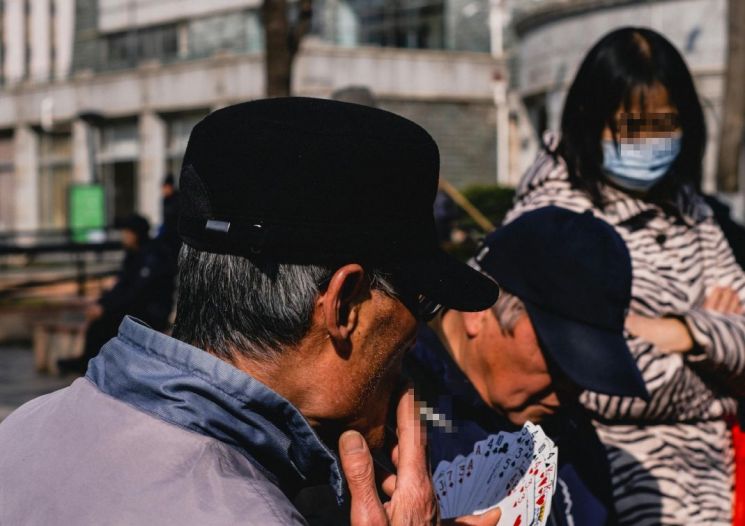
According to China News Weekly on December 16 (local time), the number of elderly HIV-infected individuals and Acquired Immune Deficiency Syndrome (AIDS) patients is increasing not only in Guangdong and Zhejiang provinces but also across various provinces in China. Some provinces in the southwestern and southern regions are reported to be particularly severe. Liang Xiaofeng, former deputy director of the Chinese Center for Disease Control and Prevention and former director of the School of Public Health at Jinan University, told the media, "As the population ages, the number of elderly HIV-infected individuals and AIDS patients is likely to continue increasing, and it is crucial to pay sufficient attention to this issue early on." HIV infection destroys immune cells, increasing the risk of opportunistic infections such as pneumonia, tuberculosis, and cancer, and if not treated in time, can progress to AIDS.
Number of Infected Individuals Aged 50 and Over: 33,000 in 2015 → 52,000 in 2022
According to a study published in 2023 in the Chinese Journal of Epidemiology by L? Fan, deputy director of the AIDS Prevention Center at the Chinese Center for Disease Control and Prevention, the number of newly reported HIV-infected individuals aged 50 and over in China increased from about 33,000 in 2015 to about 52,000 in 2022. Among them, the number of those aged 60 and over rose from about 17,400 in 2015 to about 27,000 in 2022, with most cases concentrated in certain provinces in the southwestern and southern regions where AIDS is particularly prevalent.
In AIDS research, those aged 50 and over are generally classified as "elderly." The average incubation period for AIDS is 2 to 10 years. Guo Wei, associate chief physician in the Department of Infectious Diseases at Tongji Hospital, Tongji Medical College, Huazhong University of Science and Technology, told the media, "During the incubation period, HIV-infected individuals often show no obvious symptoms," and "elderly patients are often discovered not because of typical symptoms, but because they visit the hospital for other illnesses and are 'incidentally' diagnosed during preoperative tests or similar procedures."
 China is experiencing an increase in the number of elderly people living alone, and the sexual desires of the senior population have long been ignored, making the elderly a new vulnerable group in the AIDS sexual transmission network. Photo unrelated to the article. Pexels
Most Elderly Patients Infected in Old Age... Population Aging, Increase in Elderly Living Alone, Low Sexual Awareness
Several experts point out that the recent increase in elderly HIV-infected individuals and AIDS patients is mostly due to "new infections occurring in old age." Why has the proportion of infections among the elderly risen so sharply? Experts agree that "the key is that the risk of infection within the elderly population itself has increased." There are more elderly people living alone, the sexual desires of the elderly have long been ignored, and condom usage rates are extremely low. Meanwhile, sexual health education targeting the elderly is almost nonexistent. As a result, the elderly are becoming a new vulnerable group in the AIDS sexual transmission network.
There are also social and psychological factors. As average life expectancy increases, the elderly population itself has grown, and patterns of social relationships have changed amid early retirement and relatively stable economic conditions. The loss of a spouse or prolonged unemployment leads to loneliness and emotional deprivation, prompting some elderly individuals to seek psychological comfort, but issues of face make them reluctant to seek help through formal channels. On the other hand, as antiretroviral treatment for AIDS becomes more widespread and effective, some elderly people have less fear of the disease, thinking, "I'm old, so there's nothing to be afraid of," and become even less likely to use condoms during sexual activity.
The "collapse" of sexual safety among the elderly is also increasing the risk of infection. According to the aforementioned 2023 study published in the Chinese Journal of Epidemiology, more than 90% of newly reported HIV infections among those aged 50 and over between 2015 and 2022 in China were due to heterosexual contact, with commercial sex accounting for 44.8%. The number of elderly male patients was about three times higher than that of females, and most of them had low educational backgrounds and worked in agriculture. In the past, HIV testing mainly targeted homosexual groups, but now, new infections due to commercial sex are significant, especially among the elderly.
 The "collapse" of sexual safety among the elderly is also increasing the risk of infection. Photo unrelated to the article. The Asia Business Daily DB
Most Heterosexual Infections Stem from Commercial Sex... Some Visit Establishments Charging Less Than 10,000 Won
Some low-cost sex trade establishments charge only 20-50 yuan (about 4,200 to 10,000 won), making them popular among middle-aged and elderly widowers, men living alone, and married men who visit in secret. Most elderly HIV cases reported in a given region are men, while elderly female patients are usually infected through their male partners.
The elderly often hide their HIV infection after being diagnosed. Even when they receive treatment, they are reluctant to disclose the exact route of infection. One elderly male patient living alone reduced his medication dosage for a long period out of fear that his family would find out about his HIV infection. He was eventually rushed to the emergency room with severe pneumonia. His son only learned the truth at the emergency room, but the patient had developed resistance due to irregular treatment and died of multiple organ failure within a week due to overlapping infections.
The key to countermeasures is to block the "source" of infection. The main causes of HIV transmission among the elderly are "not knowing they are infected and not taking protective measures during sexual activity." Experts say, "The key to future AIDS prevention among the elderly is to strengthen physician education and public awareness so that the elderly understand prevention methods, and to encourage those who have engaged in high-risk sexual activity to voluntarily get tested, even after the fact." In addition, when designing public welfare or government programs, more attention should be paid to the elderly, providing easy-to-understand health education so they can learn self-esteem and self-protection. However, some experts lament, "There are still considerable challenges in providing health education targeting the elderly."
© The Asia Business Daily(www.asiae.co.kr). All rights reserved.



















