NOAA Releases Annual Arctic Report
Warmest Year Since 1900 on Record
Sea Surface Temperatures Rise, Precipitation Hits All-Time High
A study has revealed that Arctic temperatures have reached record highs due to climate change. On December 16 (local time), Yonhap News, citing the UK’s Guardian, reported that "the US National Oceanic and Atmospheric Administration (NOAA) announced in its annual Arctic report that the surface temperature of the Arctic from October last year to September this year was the highest since observations began in 1900."
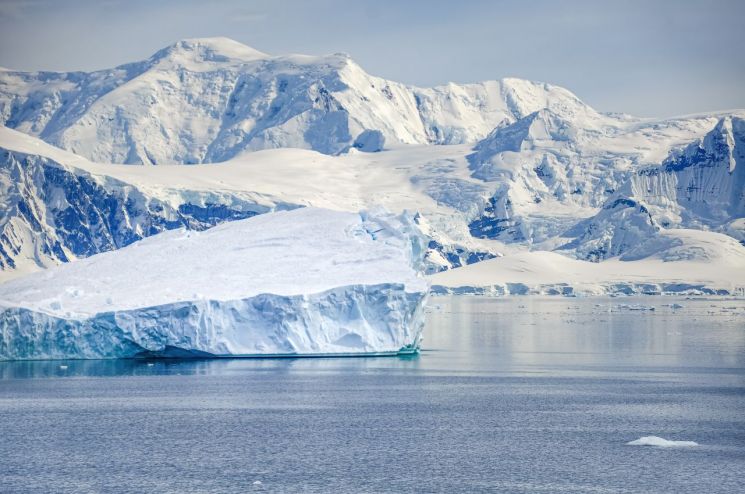 A study has revealed that Arctic temperatures have reached record highs due to climate change. Photo for article understanding. Pixabay
According to the report, the past decade has been the warmest period in the Arctic since records began. In particular, last autumn and this winter recorded the highest and second-highest temperatures ever, respectively. Since 2006, the annual rate of temperature increase in the Arctic has been more than twice the global average.
As of March, the maximum annual extent of Arctic sea ice (the largest area of sea ice in a year) was the lowest in 47 years since satellite observations began. This is attributed to both higher sea surface temperatures in the Arctic and increased rainfall. In August, the average sea surface temperature in the Atlantic-adjacent Arctic Ocean was reported to be about 7 degrees Celsius higher than the August average from 1991 to 2020. Furthermore, from September last year to October this year, the annual precipitation in the Arctic reached an all-time high.
Arctic sea ice that has lasted more than four years has decreased by over 95% since the 1980s and now remains only near northern Greenland and the Canadian Arctic Archipelago. As the reflective sea ice melts, the exposed darker sea surface absorbs heat, which in turn raises global temperatures. This leads to a "positive feedback" effect, accelerating global warming. This refers to a chain reaction that drives the climate further away from normal levels.
Matthew Druckenmiller, a researcher at the US National Snow and Ice Data Center (NSIDC) and one of the authors of the report, noted, "This year, Arctic temperatures were the warmest on record and precipitation was also at an all-time high," emphasizing the significance of both occurring in a single year. He added, "Sea ice continues to decline, and it is now raining even in winter. The very concept of an Arctic winter is being redefined."
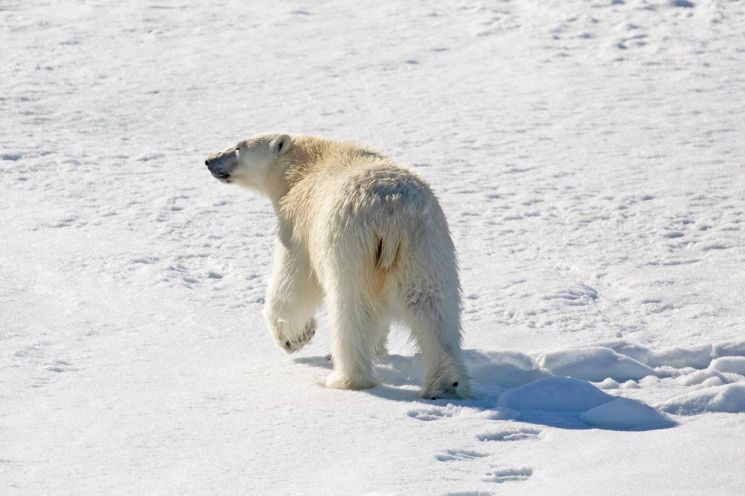 A recent study revealed that polar bears facing extinction are undergoing genetic (DNA) changes to adapt to environmental changes caused by climate change by altering their diets. Photo by Pixabay
A recent study has also found that polar bears facing extinction are undergoing genetic (DNA) changes to adapt to environmental changes caused by climate change by altering their diet. According to ABC News in the United States on December 11 (local time), researchers at the University of East Anglia in the UK announced findings that "polar bears living in relatively warmer regions of Greenland are exhibiting rapid genetic changes, which are linked to rising temperatures."
The University of East Anglia research team analyzed the genes of 17 polar bears from Greenland and discovered that those inhabiting the southeast are adapting to environmental changes by including more plant-based foods in their traditionally fat-heavy diet. Alice Godden, the lead researcher of the study, stated, "The Greenland polar bear population is rewriting its genome to survive," describing it as "a desperate survival mechanism in response to melting glaciers."
© The Asia Business Daily(www.asiae.co.kr). All rights reserved.
![Clutching a Stolen Dior Bag, Saying "I Hate Being Poor but Real"... The Grotesque Con of a "Human Knockoff" [Slate]](https://cwcontent.asiae.co.kr/asiaresize/183/2026021902243444107_1771435474.jpg)












