Full Personnel Expenses Covered by Institutional Contributions
New National Mission-Oriented Strategic Research Project Introduced
The government will abolish the Project-Based System (PBS) in order to fundamentally change the competitive structure for securing research projects at government-funded research institutes in the field of science and technology. The operational system of these institutes will be completely overhauled so that researchers can focus on national mission-oriented research, with all personnel expenses stably supported through institutional contributions, freeing them from the need to constantly secure projects.
On December 18, the Ministry of Science and ICT announced this policy direction for government-funded research institutes in the science and technology sector during the second meeting of science and technology-related ministers. This measure is a core task of the national agenda, "System Innovation for Achieving the Top Five in Science and Technology," and is focused on redefining these institutes as hubs for national strategic technologies and solving major challenges.
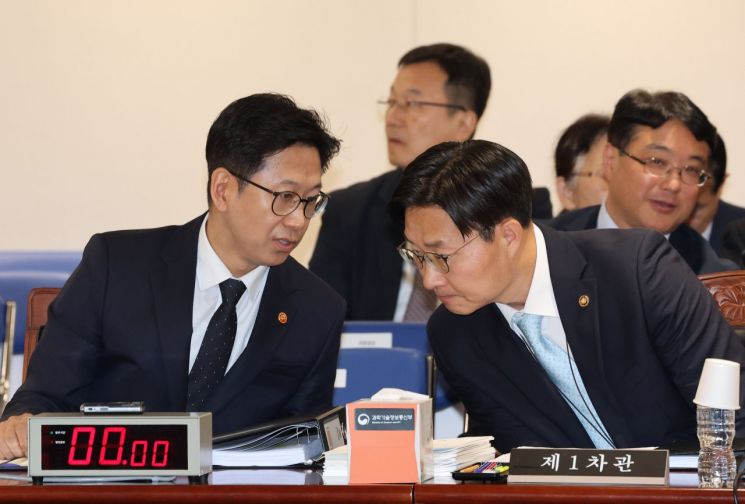 Deputy Prime Minister and Minister of Science and ICT, Paik Kyung-hoon (left), is seen conversing with First Vice Minister Koo Hyuk-chae during the National Assembly Science, ICT, Broadcasting and Communications Committee’s audit of the Ministry of Science and ICT held at the Government Complex Sejong on October 13. Photo by Yonhap News Agency
PBS and Financial Structure Limitations: "Difficult to Achieve Major Outcomes"
The government has diagnosed that, despite being the backbone of national research and development, government-funded research institutes have not been able to generate large-scale achievements as in the past. This is due to PBS-centered operations, an unstable financial structure, a compensation and incentive system not linked to performance, and excessive administrative burdens on researchers.
In particular, the government pointed out that researchers have been forced into competition for project acquisition to secure their salaries, resulting in a structural problem where short-term projects are repeatedly prioritized over long-term and challenging research.
As a first step, the government will establish a system for these institutes to fulfill national missions. The system will be revised so that research is focused on clear national objectives such as securing strategic technologies, solving national challenges, and enhancing the capabilities of businesses and regions.
To this end, PBS will be abolished, and all personnel expenses will be covered by institutional contributions, allowing researchers to focus on their core research without the pressure of competing for projects. In addition, a new "national mission-oriented strategic research project" will be created, which will be proactively planned by the institutes based on government and industry demand, along with the establishment of a supporting implementation system.
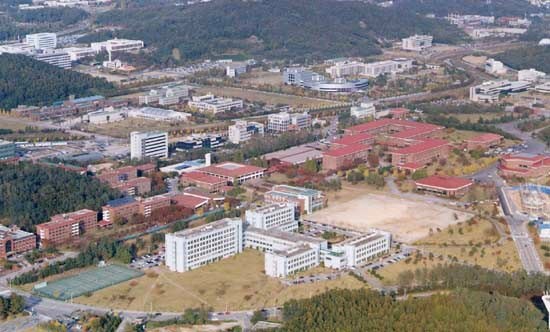 Daejeon Daedeok Research and Development Special Zone, densely populated with government-funded research institutes. The Asia Business Daily Database
Transition to a Performance-Based Evaluation and Compensation System
The evaluation and compensation system will also be reorganized to focus on performance. Institutional evaluations will shift from being based on achievement relative to plans, to being centered on representative outcomes that are tangible to the public, with a significant simplification of the evaluation process.
Evaluation results will be directly linked to compensation. A new performance-based incentive system for all staff and a bonus system for outstanding researchers will be introduced, establishing a compensation structure that rewards achievement. Policies to attract and secure top talent, such as improved working conditions and expanded special recruitment, will also continue to be promoted.
Improvements to the research environment will be pursued in parallel, so that researchers can devote themselves entirely to their work. The government plans to professionalize research administration to minimize the administrative burden that has been shifted onto researchers and to enhance research productivity.
To achieve this, the government will fully revise the "Act on the Establishment, Operation, and Fostering of Government-Funded Science and Technology Research Institutes," which was enacted in 2004, in order to establish a support and development system for these institutes that is aligned with the changed technological and policy environment.
Koo Hyuk-chae, First Vice Minister of Science and ICT, stated, "Government-funded research institutes in the field of science and technology are key players in leading innovation and change in the scientific community. We will provide unwavering support in terms of systems, finance, and environment so that these institutes can become the cornerstone for fulfilling national missions."
© The Asia Business Daily(www.asiae.co.kr). All rights reserved.
![Clutching a Stolen Dior Bag, Saying "I Hate Being Poor but Real"... The Grotesque Con of a "Human Knockoff" [Slate]](https://cwcontent.asiae.co.kr/asiaresize/183/2026021902243444107_1771435474.jpg)
















