Bloomberg: "First Annual Decline Without Major Negative Events"
About 8% Down From the Start of the Year... Correction Phase Without Bad News
Excessive Leveraged Liquidations and Whale Sell-Offs Cited as Causes
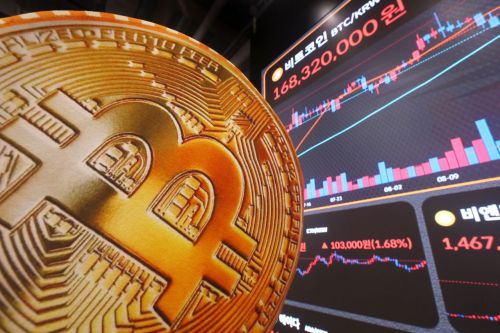
There is an outlook that Bitcoin, the leading cryptocurrency, will record its fourth-ever annual decline this year. Unlike previous downturns that coincided with major negative events, this year's decline has persisted despite several positive developments, with excessive leverage liquidation cited as a primary cause.
On the 16th (local time), Bloomberg reported that Bitcoin is expected to post its fourth annual decline on record this year, stating, "While the previous three annual declines were linked to major scandals or industry collapses within the cryptocurrency sector, this is the first time an annual drop has occurred without such issues."
According to Bloomberg, Bitcoin began the year at a closing price of $94,771 per coin on January 1 and peaked at over $126,000 in early October before starting its descent. As of noon on the 17th (local time) in Singapore, it was trading around $87,100, marking a decline of about 8% compared to the beginning of the year.
The previous three annual declines occurred in 2014 (-57.5%), 2018 (-73.8%), and 2022 (-64.3%), each coinciding with major negative events for Bitcoin. In 2014, the Mt. Gox exchange hacking incident took place; in 2018, the initial coin offering (ICO) bubble burst; and in 2022, a series of cryptocurrency exchanges including FTX went bankrupt, prompting strong regulatory actions from the Joe Biden administration.
In contrast, this year saw many positive developments. Donald Trump, a cryptocurrency advocate, returned to the White House, and the Genius Act, which incorporates stablecoins into the regulatory framework, passed the U.S. Congress. Nevertheless, after hitting an all-time high in early October, Bitcoin underwent a sharp correction and has struggled to regain upward momentum.

An industry insider told Bloomberg, "There were numerous positive catalysts, but the market failed to gain any strength, leaving most participants surprised."
Bloomberg pointed out that while this year's decline has been less severe than in previous years, the underlying causes are fundamentally different.
The primary cause identified was extreme leverage. On October 10, $19 billion worth of leveraged positions were liquidated at once, triggering a sharp downturn in the cryptocurrency market. Bloomberg also cited selling by 'whales'-large holders of Bitcoin-as a contributing factor. The mass sell-off by these major investors exerted sustained downward pressure on prices and led to a sharp drop in trading volume.
Pratik Kala, portfolio manager at the hedge fund Apollo Crypto, explained, "The selling by existing whales has clearly broken the upward momentum. The industry got everything it wanted regarding regulations, but the price failed to follow."
© The Asia Business Daily(www.asiae.co.kr). All rights reserved.


















