About 364 Trillion Won in Russia's Overseas Assets Frozen
Over 88% Held at Belgium's Euroclear
EU Plans to Use Frozen Assets to Support Ukraine
Russia Files Lawsuit Against Euroclear
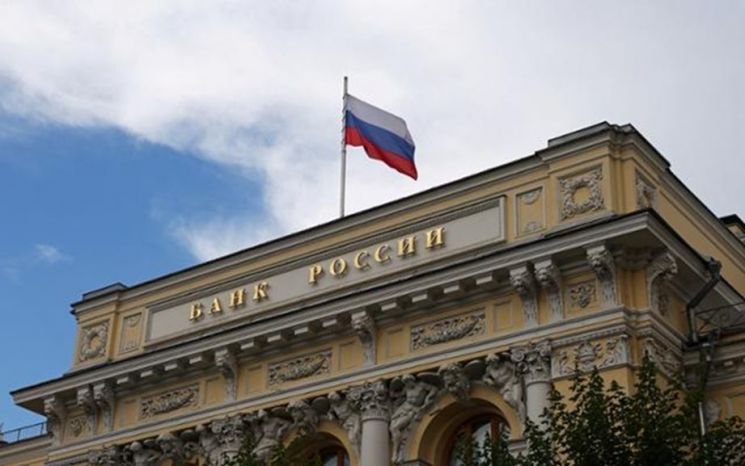 View of the Central Bank of the Russian Federation located in Moscow, Russia. Photo by Reuters Yonhap News Agency
The Central Bank of Russia has filed a damages lawsuit against Euroclear, the Belgian central securities depository. This move is seen as an attempt to pressure Euroclear, following the European Union's (EU) efforts to use Russia's frozen overseas assets held at Euroclear to support Ukraine. Some EU countries, including the Belgian government, are opposing the EU's plan to use Russia's frozen funds, expressing concerns about possible retaliatory measures by Russia. With conflicting interests among member states, it is expected that reaching an agreement on the use of Russia's frozen assets within the EU will not be easy.
Russia Sues Belgium's Euroclear... Plan to Use Frozen Funds for Ukraine Faces Setback
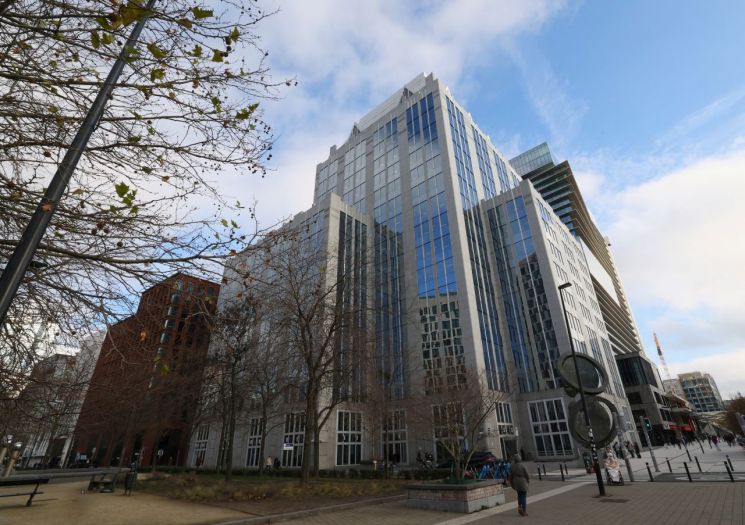 The headquarters building of Euroclear, the world's largest International Central Securities Depository (ICSD), located in Brussels, Belgium. Photo by Reuters Yonhap News.
On December 12 (local time), the Central Bank of Russia filed a damages lawsuit against Belgium's Euroclear at the Moscow Arbitration Court. The amount claimed by the Central Bank of Russia against Euroclear is 18.2 trillion rubles (approximately 340 trillion won). The Central Bank of Russia stated, "Given that the EU is officially considering ways to use the assets directly or indirectly without Russia's consent, we are filing a lawsuit against the depository, Euroclear."
The lawsuit is interpreted as a move to prevent the EU from using Russia's frozen assets deposited at Euroclear. The total amount of Russia's frozen overseas assets in Europe is 210 billion euros (about 364 trillion won), with more than 88%-185 billion euros (about 321 trillion won)-held at Euroclear. The EU is planning to use these assets as collateral to provide loans worth 90 billion euros (about 165 trillion won) to Ukraine. To this end, on December 11, the European Commission announced that it would indefinitely freeze the assets of the Central Bank of Russia.
The Guardian reported, "The EU is not stripping Russia of the legal ownership of the funds deposited at Euroclear, but instead intends to lend the funds to Ukraine." The report added, "If Russia refuses to pay war reparations to Ukraine, the EU is also considering a provision that would allow Ukraine not to repay the loan, which is provoking even stronger opposition from Russia."
Disagreements Deepen Over Disposition of Russia's Frozen Assets..."Opposition to Shifting Risks to Belgium"
There are divided opinions within the EU regarding the disposition of Russia's frozen assets. Some EU member states, including the Belgian government, are strongly opposed to the plan, fearing retaliatory measures by Russia. They argue that if sanctions against Russia are lifted, and Russia seeks to recover all the funds it deposited with Euroclear, they may be held responsible for repaying the entire amount.
According to the BBC, Euroclear, established in 1968, is the world's largest International Central Securities Depository (ICSD), providing cross-border settlement services to about 90 countries. Most of Russia's foreign currency assets have been deposited with Euroclear since the Soviet era. The BBC noted, "If sanctions against Russia are lifted after the end of the war in Ukraine, Euroclear will be obligated to comply with Russia's requests to recover its deposited funds. If Russia seeks to withdraw the entire amount at once, the economic impact could be significant due to the sheer size of the funds."
Belgian Foreign Minister Maxime Pr?vot also stated at a press conference on December 3, "The EU's plan to use Russia's frozen assets does not sufficiently reflect our concerns," adding, "We cannot accept a situation where the money is spent by the EU, but the risks are shifted solely onto us." Belgian Prime Minister Bart De Wever also submitted a letter to European Commission President Ursula von der Leyen expressing opposition to the use of Russia's frozen assets.
In addition to Belgium, some EU member states such as Italy, Malta, Bulgaria, and the Czech Republic have also expressed opposition to the use of frozen assets, citing concerns about possible Russian retaliation and negative impacts on ceasefire negotiations. Politico reported, "Some countries, including Belgium, believe that a joint bond issuance by the EU to provide financial support to Ukraine would be a safer approach," adding, "It is unlikely that a consensus will be reached on the disposition of Russia's frozen assets in the short term."
© The Asia Business Daily(www.asiae.co.kr). All rights reserved.
![Clutching a Stolen Dior Bag, Saying "I Hate Being Poor but Real"... The Grotesque Con of a "Human Knockoff" [Slate]](https://cwcontent.asiae.co.kr/asiaresize/183/2026021902243444107_1771435474.jpg)


















