Ceasefire Hopes Between Russia and Ukraine
OPEC+ Output Increase Intensifies Oversupply Expectations
International oil prices have plummeted to their lowest levels in nearly five years, driven by the potential end of the war between Russia and Ukraine and expectations of an oversupply in the market.
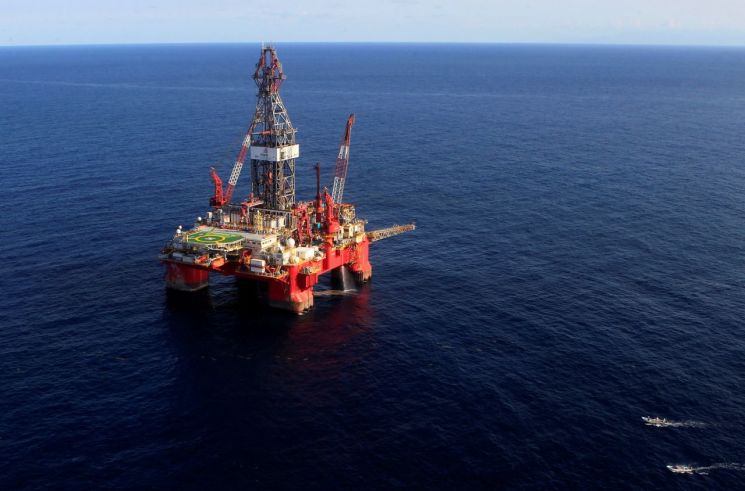
On December 16 (local time) at the New York Mercantile Exchange (NYMEX), West Texas Intermediate (WTI) crude closed at $55.27 per barrel, down 2.7% from the previous trading day. During intraday trading, WTI fell to as low as $54.98 per barrel, marking its lowest level in four years and ten months since February 2021.
Brent crude, the global oil price benchmark, ended the session at $58.92 per barrel, down 2.7% from the previous day.
The decline in oil prices is being attributed to both an increase in global crude supply and expectations of easing geopolitical tensions. In particular, speculation that geopolitical risks surrounding the war in Ukraine could ease is exerting downward pressure on oil prices. It has been reported that U.S. President Donald Trump is pressuring Ukraine to accept a peace agreement with Russia by Christmas Day, December 25, which has led to the assessment that concerns about supply disruptions due to a prolonged war have diminished.
In addition, OPEC+ (the Organization of the Petroleum Exporting Countries and its non-OPEC partners) has effectively ended its years-long production cut policy and is rapidly ramping up output, further strengthening expectations of a supply glut in the market. With supply expected to outpace demand in both this year and next in the oil market, the International Energy Agency (IEA) forecasts that the oversupply next year will reach a record high.
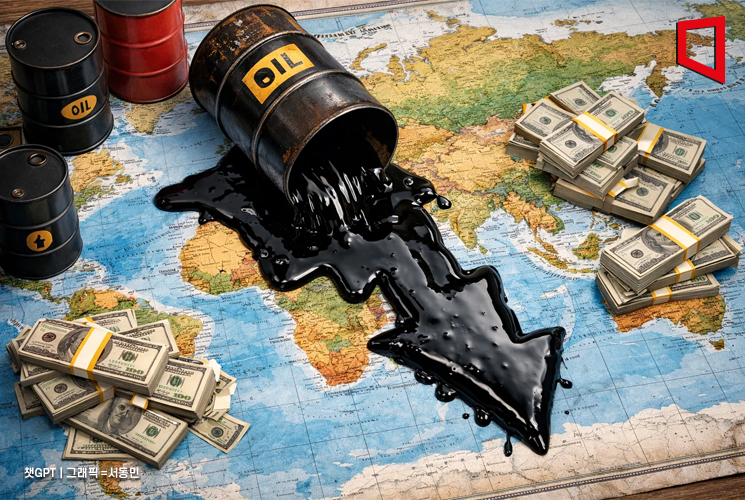
Nour Al Ali, a strategist at Bloomberg, analyzed, "As evidence mounts that supply is outpacing demand, selling pressure in the oil market has accelerated this month."
The possibility of an economic slowdown in the United States is also weighing on oil prices. According to the November employment report released by the U.S. Department of Labor's Bureau of Labor Statistics (BLS) on this day, nonfarm payrolls increased by 64,000. This marks a turnaround from October, when nonfarm employment fell by 105,000 due to federal government workforce reductions. However, the unemployment rate rose to 4.6%, the highest since September 2021, raising concerns about a cooling labor market.
Jorge Leon, head of geopolitical analysis at Rystad Energy, stated, "If a ceasefire agreement is reached between Russia and Ukraine, there is a high likelihood that Ukraine's attacks on Russian oil infrastructure and U.S. sanctions against Russia will be swiftly lifted." He added, "In this case, the risk of short-term disruptions to Russian oil supply would be significantly reduced, and up to 170 million barrels of Russian oil currently stored at sea could return to the market." He further noted that if U.S. sanctions against Russia are lifted, oil-producing countries are likely to ramp up production.
Experts believe that the weak trend in international oil prices is likely to continue for the time being.
Kim Sujin, an analyst at Mitsubishi UFJ Financial Group (MUFG), said, "The increase in production by OPEC+ and other regions, combined with the possibility of easing sanctions against Russia, is adding further downside risk to oil prices," and added, "International oil prices are likely to post a year-on-year decline."
© The Asia Business Daily(www.asiae.co.kr). All rights reserved.
![Clutching a Stolen Dior Bag, Saying "I Hate Being Poor but Real"... The Grotesque Con of a "Human Knockoff" [Slate]](https://cwcontent.asiae.co.kr/asiaresize/183/2026021902243444107_1771435474.jpg)

















