Announcement of the Ten Core Initiatives for Korea's Leap as a Cultural Powerhouse in 2026
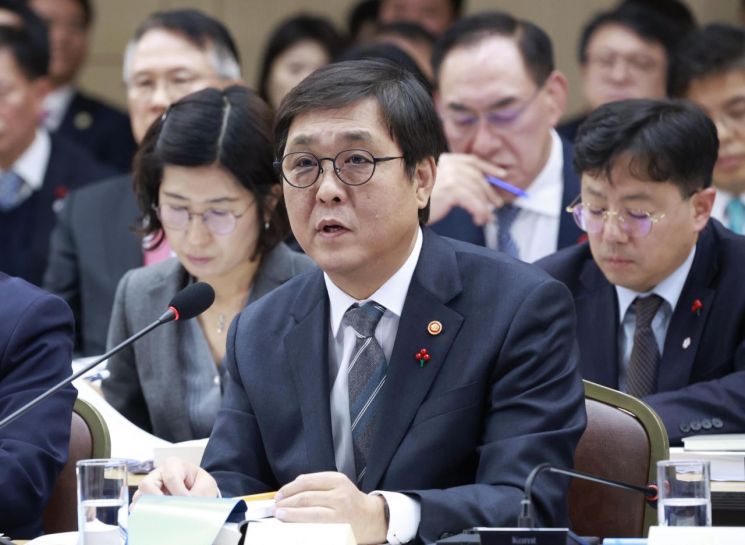
Choi Hwiyoung, Minister of Culture, Sports and Tourism, announced plans to make 2026 the inaugural year for Korea's leap as a cultural powerhouse by fostering the K-culture industry.
On December 16, at the Government Sejong Convention Center, Minister Choi presented ten key initiatives in the Ministry of Culture, Sports and Tourism and the Cultural Heritage Administration’s 2026 work report, highlighting achievements from the past six months.
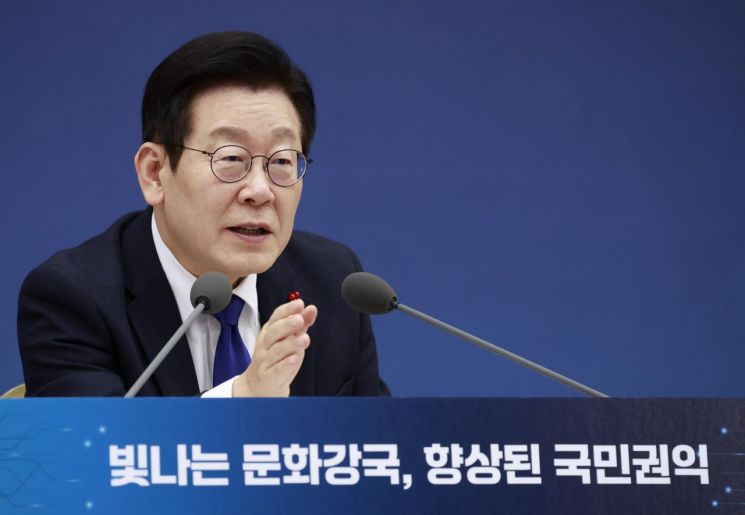
In his opening remarks, President Lee Jaemyung emphasized that culture is a core asset of national competitiveness, stating, "Support should be thorough, but interference must be avoided." He also addressed hierarchical and violent practices in the sports sector and the structural difficulties faced by cultural and artistic professionals, calling for transparent management.
Minister Choi proposed institutional reforms to address illegal content distribution and ticket scalping. He reported that the ministry will establish legal grounds to order immediate removal and "emergency blocking" in clear cases of rights infringement, aiming to reduce annual damages amounting to several hundred billion won, which have hindered the growth of the cultural industry for over 20 years.
In the performing arts and sports industries, he announced plans to push for legislation banning all forms of ticket resale at inflated prices, introduce fines of up to 50 times the ticket price, and implement a reward system for reporting scalping, aiming to fundamentally overhaul the ticket resale market.
In the sports sector, he explained that measures have been taken to enhance the democracy and transparency of sports organizations, such as limiting consecutive terms for the president of the Korean Sport & Olympic Committee and introducing electronic and online voting systems. The ministry plans to expand these reforms to provincial sports associations, improving the overall governance structure of the sports sector.
The Ministry of Culture, Sports and Tourism set a major policy direction for 2026, shifting from a "facility-centered" to a "content-centered" approach. Five key tasks were identified as the foundation for becoming a cultural powerhouse: creating a free and stable environment for artistic creation, expanding support for foundational arts, innovating the cultural and artistic support system, bridging regional cultural gaps, and securing future cultural assets.
In the K-pop sector, the ministry unveiled a strategy to link global commercial success to the expansion of industry infrastructure. Citing the recent achievement of Stray Kids topping the US Billboard 200 for eight consecutive weeks and the sustained global demand for K-pop, the ministry pledged to address the relative shortage of performance infrastructure.
Next year, 12 billion won will be invested to improve sound and lighting facilities in multipurpose sports venues. In the mid to long term, the ministry plans to build a dome-shaped performance hall with a capacity of 50,000 seats, establishing infrastructure befitting K-pop's global stature.
The ministry will also establish a comprehensive plan to secure major performance and event venues in seven global cities, led by the Presidential Committee on Popular Culture Exchange, and support entry into emerging markets such as Latin America. Plans are also underway to host the large-scale K-culture event "FANOMENON," which will combine related industries such as games, food, and beauty with K-pop.
The ministry will also strengthen strategies to secure original intellectual property (IP) to enhance the overall competitiveness of the content industry. Support for discovering creators and boosting exports in webtoon, web novel, and publishing sectors will be expanded, and 18 billion won will be allocated in 2026 to help small theater creative musicals scale up for global expansion. The "Musical International Market" will also be expanded to attract foreign investment.
Measures will be strengthened to allow artists to focus on their creative work without worrying about their livelihood. The ministry will provide annual creative grants of 9 million won each to 3,000 young creators, establish an artists’ welfare fund, and offer preparatory grants for artistic activities, as well as loans for living and housing expenses, to improve artists’ livelihoods and creative conditions. The ministry will also push to revise the "Artists’ Rights Protection Act" to address rights violations and support injury insurance enrollment for artists participating in government-funded projects to prevent safety accidents during performances.
For the film and video industry, which is currently in a slump, the ministry will combine policy financing with production support. Financial support for blockbuster film production will be expanded, and 20 billion won will be invested in supporting mid-budget films.
International co-production support will be newly established to promote overseas expansion, and support for video content production, in which domestic production companies and online video services (OTT) jointly own IP, will be increased to 39.9 billion won. The ministry also plans comprehensive support for independent films, covering the entire process from production to screening and film festival distribution, along with incentives to help theaters recover audiences.
The ministry has redefined K-culture as a comprehensive industry that includes not only content sectors such as film, drama, games, and popular music, but also food, beauty, fashion, and tourism. Based on this, the ministry will pursue two nurturing strategies: strengthening the growth engine of the cultural creative industry and expanding industries that grow together based on fandom.
The ministry will drive the overseas expansion of K-culture by securing seven global hub performance venues and promoting Korean restaurants as landmarks. It will also foster regional tourism hubs to disperse the concentration of inbound tourism demand in the Seoul metropolitan area, and improve tourism infrastructure across government agencies, including entry/exit, payment, and transportation convenience.
Minister Choi stated, "2026 will be the year to solidify the foundation of a cultural powerhouse and develop K-culture into a core growth industry leading our economy," adding, "We will overhaul the entire framework of national tourism policy to achieve the goal of 30 million foreign tourists as soon as possible."
© The Asia Business Daily(www.asiae.co.kr). All rights reserved.


















