U.S. Calls It a "Security Deal,"
Major Shareholders Warn of "Breach of Duty" Concerns
Korea Zinc’s $7.4 Billion Tennessee Smelter Investment
Legal Battle Continues... Will the Management Dispute Hinder Progress?
A management dispute between Korea Zinc, led by Chairman Choi Yunbum, and its largest shareholders, Young Poong and MBK Partners, is flaring up again over Korea Zinc’s plan to invest in a U.S. smelter. Young Poong and MBK Partners filed for an injunction, raising issues with the issuance of new shares to fund the construction of the U.S. smelter, while Korea Zinc countered by stating that the move is a “legitimate management decision aimed at building a core mineral supply chain in the U.S. and strengthening global competitiveness.” While both sides agree on the necessity of the U.S. smelter project itself, the conflict over the method of new share issuance and the defense of management control has resurfaced.

On December 16, Korea Zinc released a statement asserting, “This project is a core mineral supply chain initiative aligned with U.S. government policy and is being pursued legally in accordance with relevant laws and the company’s articles of incorporation.” The company further claimed, “MBK and Young Poong, obsessed only with hostile M&A, are devaluing the project.” Korea Zinc explained that the structural demand for core minerals such as zinc, lead, and copper is increasing due to expanding investment in electric vehicles, batteries, and renewable energy in the United States.
Addressing financial concerns, Korea Zinc stated, “The structure involves more than 90% of the total funding coming from the U.S. government and financial investors,” adding, “This will reduce borrowing burdens and improve financial stability.” Regarding the overseas joint venture (JV), the company explained, “Korea Zinc’s stake is less than 10%, voting rights are exercised independently, and external strategic investors, including the U.S. Department of Defense, will lead decision-making.”
In contrast, Young Poong clarified that it does not oppose cooperation with the United States itself. Young Poong stated, “The issue is not the U.S. smelter investment, but the third-party allocation paid-in capital increase that allows foreign governments and companies to directly acquire shares in Korea Zinc’s headquarters,” arguing that this is “an attempt to artificially restructure the governance structure amid a management dispute.”
Regarding the injunction request, Young Poong said, “This is not a measure to block cooperation with the U.S., but the minimum legal response to ensure procedural legitimacy and protect shareholder value,” adding, “Even if the new share issuance is suspended, strategic partnership with the U.S. can proceed fully under a normal board of directors system.”

Through this investment, the Korea Zinc joint venture with the U.S. Department of Defense and Department of Commerce will build a core mineral smelting and processing facility in Clarksville, Tennessee, with an annual capacity of 540,000 tons. The site will cover approximately 650,000 square meters. The total investment, including operating and financing costs, is $7.4 billion (about 11 trillion won), with capital expenditures (CAPEX) accounting for $6.6 billion (about 10 trillion won). According to the company’s plan, site preparation and basic civil engineering will begin in the first quarter of 2026, construction will start in 2027, phased operations will begin in 2029, and full operation is targeted for the first quarter of 2030.
The funding structure combines U.S. government funds, private investment, and financial loans. A total of $2.15 billion will be provided by the U.S. Department of Defense and investors, with the Department of Defense’s conditional investment amounting to $1.4 billion. The U.S. Department of Commerce will provide $210 million based on the CHIPS Act. The remaining funds will be raised through loans and project financing centered on the local joint venture. Korea Zinc stated that its stake in the joint venture is in the 9% range.
On December 15 (local time), Howard Lutnick, U.S. Secretary of Commerce, described Korea Zinc’s Tennessee smelter investment decision as a “big win for America” via social media. He directly mentioned President Donald Trump, calling it “a groundbreaking core mineral deal that will strengthen national security, rebuild the industrial base, and end reliance on overseas supply chains.”
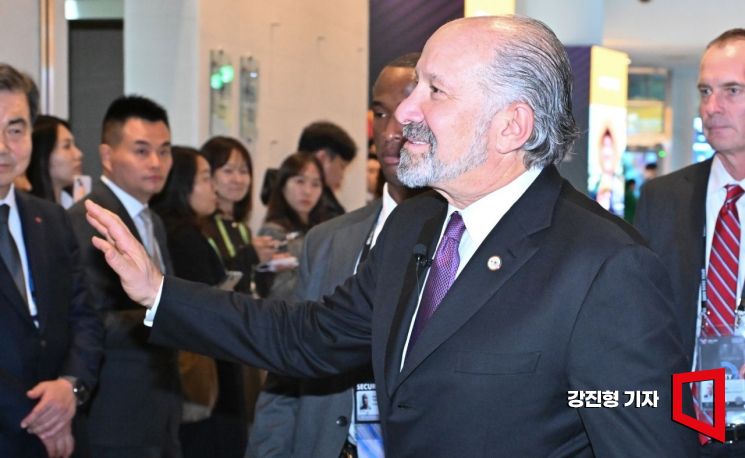
The Young Poong and MBK side responded to Secretary Lutnick’s remarks by stating, “He is simply highlighting the significance of building a smelter in the U.S., not expressing agreement or approval regarding Korea Zinc’s shareholding or the third-party allocation paid-in capital increase,” and maintained, “Regardless of the U.S. assessment, a capital increase structure disadvantageous to existing shareholders could constitute a breach of fiduciary duty.”
On the other hand, Korea Zinc maintains that the investment structure has no direct connection to management control. The company explained that the investment vehicle involving the U.S. government is a financial investment for securing strategic minerals from a supply chain perspective, not an equity investment for management participation or dividends. Korea Zinc emphasized that plant construction, operation, and technology control will be handled by a U.S. subsidiary established by Korea Zinc, and that the rights secured by the U.S. are not equity stakes but priority purchase and access rights.
However, after Korea Zinc held an extraordinary board meeting and resolved to issue 10.3% of new shares through a third-party allocation paid-in capital increase to the joint venture involving the U.S. government, the shareholding of the Young Poong and MBK alliance was rapidly matched. Young Poong and MBK currently hold a 44.24% stake in Korea Zinc. Chairman Choi Yunbum and related parties hold 19.41%, and even including all friendly shares such as Hanwha, their total remains in the 32% range. If the capital increase is completed, the Young Poong and MBK stake will be diluted to about 40%, while Chairman Choi’s side will drop to around 29%. The joint venture with the U.S. government will secure 10.3% of the total issued shares, bringing both sides’ stakes to a similar level. As a result, the composition of the board and the control structure will once again become variables ahead of next year’s regular shareholders’ meeting.
MBK plans to continue its legal response, including an injunction to prohibit the issuance of new shares and lawsuits to nullify or cancel the board’s resolution. The possibility of a shareholder derivative suit against the CEO and directors who supported the agenda is also being considered.
© The Asia Business Daily(www.asiae.co.kr). All rights reserved.
![Clutching a Stolen Dior Bag, Saying "I Hate Being Poor but Real"... The Grotesque Con of a "Human Knockoff" [Slate]](https://cwcontent.asiae.co.kr/asiaresize/183/2026021902243444107_1771435474.jpg)













