Cabinet Meeting Presided Over by President Lee Jaemyung
"Service Type" Regional Doctor System Requires 10 Years of Mandatory Service
A bill to foster regional doctors who are required to serve for 10 years in local areas to address the shortage of medical professionals outside major cities has passed the Cabinet meeting. In addition, the Cabinet approved the promulgation of the revised Corporate Tax Act, which raises the corporate tax rate by 1 percentage point across all taxable income brackets, as well as the revised Restriction of Special Taxation Act, which allows for separate taxation of stock dividend income.
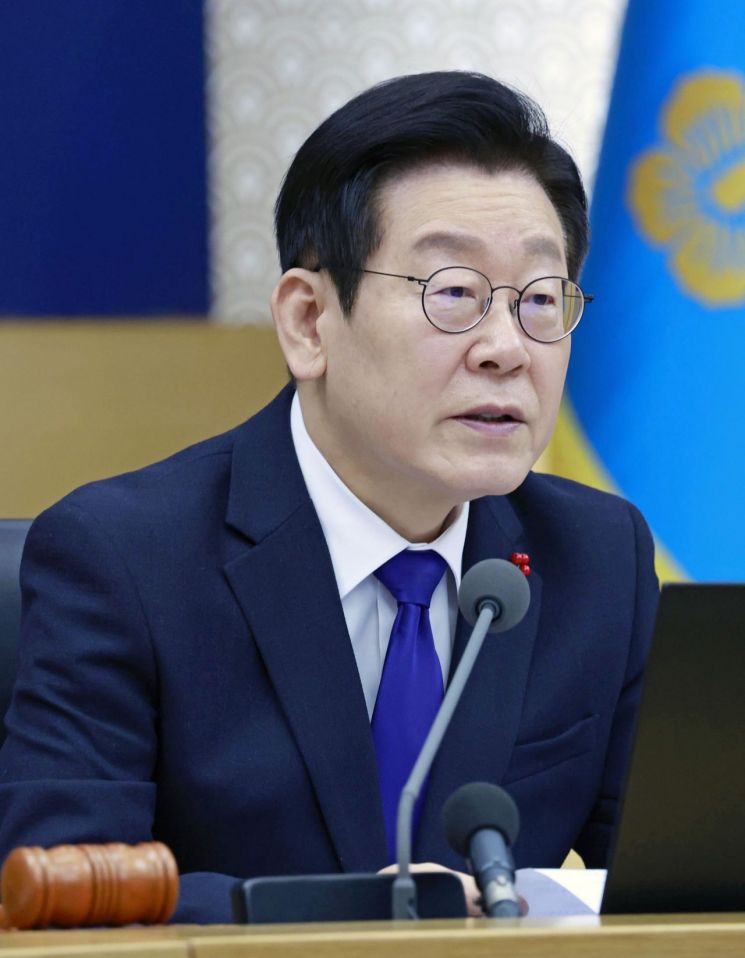
The government announced that during the Cabinet meeting held at the Government Complex Sejong and presided over by President Lee Jaemyung, the promulgation of the “Act on the Training and Support of Regional Doctors” was reviewed and approved. The law takes effect two months after its promulgation. At the meeting, a total of 35 bills for promulgation, 4 legislative bills, 24 presidential decrees, 3 general agenda items, and 1 report item were reviewed and approved.
The regional doctor system is divided into the “service type” and the “contract type.” Under the service type, medical students selected through a special admission process are required to serve in designated regions for 10 years after graduation. If the mandatory service period is not fulfilled, the Minister of Health and Welfare may issue a corrective order, and if this order is not followed, the medical license may be suspended or revoked. Students selected through this process are eligible for support from the national and local governments, including admission fees, tuition, and textbook costs. In addition, the government approved the promulgation of the revised Medical Service Act, which provides a legal basis for telemedicine.
The revised Corporate Tax Act, which increases the corporate tax rate by 1 percentage point across all brackets, also passed the Cabinet. Starting with business income earned next year, a progressive tax rate will apply: 10% for income up to 200 million won, 20% for income over 200 million won up to 20 billion won, 22% for income over 20 billion won up to 300 billion won, and 25% for income exceeding 300 billion won. In addition, with the passage of the revised Restriction of Special Taxation Act allowing for separate taxation of stock dividend income, from next year, investors who earn dividend income from high-dividend listed companies will be subject to separate tax rates: 14% for up to 20 million won, 20% for over 20 million won up to 300 million won, 25% for over 300 million won up to 5 billion won, and 30% for over 5 billion won.
At the Cabinet meeting, the promulgation of the revised Tobacco Business Act, which expands the definition of tobacco to include products made from nicotine-allowing for systematic management of synthetic nicotine e-cigarettes-was approved. The Cabinet also approved a partial amendment to the Civil Act, which has remained unchanged since its enactment in 1957, to modernize contract law provisions most closely related to daily life, such as legal acts and breach of obligations.
Additionally, the Cabinet passed a partial amendment to the “Regulations on the Operation and Innovation of Administrative Work,” which establishes the legal basis for the “Special Performance Reward” system to compensate public officials for outstanding achievements. It also approved a presidential decree amending 49 laws to either abolish or relax the minimum space requirements for business premises, supporting the revitalization of new and small-scale businesses.
© The Asia Business Daily(www.asiae.co.kr). All rights reserved.

















