EV Transition Policies Slow in Advanced Markets Like the EU and US
Global Automakers Recalibrate Production Strategies
Volkswagen Shuts Down Electric Vehicle Plant in Germany
Ford Reports $19.5 Billion Loss in EV Business
Electric Pickup Truck
As Europe and the United States begin to adjust their electrification transition policies, global automakers are also recalibrating their electric vehicle (EV) production strategies. The United States is accelerating a shift toward hybrids (HEVs) by eliminating EV tax credit benefits, while Europe has also signaled a possible reversal of its ban on the sale of internal combustion engine vehicles by 2035. The closure of Volkswagen's electric vehicle plant in Germany and Ford's halt in electric pickup truck production serve as symbolic examples of these changes.
On December 15 (local time), the Financial Times (FT) reported that the European Union (EU) is working to ease its plan to ban the sale of internal combustion engine vehicles, which was set to take effect in 2035. The European Commission is expected to propose a related amendment on December 16, which would allow automakers to continue producing internal combustion engine vehicles up to 10% of their 2021 emissions levels even after 2035.
The EU, which had been the most proactive in the electrification transition, is stepping back from the internal combustion engine vehicle sales ban due to the poor performance of European automakers. Member states with a high proportion of automotive manufacturing, such as Germany and Italy, have consistently raised concerns that the EU's electrification policy sets unrealistic targets.
Even Volkswagen, Europe's largest automaker, has decided to close its electric vehicle plant in Germany, delivering a significant shock to both the European manufacturing sector and the broader economy. This is the first time since its founding in 1937-88 years ago-that Volkswagen has closed a plant in Germany. The Dresden plant, which is being closed, has produced the ID.3 electric vehicle model and has been considered a symbolic production base for the Volkswagen Group's electrification strategy.

In the United States, the shift back toward internal combustion engines is unfolding even more rapidly. The Wall Street Journal (WSJ) reported that Ford plans to scale back its EV business and pivot its electrification strategy toward HEVs and extended-range electric vehicles (EREVs). Ford will transition its all-electric pickup truck, the F-150 Lightning, to an EREV model, and will utilize its battery plants in Kentucky and Michigan to launch a new energy storage system (ESS) business. Ford has estimated its fourth-quarter losses related to its EV business at 19.5 billion dollars (approximately 28 trillion won).
Previously, Ford decided to dissolve its battery joint venture with SK On, which had been established in Tennessee and Kentucky. With the temporary slowdown in EV demand (the so-called "EV chasm") persisting and financial pressures mounting, both companies have chosen to go their separate ways. Jim Farley, Ford's Chief Executive Officer, stated, "It's obvious that large electric vehicles will not be profitable, so we will not invest billions of dollars," adding, "We are changing direction."
Another American automaker, General Motors (GM), is also facing the burden of revising its EV strategy. GM revealed in its third-quarter results that it incurred costs of 1.6 billion dollars (about 2.3 trillion won) related to changes in its EV plans.
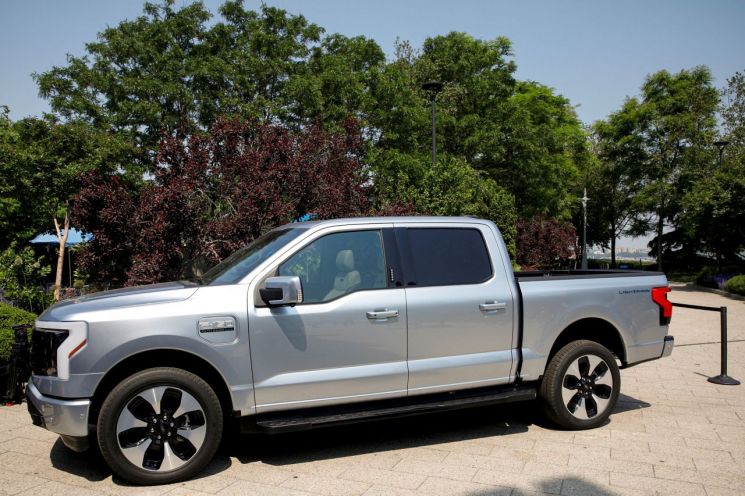
These changes are closely related to the expected actions of the second Donald Trump administration, which is likely to repeal or ease the Biden administration's EV-related targets and emissions regulations immediately after taking office. The EV tax credit, introduced under the Inflation Reduction Act (IRA) as a form of subsidy, also expired at the end of September.
As a result, South Korean automakers Hyundai Motor and Kia have found it inevitable to revise their strategies in the United States, their largest market. With the route for EV exports to the US blocked, the operation rate of Ulsan Plant 1, which produces the Ioniq 5, has dropped significantly. Hyundai Motor suspended operations at Ulsan Plant 1 until December 12. This marks the tenth shutdown at the plant this year alone.
Kia has also begun to adjust its strategies in response to market conditions. The company is reconsidering the US launch schedule for its new electric sedan, the EV4, and its electric SUV, the EV9 GT. The gap created by declining EV demand will be filled with HEV models such as the Telluride HEV.
© The Asia Business Daily(www.asiae.co.kr). All rights reserved.
![Clutching a Stolen Dior Bag, Saying "I Hate Being Poor but Real"... The Grotesque Con of a "Human Knockoff" [Slate]](https://cwcontent.asiae.co.kr/asiaresize/183/2026021902243444107_1771435474.jpg)

















