AI Semiconductor and HBM Boom
Restructured Intel Returns to Profit
SK Hynix Surpasses Samsung
Driven by robust demand for artificial intelligence (AI) semiconductors, the combined net profit of 11 major global semiconductor companies reached an all-time high in the third quarter of this year (July to September). Additionally, with the expansion of high bandwidth memory (HBM) demand, SK Hynix surpassed Samsung Electronics in net profit for the third quarter.
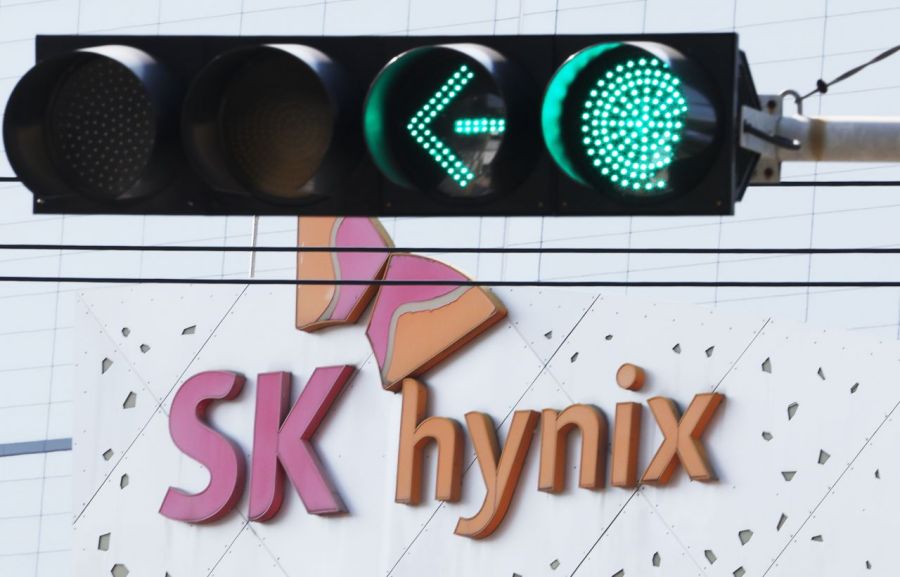
Surge in Earnings from AI Semiconductors and HBM Boom... Weakness in Automotive Chips
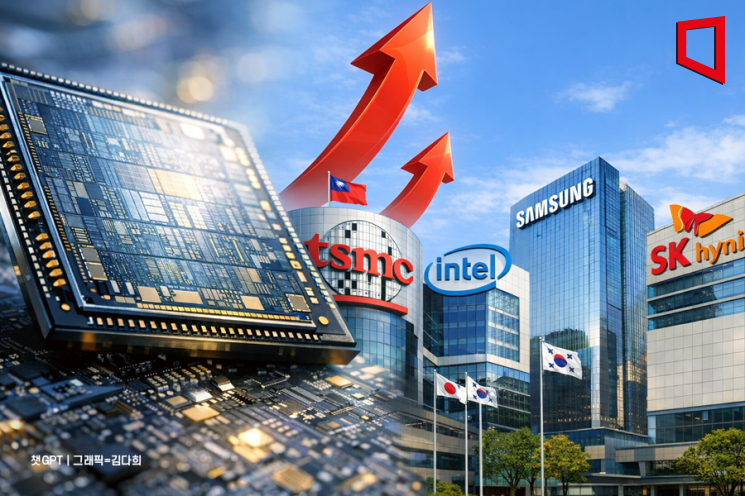
According to data compiled by Nikkei, QUICK, and FactSet on the 16th, the combined net profit of 11 leading global companies focused on semiconductor design, development, and manufacturing totaled $80.1 billion (approximately 118 trillion won) in the third quarter, a 2.3-fold increase compared to the same period last year. The companies included in this tally are Nvidia, Broadcom, AMD, Qualcomm, TSMC, Samsung Electronics, SK Hynix, Micron, Intel, Texas Instruments, and STMicroelectronics.
Nine out of the 11 companies saw improved results. Notably, Intel, which had been struggling, succeeded in returning to profitability. Analysts attribute this turnaround to restructuring efforts such as scaling back factory investments and reducing the workforce. This marks the first time in seven quarters that Intel has posted a quarterly net profit, with the improvement in net profit exceeding $20 billion.
Nvidia saw a 66% increase in data center sales thanks to strong sales of its latest AI semiconductor, "Blackwell," and its net profit rose by 65% year-on-year. Jensen Huang, CEO of Nvidia, stated during the earnings announcement, "There is a lot of talk about an AI bubble, but from our perspective, the situation looks completely different."
Broadcom in the United States also saw its net profit surge by 97% due to the success of its AI semiconductor business. CEO Hock Tan said, "New AI-related orders are steadily increasing, and our order backlog for the next 18 months amounts to $73 billion."
Taiwan's TSMC, which effectively monopolizes AI semiconductor contract manufacturing, also continued its strong performance. TSMC's third-quarter net profit reached $15.1 billion, marking an all-time high for the second consecutive quarter. The share of data center sales rose by 6 percentage points to 57% of total sales. TSMC Chairman and CEO C.C. Wei said, "Our confidence in the AI megatrend is growing even stronger."
The spread of generative AI has also driven a surge in demand for HBM, a large-capacity, high-speed memory. SK Hynix, the industry leader, saw its net profit jump 2.1 times year-on-year to $9 billion, surpassing Samsung Electronics ($8.6 billion). While Samsung Electronics remains the world’s top memory producer by volume, it ranked third in HBM sales. Micron in the United States also increased HBM production at its Hiroshima plant in Japan, with its net profit rising 3.6 times.
In contrast, the semiconductor market outside of AI remained sluggish. Switzerland's STMicroelectronics saw its net profit fall by 32% as electric vehicle (EV) sales slowed and demand shifted toward lower-priced models.
Semiconductor Tariff Uncertainties... Caution Amid Rapid AI Investment
Despite strong results, concerns are being raised that the pace of AI infrastructure investment is excessively fast. This is due to the burden of excessive investment costs and uncertainty about when profits will be realized. In fact, the completion of Oracle's AI data center for OpenAI in the United States has been delayed, raising concerns about the recovery of returns relative to investment.
Business Insider pointed out, "It will take time for Oracle's ambitious plans in the AI sector to bear fruit, and there is speculation that the investment plans may be overly aggressive."
While major semiconductor companies are expected to continue increasing their net profits in the fourth quarter, the growth rate is projected to slow. Nikkei forecasts that the combined net profit of the 11 major companies will reach $85.8 billion in the fourth quarter, but the growth rate will be lower than in the third quarter.
Policy risks are also a variable. U.S. President Donald Trump is reportedly considering the introduction of tariffs on semiconductor chips and manufacturing equipment. If semiconductor tariffs are imposed, it could lead to higher prices for electronic devices and automobiles, as well as increased cost burdens for companies, resulting in reduced investment and potentially dampening demand for AI semiconductors.
Daisuke Minami, Senior Manager at PwC Japan, said, "There is a possibility that the tariff policy could be announced as early as within this year, or by March 2026 at the latest." Nikkei noted that if AI demand falters in this way, the performance of major semiconductor companies could deteriorate much more than expected.
© The Asia Business Daily(www.asiae.co.kr). All rights reserved.
!["The Woman Who Threw Herself into the Water Clutching a Stolen Dior Bag"...A Grotesque Success Story That Shakes the Korean Psyche [Slate]](https://cwcontent.asiae.co.kr/asiaresize/183/2026021902243444107_1771435474.jpg)


















