Rising Fees and Costs Weigh on Domestic Profitability
Global Performance Also Sluggish Amid U.S. Tariff Uncertainty
Despite a downturn in the overall furniture industry, IKEA Korea managed to maintain its sales at last year’s level this year, but its profitability declined significantly. Analysts say that, combined with the poor performance of the global headquarters, the Korean subsidiary also faced ongoing pressure from rising costs.
IKEA Korea announced that its sales for the 2025 fiscal year (September 2024 to August 2025) reached 639.3 billion won, a 2.2% increase from the previous year. Thanks to a rise in both online and offline visitors, the company achieved modest growth in revenue. However, during the same period, operating profit fell by 41.6% to 10.9 billion won from 18.6 billion won the previous year. Net profit also dropped by 40% to 3.3 billion won.
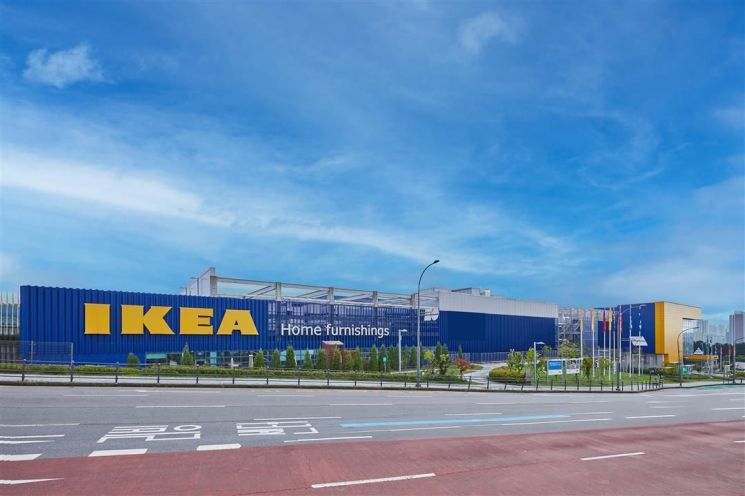
The decline in profitability appears to have been significantly affected by increased selling and administrative expenses. Fees paid by IKEA Korea to its headquarters, including royalty and operating fees, rose to 94.7 billion won this year from 89.2 billion won the previous year. Even as sales grew, the high level of fee payments continued to constrain improvements in operating profit. The company explained, “The increase in costs was influenced by the opening of the Gangdong store in April.”
IKEA has been unable to achieve a clear rebound in the Korean market over the past three years. This is due to declining furniture demand caused by a sluggish construction industry, as well as the rapid growth of e-commerce platforms. As e-commerce platforms expand their services to include delivery and installation, the appeal of IKEA’s traditional ‘low-cost DIY model’ has diminished.
The global headquarters is facing similar challenges. During the same period, IKEA’s operating profit fell by 26% to 1.7 billion euros, and net profit decreased by 32%. The direct cause of the decline in profitability is cited as a drop in gross profit margin from 16% to 14%, triggered by a sharp rise in raw material prices and logistics costs in the second half of the year due to uncertainty surrounding U.S. tariff policies.
This is particularly problematic in the United States, one of IKEA’s core markets, where more than 15% of products sold locally are sourced from overseas, including Sweden, making the company directly exposed to changes in tariff policy. Although the global increase in cost pressures has not yet been fully reflected in the domestic cost structure, some analysts warn that it could become a factor weighing on profitability in the future. With the recovery in furniture consumption delayed, uncertainties remain high regarding costs such as raw materials, exchange rates, and fees.
To expand sales, IKEA Korea plans to continue strengthening its ‘omnichannel’ approach, integrating online and offline channels. Building on the opening of the IKEA Lotte Gwangju store in November, the company will continue testing ‘small IKEA stores in the city’ and plans to further expand its pop-up stores. Online, IKEA Korea will offer an e-commerce shopping experience through its official mall, the IKEA app, and remote customer touchpoints.
© The Asia Business Daily(www.asiae.co.kr). All rights reserved.
![Clutching a Stolen Dior Bag, Saying "I Hate Being Poor but Real"... The Grotesque Con of a "Human Knockoff" [Slate]](https://cwcontent.asiae.co.kr/asiaresize/183/2026021902243444107_1771435474.jpg)
















