Management Crisis Amid Onslaught of Low-Cost Chinese Products
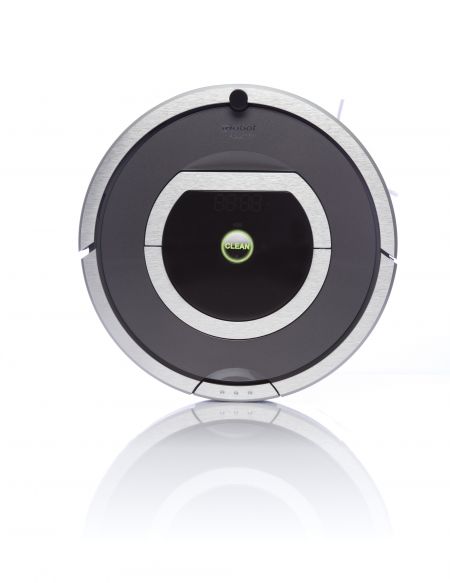 The 'Roomba 780' model from the American robot vacuum manufacturer iRobot. iRobot announced through a press release on the 14th (local time) that it has filed for bankruptcy.
iRobot, the American company famous for its robot vacuum cleaner 'Roomba', was unable to overcome its financial difficulties and filed for bankruptcy protection on the 14th (local time). iRobot is expected to be sold to Pisia Robotics, a Chinese company that manufactures its products under contract.
In a press release issued on the same day, iRobot announced, "Chinese company Pisia has signed a Restructuring Support Agreement (RSA) to acquire iRobot under court supervision." The company added, "According to the RSA, Pisia will acquire 100% of iRobot's shares. This will reduce iRobot's debt and enable the company to continue normal operations and maintain its global business foundation." All existing iRobot common shares will be canceled.
Gary Cohen, CEO of iRobot, stated, "This transaction will strengthen our financial position and help provide continuity to our consumers, customers, and partners."
iRobot, founded by engineers from the Massachusetts Institute of Technology (MIT), achieved success with the launch of the Roomba in 2002. The cumulative sales of its home robots have exceeded 40 million units, and its revenue in 2024 reached approximately 682 million dollars. However, according to Reuters, the emergence of low-cost Chinese competitors such as Ecovacs dealt a blow to the company and significantly undermined its profitability.
In 2022, Amazon.com agreed to acquire iRobot for 1.4 billion dollars, but the merger and acquisition (M&A) fell through after the European Union (EU) competition authorities blocked the deal, citing concerns that it could restrict competition. Since then, iRobot has struggled to find a qualified buyer.
According to the bankruptcy filing, iRobot still maintains a strong position in key markets such as the United States and Japan, but intensified competition has forced the company to lower prices and continue making significant investments in technology upgrades. The company holds a 42% share of the U.S. robot vacuum market and a 65% share in Japan.
As a result, all of the top five companies in the global robot vacuum market are expected to be Chinese. According to a report released by market research firm IDC in March, as of last year, Roborock (16.0%), iRobot (13.7%), Ecovacs (13.5%), Xiaomi (9.7%), and Dreame (8.0%) made up the top five in global market share. Except for iRobot, all four are Chinese companies.
© The Asia Business Daily(www.asiae.co.kr). All rights reserved.

















