Reduction of Port Calls Focused on Key Hub Ports
HMM announced on December 15 that it will introduce a "hub and spoke" strategy on the Asia-North Europe route starting in April next year. The company plans to maximize service efficiency by reducing the number of port calls to focus on key hub ports while establishing a feeder network.
The "Premier Alliance," which consists of HMM, Ocean Network Express (ONE) from Japan, and Yang Ming from Taiwan, unveiled a new service operation plan to be implemented from April next year.
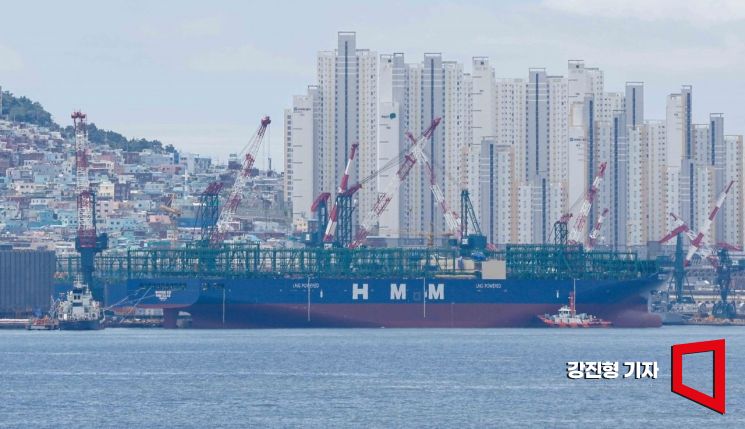
Among the operation plans covering major routes such as Northern Europe, the Mediterranean, North America, Asia, and the Middle East, the most notable change is the restructuring of the Northern Europe route. The Premier Alliance will shift from the current approach of calling at numerous ports on the Northern Europe route to focusing on key hub ports with concentrated cargo volumes, thereby reducing the number of port calls. The alliance aims to maximize service efficiency by establishing a spoke (feeder) network at these hub ports.
The routes undergoing the biggest changes are the FE3 and FE4 services, where HMM will deploy 24,000 TEU-class ultra-large container ships. The FE3 service will be streamlined from 11 to 8 port calls to serve as a high-speed corridor connecting major hubs in China and Europe. The ports of call will be Qingdao (China) - Ningbo (China) - Yantian (China) - Singapore - Algeciras (Spain) - Felixstowe (UK) - Hamburg (Germany) - Antwerp (Belgium).
The FE4 service will establish Busan Port as the key hub in Northeast Asia, providing direct service to major ports in Northern Europe. The number of port calls will be reduced from 13 to 5 to shorten cargo transit times, with the route covering Shanghai (China) - Busan (Korea) - Rotterdam (Netherlands) - Hamburg (Germany) - Le Havre (France).
Among the ports excluded from the hub network, the Premier Alliance's three companies plan to jointly launch a new feeder service for Kaohsiung (Taiwan) and Xiamen (China). This service will utilize Busan as a transshipment hub and is expected to contribute to increased cargo volume at Busan Port.
An HMM representative stated, "This is not just a simple route change, but a strategic decision to provide customers with predictable services," adding, "Through the hub and spoke strategy, we will further enhance HMM's service competitiveness."
© The Asia Business Daily(www.asiae.co.kr). All rights reserved.
![Clutching a Stolen Dior Bag, Saying "I Hate Being Poor but Real"... The Grotesque Con of a "Human Knockoff" [Slate]](https://cwcontent.asiae.co.kr/asiaresize/183/2026021902243444107_1771435474.jpg)











