Production Impact of 10.7 Trillion Won, 57,000 Jobs Created
Clear Differences in Sales Increases and Decreases by Business Sector Across Three Facilities
Gwangju City Emphasizes "Shared Growth" vs. Merchants' Association Cites "Lack of Consultation"
Kang Gijeong: "Will Boost Commercial Vitality and Urban Competitiveness"
According to a commissioned research report, the three complex shopping malls currently being developed in Gwangju are expected to generate a total economic impact of 16.4412 trillion won during the construction phase, including 10.7174 trillion won in production inducement and 4.4412 trillion won in added value, as well as create 57,123 jobs. The report also found significant differences in sales changes by facility and business sector, highlighting the need for future strategies for the local commercial districts.
On December 15, Gwangju City held the "Final Report Meeting on the Impact Assessment of Complex Shopping Malls on Commercial Districts" in the medium conference room of City Hall, where it announced the economic and commercial impacts of three facilities: The Hyundai Gwangju, The Great Gwangju (Shinsegae), and Grand Starfield Gwangju. During the operation phase, the report projected 5.7238 trillion won in production inducement, 2.51 trillion won in added value, and 46,933 jobs created.
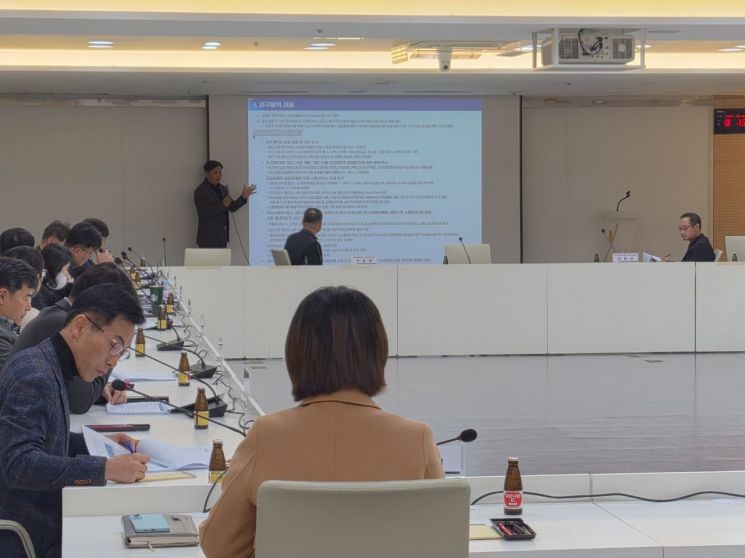 On the morning of the 15th, the final briefing session for the complex shopping mall commercial area impact assessment research project was held in the medium conference room at Gwangju City Hall. Attendees are listening to the explanation of the research results. Photo by Song Bohyun
Differences in Impact by Business Sector: Sectors with Increases and Decreases Identified
The research found that changes in sales by business sector varied for each facility.
At The Hyundai Gwangju, sales increased in supermarkets (1.59%), restaurants (2.91%), clothing, fashion, and accessories (1.26%), coffee shops and bakeries (2.21%), and electronics, furniture, and household goods (1.68%), while cosmetics saw a decrease of -3.43%. Of the visitors, 39.5% came from outside the region, and the rate of simultaneous use of surrounding commercial districts was 67%.
At The Great Gwangju (Shinsegae), sales decreased in cosmetics (-1.53%) and electronics, furniture, and household goods (-1.29%), but increased in supermarkets (0.94%), restaurants (2.59%), clothing, fashion, and accessories (1.84%), and coffee shops and bakeries (2.07%). The composition of visitors was 61.95% local and 38.05% from outside the region.
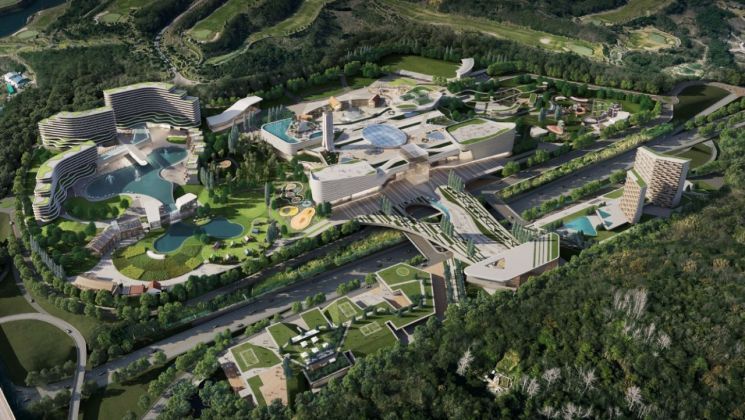
At Grand Starfield Gwangju, sales increased in supermarkets (2.14%), restaurants (4.22%), coffee shops and bakeries (5.53%), cosmetics (5.59%), and electronics, furniture, and household goods (4.39%). However, if a warehouse-type hypermarket opens, clothing, fashion, and accessories are expected to decrease by 1.46%. The analysis showed that 65.65% of visitors would come from other regions, and due to its suburban location, a complementary relationship with surrounding commercial districts is likely to form.
Traditional markets are expected to be only minimally affected, as they cater to different consumer items and age groups. The estimated annual sales by facility are 1.1994 trillion won for The Hyundai, 971 billion won for Shinsegae, and 800 billion won for Starfield.
As follow-up measures, Gwangju City proposed issuing Gwangju Alley Points, establishing shared-growth complex facilities, expanding special guarantee programs, and implementing one-on-one matching between large-scale stores and small businesses. The city also plans to hold a major forum, gather opinions from commercial districts, and operate a shared-growth development council as part of ongoing procedures.
Kim Youngmoon, Deputy Mayor for Culture and Economy of Gwangju City, stated, "The purpose is to accurately diagnose the impact of large-scale store openings on local commercial districts and to develop optimal shared-growth strategies for small businesses. Based on the research results, we will prepare commercial district revitalization measures that everyone can agree on."
Merchants' Associations Raise Concerns Over Procedural Sufficiency
The Gwangju Merchants Association raised concerns about the lack of sufficient consultation procedures regarding the release of this research. A representative stated, "We are not opposed to the opening of complex shopping malls itself, but although we requested repeated discussions, the process was carried out with an emphasis on speed."
They also pointed out that opinions raised during the interim report meeting were not reflected in the final report, and it was difficult to verify which merchants participated in the interviews during the research process, raising questions about the report's representativeness. At the meeting, the merchants' associations once again conveyed to Gwangju City the need for sufficient consultation.
The Hyundai Gwangju Groundbreaking Ceremony... Kang Gijeong: "An Opportunity to Enhance Urban Competitiveness"
Meanwhile, the groundbreaking ceremony for The Hyundai Gwangju project was held on the 20th of last month, marking the official start of the redevelopment of the Jeonbang and Ilsin Textile sites.
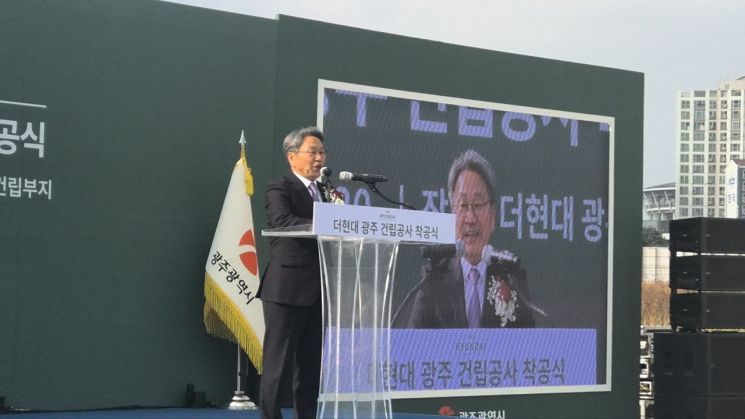 Gwangju Mayor Kang Gijeong is delivering a congratulatory speech at the groundbreaking ceremony for The Hyundai Gwangju construction on the 20th of last month. Photo by Song Bohyun
The Hyundai Gwangju will have a total floor area of 272,955 square meters, with six basement levels and eight above-ground floors. It is scheduled for completion at the end of 2027, with the goal of opening in the first half of 2028. The design was undertaken by Hairchoke & de Meuron, and construction is being carried out by a consortium of Jungheung Construction, Hyundai Engineering & Construction, and Woomee Construction. Gwangju City reduced the permit period from 19 months to 11 months, and conditions such as the donation of access roads, adjustment of the timing for bridge installation, and vehicle entry/exit management were imposed.
At the groundbreaking ceremony, Gwangju Mayor Kang Gijeong stated, "Increasing the urban user population will revitalize Gwangju's commercial districts and serve as an opportunity to enhance the city's competitiveness."
© The Asia Business Daily(www.asiae.co.kr). All rights reserved.



















