"Analysis of the Impact of China's Hanilryeong on the Korean Hotel Market" Report
Asian Tourism Landscape Shifts, Korean Hotels Enter a Phase of Reevaluation
Due to the Chinese government's implementation of the Hanilryeong (限日令, a restriction on the inflow of Japanese popular culture content), tourism between China and Japan has rapidly declined, leading to a swift restructuring of tourism demand across Asia and triggering significant structural changes in the South Korean hotel market. Experts have assessed that this measure will serve as a structural turning point that will prompt a comprehensive reevaluation of the Korean hotel market, beyond just short-term fluctuations in demand.
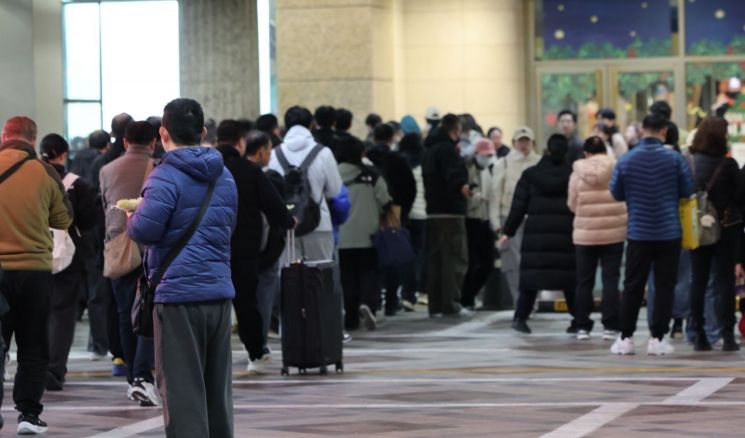
On December 15, Samjong KPMG announced the publication of its report, "Analysis of the Impact of China's Hanilryeong on the Korean Hotel Market." The report provides an in-depth analysis of the changes that China's restrictions on travel to Japan may bring to the Korean tourism and hotel sectors, and forecasts the potential for a restructuring of tourism demand across Asia, including Korea, under the pressure of the Hanilryeong policy.
This regulation was triggered when China effectively suppressed visits to Japan in response to Japanese Prime Minister Sanae Takaichi's comments regarding "military intervention in the event of a Taiwan contingency." The Chinese government has a history of controlling overseas travel whenever political conflicts arise, as seen with the 2017 Hallyu Ban. Therefore, this latest measure is also expected to rapidly alter tourism flows in the short to medium term, depending on shifts in Chinese public sentiment and policy direction.
Samjong KPMG analyzed that if China's restrictions on travel to Japan persist over the long term, Chinese tourism demand could be redirected to neighboring regions such as Southeast Asia and Korea. In fact, countries like Thailand, Singapore, and Malaysia are emerging as strong alternatives based on ease of communication and political neutrality. Additionally, given Korea's geographical proximity and the growing influence of the Korean Wave, the report assessed that Korea is highly likely to reemerge as a competitive destination for Chinese tourists.
The report projected that an increase in inbound Chinese tourists would drive up both the occupancy rate (OCC) and average daily rate (ADR) for tourist hotels in Seoul, thereby simultaneously improving investment returns and asset values. In particular, three- and four-star hotels, which already maintain high occupancy rates, are expected to operate at near full capacity year-round if additional demand flows in. With lower initial investment costs compared to five-star hotels, these properties are also becoming attractive investment alternatives in terms of profitability.
Furthermore, the report noted that Seoul, with its limited supply, is likely to continue experiencing structural upward pressure on asset values. Key regions such as the Seoul metropolitan area and Busan are also emerging as new strategic markets, given their high growth potential relative to investment costs.
Accordingly, Samjong KPMG advised global and domestic institutional investors to consider a range of strategies, including: ▲ seeking additional value-up opportunities for core assets in Seoul, ▲ expanding portfolios focused on growth regions such as the metropolitan area and Busan, and ▲ participating in new development and renovation projects.
Seok Bonggil, Executive Director of Samjong KPMG's Hotel and Tourism Industry Team, stated, "China's Hanilryeong is not merely a short-term variable, but a turning point that is triggering a structural transformation of the Korean hotel market. Now is a crucial 'strategic investment timing' to proactively capture signals of change."
Samjong KPMG plans to continue monitoring the impact of global geopolitical risks and changes in tourism demand on the domestic hotel and leisure industry, and to support investors and companies in formulating their mid- to long-term strategies.

© The Asia Business Daily(www.asiae.co.kr). All rights reserved.


















