Record High Proportion of Long-Term Unemployment Among Youth
Delayed Entry into Labor Market Also Impacts Pension Enrollment
As young people in South Korea are entering the labor market at increasingly later ages, prolonged periods of unemployment among the youth are becoming a structural issue. There are growing concerns that extended job searches and unstable first jobs are driving an increase in the number of young people who are classified as "taking a break" and NEETs (a term referring to young people who are not in employment, education, or training), which could also lead to delays in National Pension enrollment.
According to data released by the National Pension Research Institute, as of this year, 18.9% of unemployed youth aged 15 to 29 had not found employment for more than three years. This is the highest figure since related statistics began to be compiled. The proportion has risen by 3.4 percentage points over the past decade, from 15.5% in 2015. This means that about one in five unemployed young people are in a state of long-term unemployment.
The lengthening of job search periods among young people is attributed to both changes in the structure of the labor market and shifts in entry strategies. The domestic university enrollment rate increased from 67.5% in 2015 to 76.3% in 2025, and the average time taken to secure a first job is also on the rise. The average period required for all young people to land their first job increased from 10.0 months in 2020 to 11.5 months this year. Among university graduates and above, the period lengthened from 7.2 months to 8.8 months over the same period.
The number of young people not participating in economic activities and reporting that they are "taking a break" without any particular reason is also rapidly increasing. The number of youth in the "taking a break" category grew from 393,000 in 2015 to 590,000 last year. The proportion of economically inactive youth classified as "taking a break" expanded from 6.6% to 12.4% over the same period. Since surpassing 10% in 2020, there has been no clear downward trend.
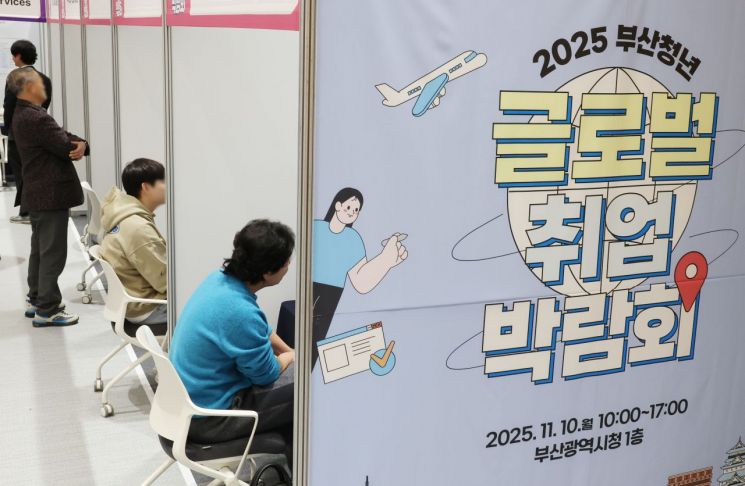 Young job seekers are participating in on-site interviews and consultations at the 2025 Busan Youth Global Employment Fair held last month at Busan City Hall. Photo by Yonhap News Agency
This trend suggests that young people who were previously engaged in studies or job searches are increasingly at risk of withdrawing from both the labor market and education or training, remaining inactive for extended periods. There are concerns that a significant portion of those "taking a break" may transition into NEET status, as they do not participate in economic activities or vocational training.
The quality of first jobs is also cited as a factor making it difficult for young people to establish themselves in the labor market. According to analysis by the Korea Employment Information Service, the proportion of contract positions among first jobs held by young people increased from 33.0% in 2020 to 37.5% in 2025. The share of part-time jobs also rose from 21.0% to 25.0% during the same period.
Wage levels also fell short of expectations. As of last year, only 32.0% of respondents reported earning a monthly wage of 2 million won or more in their first job. A total of 68.0% earned less than 2 million won per month. Although the average working hours of young people were 94.9% of the all-age average, their total monthly wages amounted to only 69.6% of the all-age average.
As a result, there were many cases where young people left their first jobs within a relatively short period. The most common reason for leaving a first job was dissatisfaction with working conditions, such as pay and working hours, followed by the expiration of contract periods.
Among youth classified as "taking a break," the proportion of men was 55.8%, higher than that of women at 44.2%. The rate at which the "taking a break" status persisted for more than two years was also higher among men.
Experts point out that if delays in youth employment and prolonged "taking a break" statuses continue, the timing of National Pension enrollment will be pushed back, which could ultimately affect the level of income security in old age.
© The Asia Business Daily(www.asiae.co.kr). All rights reserved.
![Clutching a Stolen Dior Bag, Saying "I Hate Being Poor but Real"... The Grotesque Con of a "Human Knockoff" [Slate]](https://cwcontent.asiae.co.kr/asiaresize/183/2026021902243444107_1771435474.jpg)


















