University of East Anglia Research
"Rapid Genetic Changes Linked to Rising Temperatures"
A new study has found that endangered polar bears are changing their DNA in a way that allows them to adapt their diets in response to environmental changes caused by global warming.
According to ABC News on the 11th (local time), researchers from the University of East Anglia in the United Kingdom announced that polar bears living in relatively warm regions of Greenland are exhibiting rapid genetic changes, which are linked to rising temperatures.
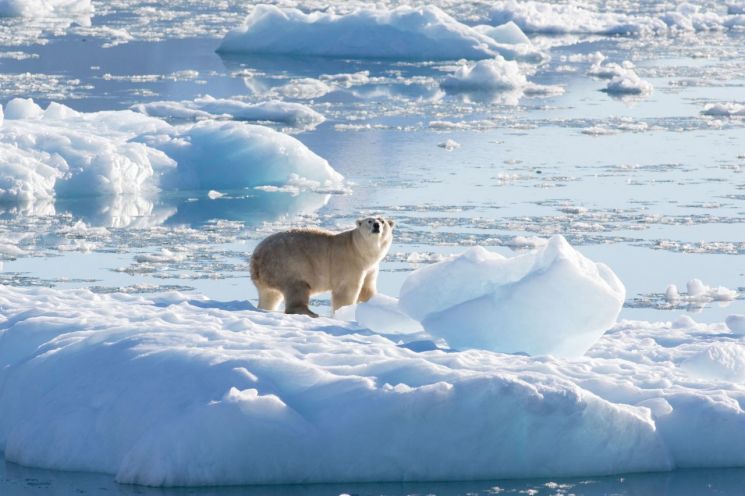
The research team analyzed previous data from the University of Washington in the United States, which had collected blood samples from polar bears inhabiting Greenland. Through these samples, they discovered that a population of polar bears living in the relatively warmer southeastern region of Greenland genetically diverged from those inhabiting the colder northeastern region about 200 years ago.
"Plant-based foods included in formerly fat-centric diets"
The University of East Anglia researchers analyzed the genes of 17 polar bears in Greenland and found that those living in the southeast are adapting to their environment by incorporating plant-based foods into their traditionally fat-rich diets.
Alice Godden, lead author of the study and senior research associate at the School of Biological Sciences at the University of East Anglia, explained, "Typically, polar bears consume high-fat foods such as seals, but there has been a significant shift as they now eat more plant-based foods."
The research team interpreted these findings as a ray of hope for the survival of endangered polar bears. As the Arctic Ocean continues to melt due to warming, it has become increasingly difficult for polar bears to hunt seals for food. As a result, it is predicted that two-thirds of polar bears will disappear by 2050, and the entire species could go extinct by 2100.
Godden stated, "This population of Greenland polar bears is rewriting its genome to survive," describing it as "a desperate survival mechanism in the face of melting glaciers." She added, "While this study is hopeful, it is only a small opportunity to better understand the polar bear genome," emphasizing, "We must all continue to reduce carbon emissions to ensure the survival of polar bears." The results of this study were published in the journal 'Mobile DNA.'
© The Asia Business Daily(www.asiae.co.kr). All rights reserved.

















