Fee Reduction for Two Months Starting December 15
Rates Changed to Tiered Structure, 20?40% Lower Than Before
The Korea Exchange will lower stock trading fees for two months starting December 15. The exchange’s decision to cut fees stems from competition with NextTrade, an alternative trading system (ATS). Attention is focused on whether this fee reduction will lead to a full-scale fee-cutting competition between the two exchanges in the future.
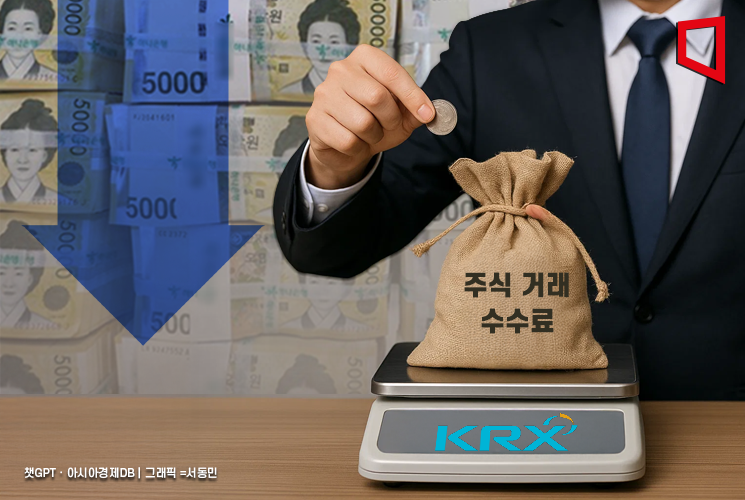
According to the financial investment industry on December 15, the Korea Exchange will temporarily lower stock trading fees for two months, from this day until February 13 of next year. The current flat fee rate of 0.0023% will be changed to a differentiated rate, matching that of the alternative trading system: 0.00134% for limit orders (makers) and 0.00182% for market orders (takers). This brings the fees down to the same level as NextTrade, a reduction of 20% to 40% compared to the previous rates.
The exchange’s fee reduction is due to the rapid growth of NextTrade. Launched in March this year, NextTrade accounted for an average daily trading value of 13.3158 trillion won as of October, which is about 49.4% of the Korea Exchange’s volume. In August, it even surpassed half of the market share, demonstrating a steep growth trajectory. The rapid rise of NextTrade has affected the exchange’s revenue. According to data submitted by the Korea Exchange to Assemblyman Kim Sanghoon of the National Assembly’s Political Affairs Committee, trading fee revenue for the first half of this year was 94.2 billion won, a 19% decrease compared to the same period last year.
As a result, the exchange ultimately decided to implement a fee reduction. While the reduction is set for two months, there is a possibility it could be extended by about a month. In an interview with The Asia Business Daily last month, Korea Exchange Chairman Jung Eunbo mentioned that the fee reduction could be extended depending on circumstances. The exchange can decide on fee reductions for up to three months on its own; any extension beyond three months requires review by the Financial Services Commission.
The exchange plans to closely analyze the impact of fees on trading through this fee reduction. An exchange official stated, “Currently, 80% to 90% of foreign and institutional trades are routed through designated orders on the exchange, while about 40% of individual trades are routed through designation and 60% through best execution. This fee reduction will help us gauge the extent to which fees influence investor choices.”
The exchange believes that, now that NextTrade has established itself in the market, competition should take place on equal footing. Accordingly, it is also considering extending trading hours, as NextTrade has done. Chairman Jung emphasized, “Although strong market conditions this year have prevented a significant drop in fee revenue, ATS has now moved beyond just establishing itself and is playing its own role. Therefore, trading should now occur under equal conditions between the exchange and ATS.”
The market is watching closely to see whether a full-fledged fee-cutting competition between the two exchanges will unfold. A securities industry official commented, “If the exchange fully commits to lowering fees, it could become a game of chicken. However, because a fee cut would significantly reduce revenue, the exchange is likely to make a cautious decision regarding any permanent fee reductions.”
© The Asia Business Daily(www.asiae.co.kr). All rights reserved.

















